

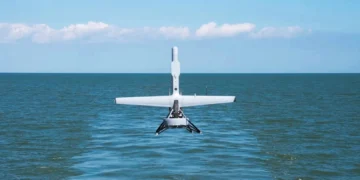



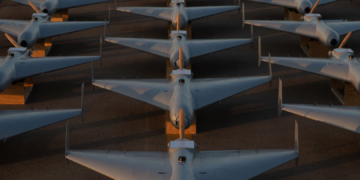




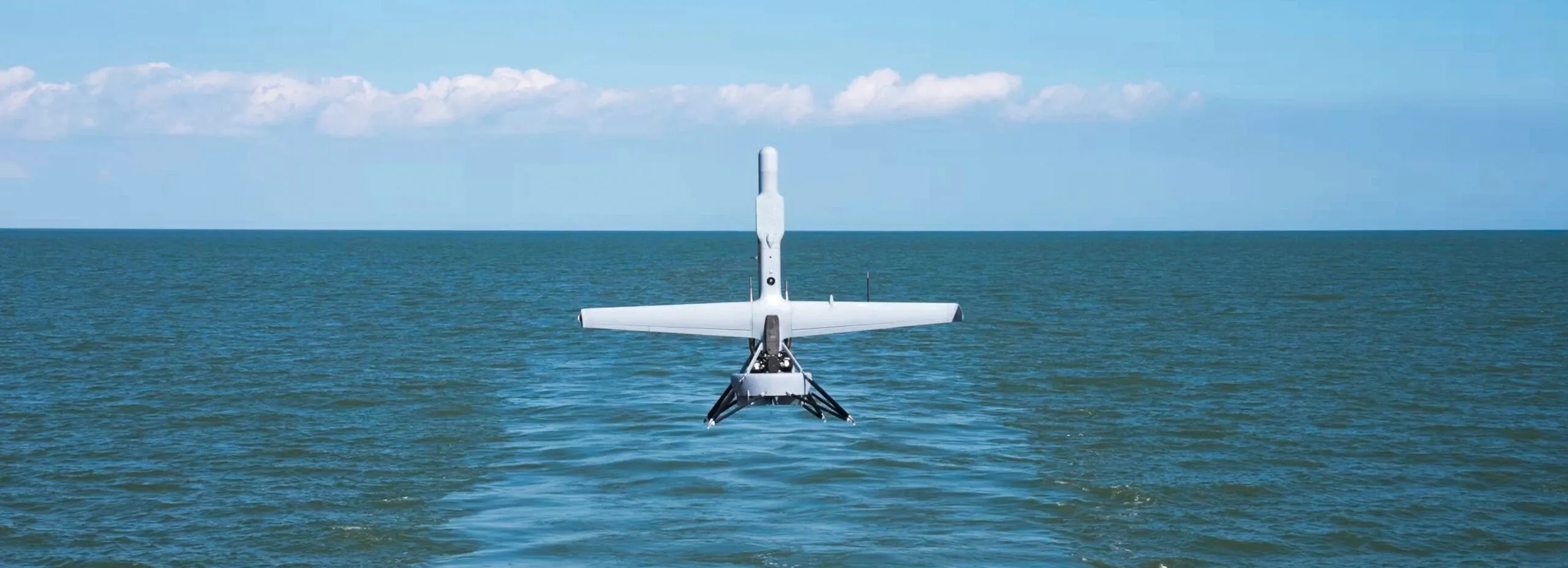
The V-BAT, capable of independent takeoff from ship decks with a single vertical motor, is poised to take on a leading role in the US Navy’s massive $800 million intelligence operations. Even in the most challenging electronic warfare environments where GPS and communications are completely disrupted, this system can remain airborne for 12 continuous hours. As a result, it takes naval reconnaissance and surveillance capabilities to a new dimension.

V-BAT Leaves Its Mark on the $800 Million Competition
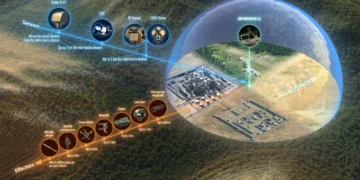
Shield AI has been selected by the US Navy to provide Contractor-Owned, Contractor-Operated (COCO) Intelligence, Surveillance, and Reconnaissance (ISR) services to support naval and joint force operations. Under the Navy’s modernization initiative, Shield AI will compete for task orders totaling up to $800 million. Other selected industry partners will also compete for these tasks.
Battle-Proven Performance
Brandon Tseng, Co-Founder and President of Shield AI, stated that the V-BAT system has achieved more operational outcomes than all other Group 3 VTOL UAVs. Key highlights from the platform’s operational history include:
- Support for over 100,000 pounds of drug seizure operations in the Caribbean and Pacific.
- Hundreds of targeting missions in Ukraine within environments featuring GPS and communication jamming.
- Critical operations conducted with allied forces in the Middle East.
V-BAT Technical Specifications and Logistics Advantages
Classified as a Group 3 Vertical Takeoff and Landing (VTOL) UAV, the V-BAT stands out with its ducted fan design and heavy-fuel engine. Moreover, the system’s technical infrastructure offers the following advantages:
- Endurance: Over 12 hours of continuous flight capability.
- Design: Single-engine, enclosed rotor configuration for safe operation in confined spaces and on ship decks.
- Durability: Ability to execute missions in contested environments with electronic warfare and signal disruption.
- Operational Mobility: Minimal logistical requirements and the ability to take off and land unassisted from areas with limited infrastructure.
Already actively used by the US Coast Guard and the US Marine Corps, the system will further strengthen its presence on US Navy vessels with this new contract.
Read more defence news
Source:C4Defence– Shield AI