




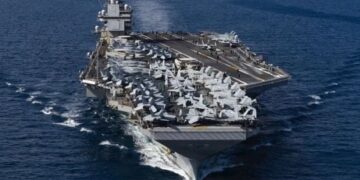














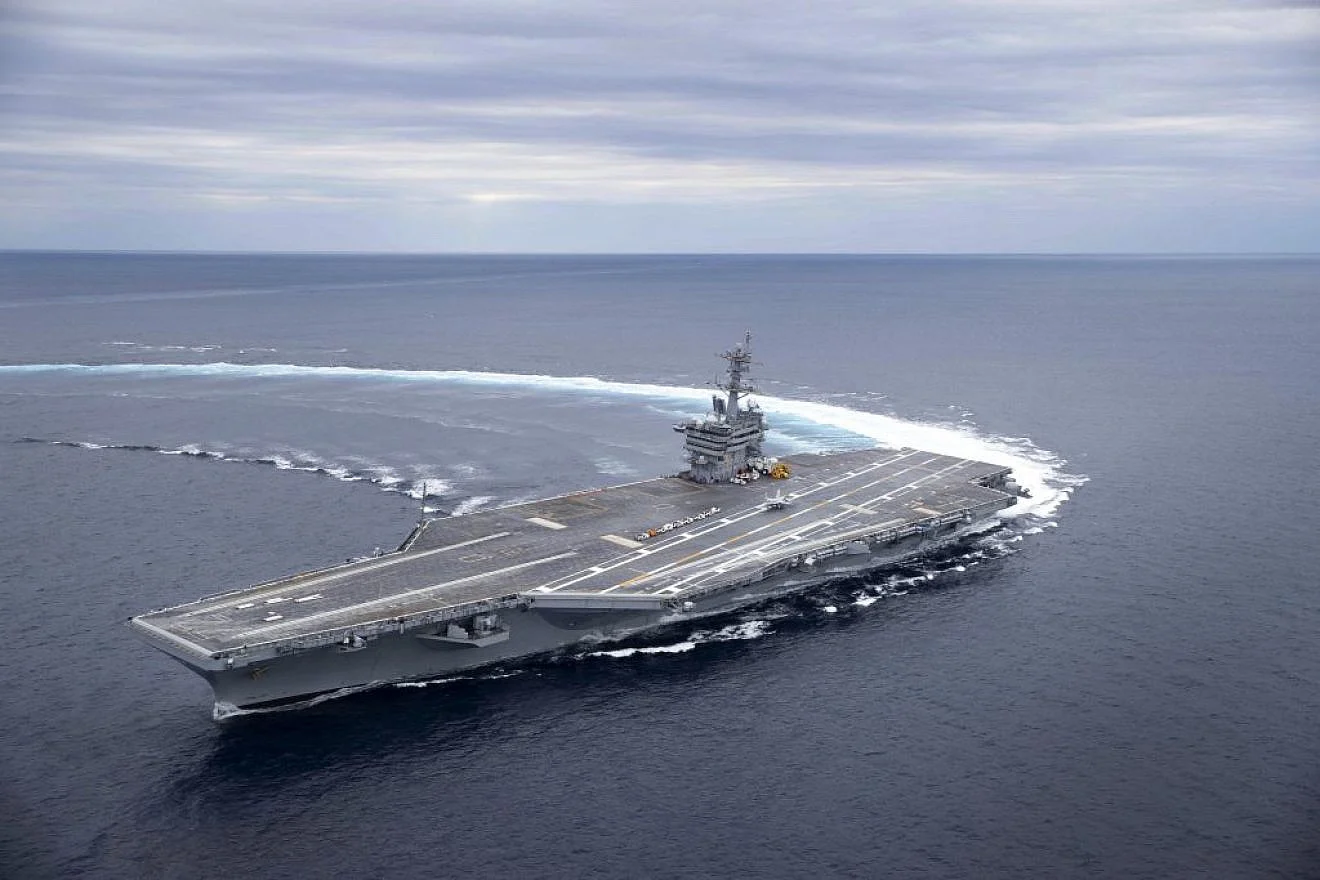
The U.S. Department of Defense (Pentagon) has redirected the USS Abraham Lincoln (CVN-72) Carrier Strike Group from the South China Sea to the CENTCOM area of responsibility in response to escalating unrest in Iran and heightened tensions along the Washington-Tehran line.

According to defense sources and reports in The Telegraph, Washington decided to increase its military presence in the region following signals of a harsh crackdown on protests in Iran. The Nimitz-class nuclear aircraft carrier USS Abraham Lincoln Carrier Strike Group, previously operating in the South China Sea, is now en route to the Middle East and is expected to arrive in the region next week.
Strategic Positioning and Task Force Capacity
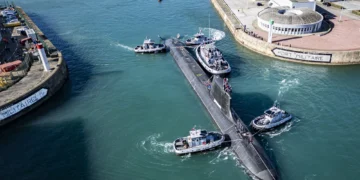
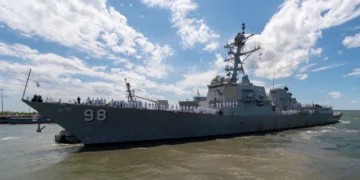
The group commanded by the USS Abraham Lincoln, which has left the South China Sea, includes Arleigh Burke-class guided-missile destroyers (USS Spruance, USS Michael Murphy, and USS Frank E. Petersen Jr.) and at least one nuclear attack submarine. Hosting fifth-generation F-35C Lightning II fighter jets, the group’s deployment aims to fill the carrier gap that emerged in the region at the beginning of January, thereby increasing the United States’ operational capacity.
Trump Administration and Military Options
The deployment coincides with statements by President Donald Trump supporting protesters in Iran and warning the Tehran administration. Trump’s remarks that military options remain on the table if civilian casualties rise are seen as an indicator that Washington is raising its military readiness in response to pressures on Iran. The report also notes that the Trump administration is considering various plans involving cyber and military options against the regime’s repression in Iran.
Regional Mobility
Alongside the U.S. carrier deployment, military activity in the region has surged. In response, Iran temporarily closed the airspace around Tehran to civilian flights and raised the overall level of military preparedness nationwide. At the same time, some U.S. and British personnel at Al Udeid Air Base in Qatar have reportedly been evacuated as a precaution due to increasing security risks and potential retaliatory threats. These developments underscore the ongoing seriousness of the alert status over strategic bases and energy routes in the region.
Source: C4Defence / The Telegraph