






Written by Retired Lieutenant General (Air Force) Nihat Kökmen, Member of EDAM

As of 2026, various projections and assessments are being made regarding the possible trajectory of U.S.–Türkiye defense industry relations. However, the unpredictable and unconventional leadership style of U.S. President Donald Trump, who is serving his second term, has the potential to render even the analyses of individuals, institutions, and states operating in this field misleading. In this context, Türkiye–U.S. bilateral relations entered a period of marked deterioration during Trump’s first term, experienced a relative pause during the Biden administration, and in Trump’s second term have become increasingly difficult to manage and predict due to the unpredictability of his leadership style. It may be argued that in the evolution of bilateral relations to this point, both leaders’ tendency to largely bypass established diplomatic mechanisms in resolving disputes—prioritizing telephone diplomacy or decisions taken following direct leader-to-leader meetings—has contributed to outcomes that have often progressed to Türkiye’s disadvantage.
The Turkish Defense Industry
Following its accession to NATO in 1952, Türkiye structured its security architecture—and accordingly its procurement of weapons, equipment, and materiel—largely within a framework dependent on the United States. The organization and modernization of the Turkish Armed Forces progressed in line with this dependency relationship. Military training activities were also integrated into the U.S.-centered system as an inseparable component of this structure. Over time, Türkiye has inevitably been affected by various regional conflicts and polarizations. In particular, after the oppression and subsequent massacres of Turkish Cypriots, the U.S. arms embargo imposed following the successful 1974 Cyprus Peace Operation demonstrated through painful experience how critical a domestic defense industry was for the operational independence of the Turkish Armed Forces. Companies affiliated with the Turkish Armed Forces Foundation—such as ASELSAN, HAVELSAN, ROKETSAN, and TUSAŞ—which now form the backbone of the Turkish defense industry, were established in response to these needs. Today, Türkiye possesses defense industry companies capable of competing at the global level, conducting both R&D and production activities across various sectors.
Tensions with the United States
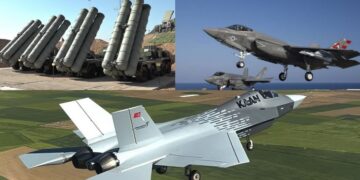
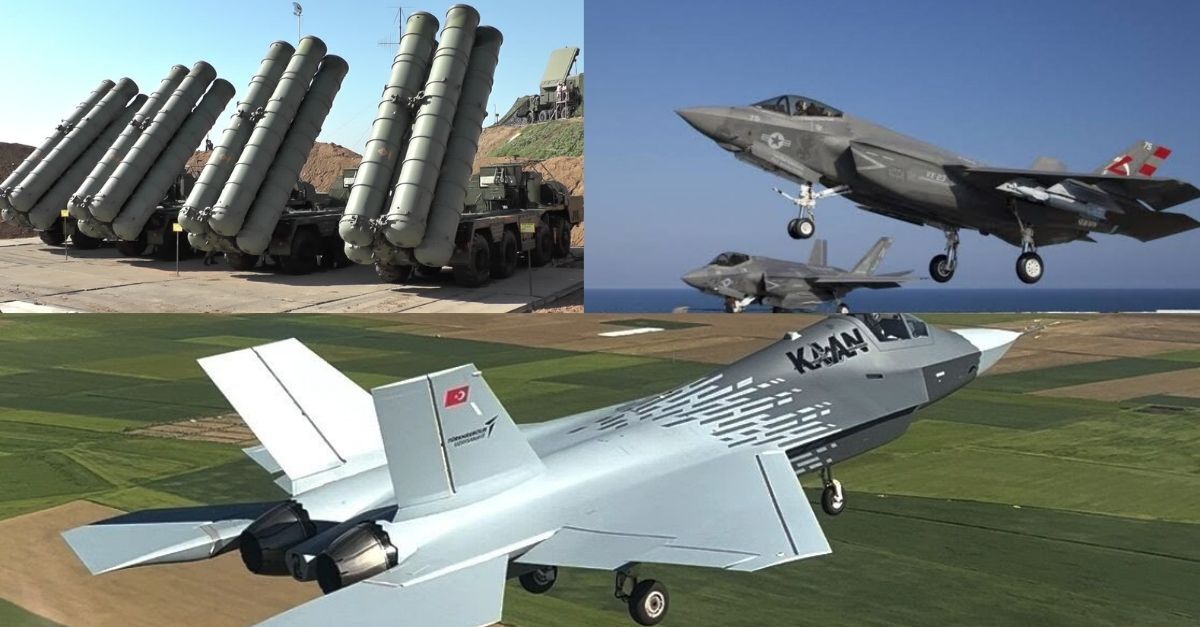
In line with the modernization requirements of the Turkish Air Force, Türkiye became a production partner in the F-35 Joint Strike Fighter (JSF) program in the 1990s, committing to procure 116 aircraft and securing its obligations through contracts. However, Türkiye’s procurement of the Russian-made S-400 long-range air and missile defense system in 2019 to meet urgent defense needs was cited by the U.S. administration as grounds for imposing CAATSA sanctions, and during Trump’s first presidency, Türkiye was removed from the program. Since then, the issue has periodically been raised by various U.S. authorities; however, these initiatives have largely created the impression of seeking a solution rather than producing a permanent and concrete one.
The most recent example is the statement made on December 10, 2025, via the X platform by U.S. Ambassador to Türkiye and Special Representative for Syria Tom Barrack. Barrack confirmed that discussions were ongoing between the two countries regarding Türkiye’s potential return to the F-35 program and the continued possession of the Russian-supplied S-400 system, adding that the issue could be resolved within four to six months. On the same date, Anadolu Agency reported assessments that the positive relationship between Donald Trump and President Recep Tayyip Erdoğan allowed for constructive and productive discussions on the procurement of F-35 aircraft. It should also be borne in mind that the linking of the F-35 procurement—an issue that has become a protracted saga since 2019—to the S-400 system may continue to be kept on the agenda in 2026, potentially used as leverage in connection with developments in the Black Sea, the Eastern Mediterranean, and Syria.
Regarding the S-400 systems, media reports indicated that during President Erdoğan’s December 12, 2025 visit to Turkmenistan, the possibility of returning the systems to Russia was discussed in his bilateral meeting with President Vladimir Putin. However, official statements have not clearly and definitively confirmed this matter. Moreover, the emergence of such reports immediately following Barrack’s statement that the S-400 issue could be resolved within four to six months raises questions about their credibility. Meanwhile, the file concerning the long-awaited procurement of 40 F-16V aircraft—urgently needed by the Air Force Command—appears to be left on the Pentagon’s dusty shelves, seemingly awaiting a more opportune time.
The Eurofighter Procurement
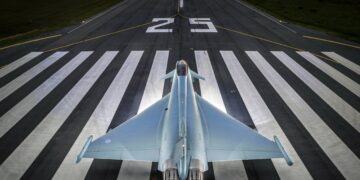
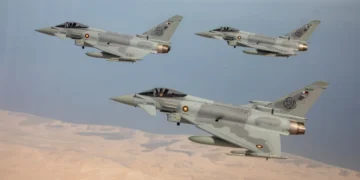
Efforts to meet the need for next-generation aircraft have finally yielded results. In this framework, mutual signatures have been exchanged regarding the procurement of 20+20 Eurofighter Typhoon combat aircraft produced by a consortium formed by three European countries, thereby initiating the acquisition process. Officials have stated that the agreement includes training, munitions, spare parts, and the integration of national weapons systems. In addition to the aircraft to be procured from the United Kingdom, it has been indicated that a total of 24 first-version aircraft will also be acquired from Qatar and Oman. Although these aircraft are more expensive than the F-16s in terms of both price and maintenance/operational costs, they have been preferred due to their expected significant contribution to the Turkish Air Force’s air defense capability.
With the procurement of Eurofighters from the United Kingdom, relations with the United States—already strained due to Türkiye’s removal from the F-35 JSF program despite having paid for the aircraft, and the obstruction of F-16V procurement in Congress—have reached their lowest levels. Given that an agreement has now been reached on acquiring Eurofighters, it may also be argued that there is no longer a need for the F-16Vs. Furthermore, following Türkiye’s exclusion from the F-35 JSF program, to which it had contributed since the 1990s, the loss of industrial capabilities and the termination of parts production contracts—previously generating annual revenues of $7–8 billion and potentially reaching $15–20 billion today—are highly significant in terms of both lost capabilities and incurred financial losses. Additionally, the system differences arising from the procurement of Eurofighters will inevitably lead to additional investment costs.
The Requirements of the Defense Industry
In short-term conflicts that emerged in Türkiye’s immediate neighborhood in 2025, manned systems proved decisive—particularly in the Iran–Israel and Pakistan–India wars—in bringing hostilities to an end. However, countries are now developing various types of unmanned combat aerial vehicles, either individually or through consortiums, along with low-cost, single-use drones capable of carrying explosives. These drones are used daily in the Russia–Ukraine war, with hundreds deployed reciprocally each day.
Türkiye has acquired the capability to produce more advanced versions of the MQ-series UAVs that it once sought from the United States for counterterrorism purposes but was denied due to Congressional obstacles. Although the domestic production rate was initially low, official statements indicate that localization has now reached approximately 80 percent. While this rate may appear high and is considered a success, the continued external procurement of certain critical components remains a threat to the sustainability of these systems. Similar challenges have previously been experienced in the Fırtına howitzers, satellite projects, and UAV/SİHA camera systems.
In this context, during President Erdoğan’s visit to the United States, Foreign Minister Hakan Fidan stated on September 27, 2025, that “KAAN’s engines are waiting in the U.S. Congress; their license has been halted, and this does not align with the spirit of alliance or strategic partnership.” Although narratives frequently emphasize that external dependency is decreasing with the successive induction of domestically developed helicopters and munitions into inventory, it may be analytically rational to establish an inverse relationship between strained relations with the United States and the diversification and expansion of domestic production capacity through national means. It may also be argued that the deterioration in relations has been directly proportional to conflicts of interest between the two countries regarding the region.
Particularly in Syria, in the second week of 2026, the United States reportedly demanded that the SDF—considered by Türkiye to be an extension of the PKK—be politically and militarily integrated into the central Syrian government following a sudden strategic shift. The reported inclusion in an agreement of provisions granting a deputy defense minister position to Kurdish-origin figures—who historically lacked recognition in Syrian administrations—and preventing central government police and military forces from entering predominantly Kurdish areas may be perceived as resembling a de facto federation. Meanwhile, the U.S. maintains a continuous military presence in the Eastern Mediterranean, both supporting Israel and signaling deterrence to surrounding countries. During the Trump–Netanyahu meeting in Florida on December 30, it was reportedly stated that if F-35s were delivered to Türkiye, a clause would be included in the contract stipulating that they not be used against Israel. Developments such as the lifting of the arms embargo on the Greek Cypriot administration, the establishment of bases in the south, and initiatives to evaluate Eastern Mediterranean hydrocarbon resources through platforms excluding Türkiye warrant close monitoring.
The United States’ open support for Greece—through the construction of bases near Türkiye’s borders and the approval of F-16V and F-35 sales to Greece without obstruction, while withholding them from Türkiye—is noteworthy. The suspension of F110 engine supplies required for the initial production of KAAN, reportedly due to Congressional issues, is also concerning. Furthermore, encouragement of other NATO countries in the Black Sea region in ways that could erode the Montreux Convention is perceived as unacceptable from Türkiye’s perspective.
Conclusion
It may be stated that Türkiye–U.S. defense industry relations have reached their most problematic historical level since the partial onset of deterioration during the Barack Obama era. During Donald Trump’s first presidency, despite official rhetoric emphasizing that problems were being overcome, CAATSA sanctions were implemented in practice; Türkiye was removed from the F-35 program; and numerous Turkish defense firms and officials became direct targets of sanctions. Under Biden, relations remained largely stagnant. Although the F-16V procurement was raised and mutual assurances were given—and despite Ankara’s approval of Finland and Sweden’s NATO membership—no progress was achieved regarding the F-16Vs.
It is difficult to assert that Trump’s second term presents a bright outlook for bilateral relations. Existing procurement problems largely persist, and CAATSA sanctions remain fully in force. As of 2026, the likelihood of a profound and dramatic transformation appears limited. Nevertheless, actors expecting progress in bilateral relations must accurately interpret the nature of U.S. expectations from Türkiye. In this regard, the statements of U.S. Ambassador to Ankara Tom Barrack—occasionally exceeding formal diplomatic tone and implying a form of regional authority—should be carefully analyzed, particularly with respect to the implicit American demands embedded between the lines.
Defense news related to the topic
Source: C4Defence