








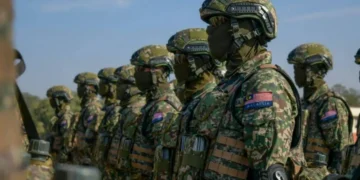





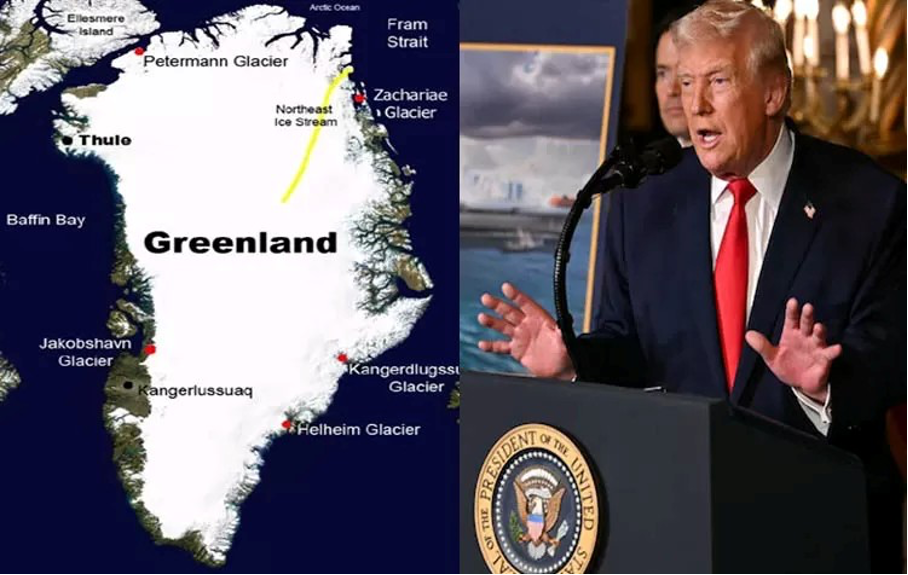
“We do not want Russia or China to go to Greenland. If we do not take control of Greenland, Russia or China will be your neighbor. That will not happen.”“We cannot allow China or Russia to invade Greenland. We also cannot allow China or Russia to invade Venezuela. If we had not done what we did, China or Russia would be in Venezuela.”
U.S. President Donald Trump[1]
The international system is facing a highly significant turning point and rupture in global geopolitics in 2026, comparable to the historic transformation that followed the Second World War. From Venezuela to Greenland, Washington views its allies as territories to be managed, forcing the European Union to decide whether it will adhere to its principles or fall under the influence of U.S. power politics. [2]

Having had a turbulent start following the new Trump administration’s assumption of office in 2025, NATO is entering 2026 amid what may be the worst crisis in its existence. Indeed, the White House’s statement that it is considering “various options” for the United States to take control of Greenland, and that using the U.S. military to do so is “always an option,” has become a source of curiosity and concern worldwide. [3]
What geopolitical and military plans lie behind Trump’s interest in Greenland? Trump has argued that U.S. ownership of Greenland is necessary to “defend the free world.” [4] It is true that both Russia and China have increased their military activities in the Arctic in recent years. And if Russia were to launch missiles at the United States, those missiles would most likely pass over Greenland. This could make the island a useful base for an expanded U.S. presence and a strategic location for the deployment of U.S. missile interceptors as part of the “Golden Dome” missile defense system, a priority of the Trump administration. The United States already maintains a presence there at Pituffik Space Base, a U.S. Space Force installation that has been operational since 1943. [5]
With the new U.S. National Security Strategy released by the White House just one month ago, we can already see what America’s vision of prioritizing the Western Hemisphere looks like. Following the United States’ capture of Venezuelan President Nicolás Maduro, the world is now questioning how far Washington is willing to go to achieve its objectives. What are its intentions regarding Cuba, and how far is it prepared to pressure its NATO allies over the Greenland issue? [6]
What Could Be Europe’s Counterstrategies to Trump’s Greenland Initiative?
Donald Trump’s attempt to expand the American sphere of influence is forcing Europeans to strive to cope with the rapidly changing geopolitical situation. Despite the astonishment of European allies and the general surprise of a large part of the American public, why did he attempt to purchase Greenland, a territory belonging to Denmark?
Trump presented this interest as the thoughts of a shrewd businessman: “I said, ‘Why don’t we have it?’ Look at a map. I am in the real estate business. I look at a corner and say, ‘I should buy that shop for the building I am constructing,’ and so on. You know, it is not very different. I like maps. And I always said, ‘Look at the size of this, it is enormous and it should be part of the United States.’” He added, “This is no different from a real estate transaction. It is just a little bigger, to say the least.” [10]
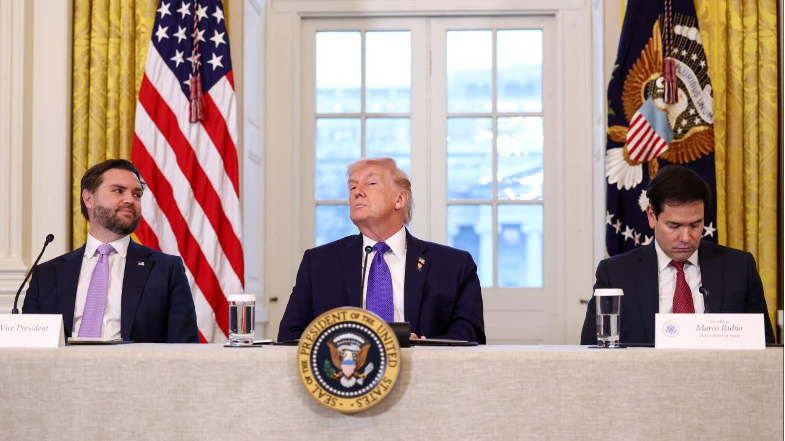
As Donald Trump rapidly advances his boundless agenda to expand America’s sphere of influence, the European Union is struggling to find its own path while grappling with internal divisions and fear of angering the U.S. president. The United States’ operation to remove Nicolás Maduro from the Venezuelan presidency and Trump’s renewed threats to take Greenland from Denmark are forcing the bloc to confront unsettling questions about its decades-long alliance with the world’s largest economy and the dependencies reinforced by that relationship.
At the same time, the EU—having declared itself a defender of the multilateral system—is facing growing doubts about its commitment to international law and its determination to stand up to those who violate it. So far, silence is speaking louder than answers to these questions. [11]
In a statement, U.S. President Donald Trump said that amid renewed efforts to seize the Arctic island of Greenland, Washington may be forced to choose between controlling Greenland and maintaining the NATO alliance. Trump also implied that the alliance would be ineffective without the United States, saying, “I think we will always get along with Europe, but I want them to get their act together. If you look at NATO, I can say that Russia is not interested in any country other than us.” [12]
Trump stated, “We need Greenland… Right now it is very important strategically. Greenland is full of Russian and Chinese ships all over the place.” The president also argued, “From a national security standpoint, we need Greenland, and Denmark will not be able to provide that.” [13]
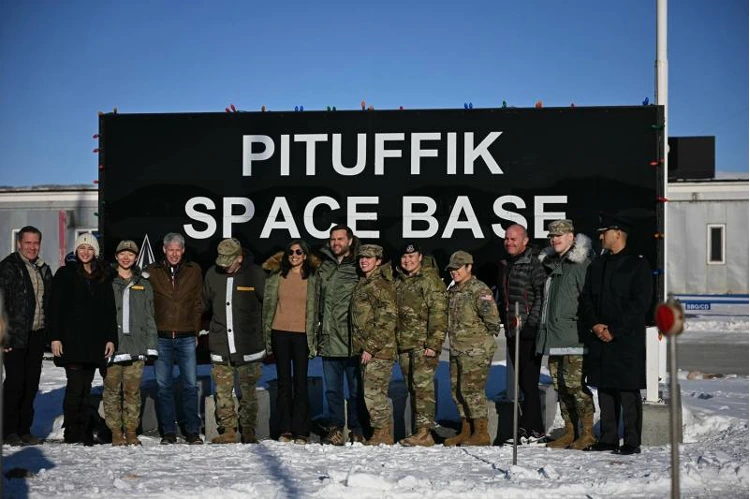
U.S. Vice President James David Vance’s visit to the United States’ Pituffik Space Base in Greenland
U.S. Vice President James David Vance has argued that European leaders need to take Greenland’s “security” more seriously; otherwise, the United States will “have to do something about it.” Vance accused NATO member Denmark and the rest of Europe of failing to make sufficient efforts to protect the strategically important island from the plans of Russia and China. [14]
White House Deputy Chief of Staff Stephen Miller, in a statement, reiterated that Greenland should be part of the United States, saying, “No one is going to fight the United States over the future of Greenland.” While noting that forcibly seizing territory from a sovereign nation such as Denmark would constitute a clear violation of international law—similar to Russia’s annexation of Ukrainian territory—Miller mocked what he referred to as “international niceties.” “But we live in the real world, a world governed by power, force, and authority. These are the immutable laws of the world,” he added, indicating that the Trump administration adheres to a policy of “might makes right.” [15]
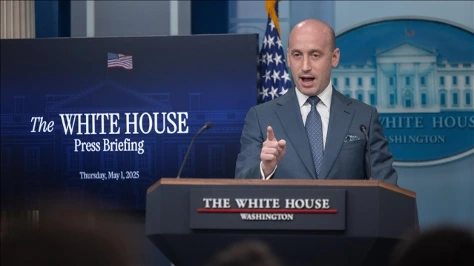
“To secure the Arctic region, to protect NATO, of course Greenland must be part of the United States.” [16]
The divisions opened by the Trump administration’s operation to overthrow Nicolás Maduro in Venezuela have deepened further. Danish Prime Minister Mette Frederiksen stated that the seizure of Greenland by the United States would mean the end of the NATO military alliance. Frederiksen said, “If the United States chooses to militarily attack another NATO country, everything stops. This includes our NATO and therefore the security that has been provided since the end of the Second World War.” [17]
From the perspective of international law, the U.S. attack on Venezuela and the abduction of its leader constitute a clear violation of the prohibition on the threat or use of force. The operation was not authorized by the UN Security Council, and the alleged threat posed to the United States by “narco-terrorists” cannot credibly meet the threshold required to justify self-defense. [18]
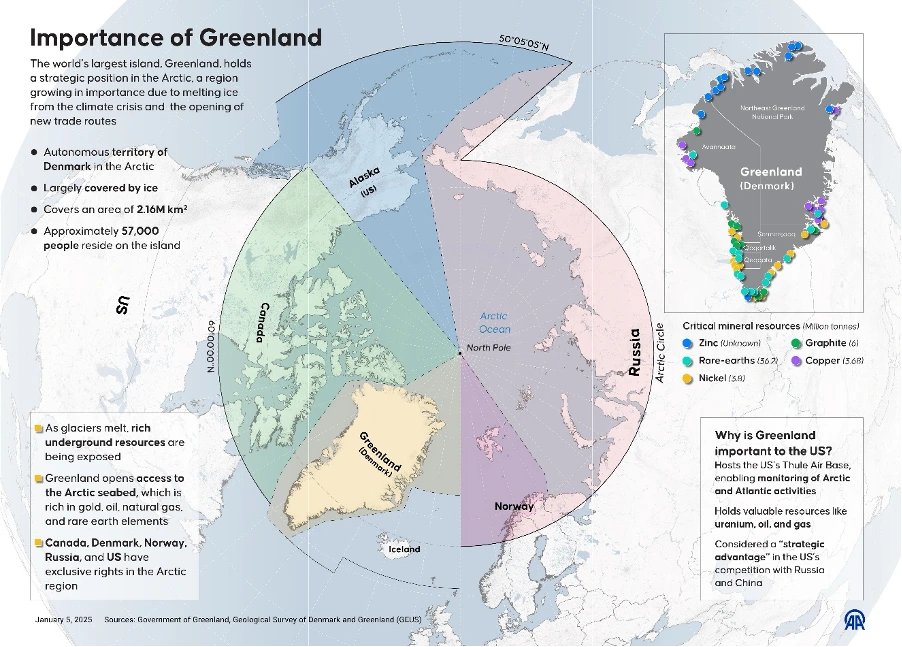
Why has Greenland become a geopolitical focal point? Greenland has significant potential in terms of oil, gas, and especially rare earth elements that are critical for green technologies. Climate change and the melting of glaciers are opening access to previously unreachable mineral resources and new maritime routes. The new routes emerging in the Arctic can serve as alternatives to the Suez Canal, nearly halving the distance between Europe and Asia. Cooperation between China and Russia along these routes is one of the main factors setting off alarm bells in the United States.
As summarized above, Trump downplays resource claims and says, “We need Greenland not for minerals, but for national security.” However, Republican circles in Washington do not hide that the objective of breaking China’s global dominance over rare earth elements is a decisive factor. [19]
The future power struggle is in the Arctic Ocean. The melting of glaciers is revealing new reserves. The region contains rare elements required for new technologies. In addition, the shorter and more economical nature of the emerging northern route also makes the Arctic important. [20]
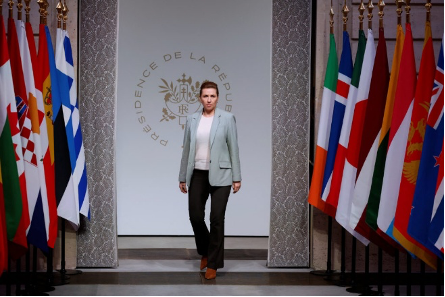
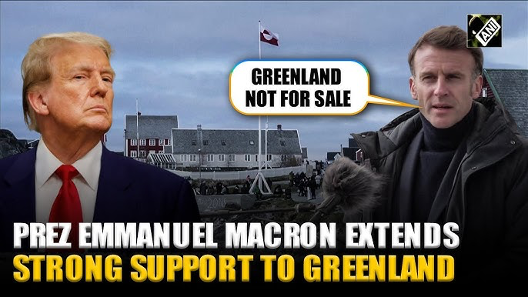
Denmark and France are reacting strongly against the United States.
Greenland is the world’s largest island. It is six times the size of Germany. It is located in the Arctic and is an autonomous territory affiliated with Denmark. [21] French President Emmanuel Macron has emerged as the strongest European leader to clearly articulate the challenges facing the continent. The threat to seize Greenland fully aligns with Trump’s foreign policy worldview, which rejects the rule of law and multilateralism in at least three areas:
- The 2025 U.S. National Security Strategy clearly reveals that Trump’s America aims to return to the logic of the 1823 Monroe Doctrine. The objective is to reestablish U.S. economic and military supremacy in the Western Hemisphere, including expanding access to strategically important locations.
- The Monroe Doctrine is not the only historical precedent; Greenland has long held a special place in U.S. strategic thinking. Washington maintains a significant military presence on the island. During Denmark’s occupation by Nazi Germany in 1940, the United States rejected British and Canadian control and declared Greenland to be under U.S. protection. In 1946, the United States offered to purchase Greenland for 100 million euros; Denmark rejected this offer. Instead, an agreement concluded with Denmark in 1951 granted the United States extensive rights to conduct military activities and establish facilities in Greenland as part of mutual defense within NATO..
As is well known, Greenland stands on the front lines of the intensifying great-power competition in the Arctic. The United States, China, and Russia are all seeking access to yet-undiscovered natural resources and strategic positioning. This is where the dilemma lies: as the Arctic race accelerates, Europe’s Arctic states have so far failed to present a convincing long-term vision for the Arctic and its peoples. Greenland wants independence, but under what conditions? Can Washington offer a more attractive deal than Denmark or the EU? Europe’s delay in defending its values and interests has exposed the region to predatory bargaining and increasing pressure on local communities. This situation also sets a dangerous precedent.
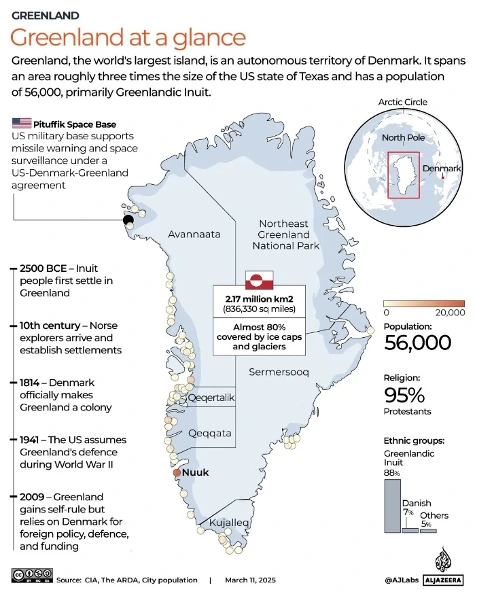
If Greenland is put at risk, could other islands such as Svalbard be next in line? It is unlikely that the threats will simply disappear. However, Greenland and Denmark can raise the stakes by acting together with NATO and the EU. Indeed, French President Emmanuel Macron has criticized the Trump administration for challenging the rules-based global order by reiterating threats to overthrow Venezuelan President Nicolás Maduro and to annex Greenland.
In his annual foreign policy speech, Macron stated, “The United States is a historic power that is gradually distancing itself from some of its allies and breaking away from the international rules it once defended.” He added, “We are evolving in a world ruled by great powers, and there is a real temptation to divide up the world,” arguing that “what has happened over the past few months, even over the past few days, does not change this assessment.” Macron also emphasized that Europe must reject what he described as “new colonialism” and underlined that the continent should not refuse to invest more in its “strategic autonomy.” [22]
Welsh First Minister Eluned Morgan stated that the United States’ intervention in Venezuela had “crossed the line,” noting that it undermines the global order and creates serious risks for Europe, adding, “What is clear is that they have interests in seizing oil, and I think this weakens their claims.” Referring to broader concerns across Europe, Morgan said that the failure to provide a clear response at this stage could lead to far more serious consequences in the future.
“This undermines the structure of the world, and if we do not openly condemn this, it will be much harder for us to condemn anything Trump might do in Greenland, which is causing great concern in Europe right now. If something like this were to happen, I think it would be the end of NATO. The consequences would be very serious,” she said, drawing attention to the developments ahead. [23]
The muted reaction of European leaders to the illegal attack on Venezuela revealed how afraid they are of angering Washington. They are now also afraid of Donald Trump’s plans to seize Greenland, but they have no clear plan to stop him. One year after the start of Donald Trump’s second term, Europe’s absolute dependence on American hegemony has become more evident than ever. What is new, however, is that the United States is making no effort to persuade its NATO and EU allies of the justification for the attack.
Instead, it is using the attack to reapply pressure on Europe to fulfill its foreign policy demands—meaning ending the war in Ukraine on Trump’s terms and even allowing Denmark’s autonomous territory of Greenland to be placed under U.S. occupation. [24] The EU’s executive body has said nothing about an operation that has been condemned as a grave violation of international law by many national leaders outside Europe, opposition politicians within Europe, and nearly all legal experts.
Instead, it merely reminded Europeans that, thanks to the EU, they can return safely from their holidays, travel across borders with just identity cards, and receive refunds or compensation in the event of bus, train, or flight delays. However, Europe’s acquiescence risks undermining the legal principles behind opposing Russia’s invasion of Ukraine while trying to secure the support of the U.S. president. [25]
Indeed, in line with this assessment, German Chancellor Friedrich Merz stated that the legal evaluation is “complex” and requires “careful examination,” while Italian Prime Minister Giorgia Meloni described the military intervention as a “defensive” and “legitimate” response. Spanish Prime Minister Pedro Sánchez is the only EU leader to have explicitly described the removal of Maduro as unlawful.
In a statement made in Paris this week, Sánchez said, “Unfortunately, we will not remain silent in the face of violations of international law that are becoming increasingly frequent. Spain will not be a party to this act of stepping onto foreign soil.” He added, “An illegitimate act cannot be answered with unlawfulness.” [26]
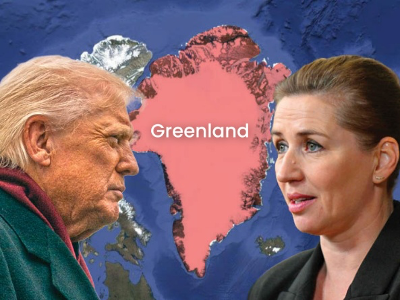
Danish Prime Minister Mette Frederiksen said, “I must say this very clearly to the United States: the U.S. has no right to annex any part of the Kingdom of Denmark.” Greenland Prime Minister Jens-Frederik Nielsen went even further, accusing the United States of using “completely and absolutely unacceptable” rhetoric and stressing that it must “abandon its annexation fantasies.” [27]
German President Frank-Walter Steinmeier sharply criticized U.S. foreign policy under the Donald Trump administration, warning that “our most important partner, the United States, which initially helped establish this world order, is abandoning its values.” [28] By contrast, the former UK ambassador to the United States adopted a different approach and voiced support for Washington’s position. Peter Mandelson accused European leaders, including Keir Starmer, of “overreacting” to Donald Trump’s plan to seize Greenland and argued that, without “hard power and cash,” they would continue to become irrelevant in the “Trump era.”
In his first political remarks since being removed from his post as the UK’s ambassador to Washington last year, Lord Mandelson claimed that Trump, by capturing Venezuelan President Nicolás Maduro, had “achieved more in a single day than traditional diplomacy has managed in the past decade.” [29]
The Risk of Military Conflict Among NATO Allies and the Search for a Diplomatic Solution
What is unfolding resembles classic gunboat diplomacy, in which one state seeks to force another into submission. For Europe, such aggression coming from its closest ally is alarming. The European Union generally adheres to international law, even when doing so runs counter to its immediate interests. A recent example is the EU’s refusal to use frozen Russian assets to finance Ukraine, based on legal arguments related to state immunity. Another is the decision by Finnish courts to reject attempts to prosecute the crew that cut undersea cables, on the grounds that the incident occurred in international waters. Can anyone truly claim to be confident that the United States under the Trump administration will remain faithful to the mutual defense commitment that forms the foundation of the alliance? [30]
No European politician openly declares that Greenland is not merely a Danish issue or a matter of international norms, but also a pan-European sphere of interest that must be defended. Europe is therefore now facing a challenge. The Trump administration has declared a new Monroe Doctrine in order to shut China out of the Western Hemisphere. Although the primary reason for its desire to seize Greenland—the northernmost part of the region—is China, followed by Russia, the issue inevitably turns into a U.S.–EU problem, and even a crisis within NATO. This is because the Greenland the United States seeks to take over is Danish territory, and Denmark is both an EU and NATO member. [31]
White House Press Secretary Karoline Leavitt stated that “the acquisition of Greenland is a U.S. national security priority in order to deter rivals such as Russia and China.” Leavitt said, “The President and his team are evaluating a range of options to achieve this important foreign policy objective. And of course, using the U.S. military is always an option available to the commander in chief.” Secretary of State Marco Rubio, meanwhile, told members of the U.S. Congress that Trump’s preferred option is to purchase Greenland from Denmark. Rubio added that threats directed at Denmark do not indicate that the United States intends to occupy the island in the near future. [32]
Another alternative, aside from the military option, is the purchase of the island. In discussions held between the White House and Trump’s advisers, it was stated that potential payments to Greenlanders were considered in amounts ranging from 10,000 to 100,000 dollars per person. If the highest scenario were implemented, the total cost for the island, with a population of approximately 57,000, would approach 6 billion dollars. [33]
The problem is that if Europe merely follows the rules, it risks being exposed to similar pressure and aggression. If sovereignty can be constrained by power and proximity, is Russian President Vladimir Putin’s war against Ukraine justified? What would become of his long-term objective of pushing NATO back to its pre-1997 borders? Would this invite China to attack Taiwan under the banner of fighting separatism? Or, after Trump’s claim over Greenland, is Denmark next in line? [34]
It is difficult to see how the alliance could recover from such a shocking treaty violation as one ally attacking another to seize territory. Changes in U.S. policy under President Trump already risk undermining the credibility of the United States’ commitment to NATO’s Article 5 guarantee. The United States—the most powerful country in NATO by far—threatening to attack a NATO member state further damages the credibility of Article 5.
The U.S. approach of placing American interests above international law also constitutes a normative challenge for NATO. NATO has defined itself as an alliance based on the shared values of democracy and human rights governance among its members. In fact, this forms the basis of many of NATO’s criticisms of Russia’s actions against Ukraine and other states. A departure from these values by the United States weakens NATO both politically and militarily.
In parallel, European countries need to seriously consider what a NATO without the United States would look like and accelerate investments in capabilities in areas where the United States currently provides them. [35]
Expectations and open fear are rising among allies, rivals, and the European public, and the continent’s capacity to deal with them is being tested. The question is no longer whether governments understand the threats, but whether they can translate their intentions into action at the speed required by the strategic environment. Europe’s defense transformation is currently constrained by both a lack of coherence and a shortage of funds. [36]
So, will Europe enter into a new equation with Russia? On the issue, French President Macron stated, “It is time to restart dialogue with Russia”; Meloni said, “Macron is right, it is time to talk to Russia”; and Starmer said, “A framework that includes broader dialogue with Moscow should be provided.” Indeed, Meloni stated that she agrees with French President Emmanuel Macron, who has called for a new dialogue with the Kremlin. Moscow, in response, stated that Russian President Vladimir Putin is “ready to engage in dialogue” with Macron. Meloni said, “I believe it is time for Europe to talk to Russia as well. I fear that if Europe speaks with only one of the two sides on the ground, the contribution it can make will be limited.” [37]
It will now also be necessary to seriously assess what kind of adversary the United States could become, especially if it were to attack Greenland. Much of this will and must be done quietly or discreetly. However, states can no longer ignore this possibility. Despite concerns about European states’ capabilities, they possess significant leverage that the current U.S. administration tends to overlook. U.S. military personnel and equipment deployed in Europe are not there solely to strengthen NATO deterrence. European bases are also highly conducive to supporting U.S. operations. Their removal would make certain operations in the Middle East and the Arctic much more difficult.
If the United States continues to threaten NATO member states, European countries could make matters more difficult for Washington. They could refuse to refuel U.S. ships in European ports; deny wounded U.S. military personnel treatment in European military hospitals; and demand higher payments for the continued deployment of U.S. forces. They could also propose the closure of certain military facilities. [38]
For NATO, this means the worst possible start to the year. The possibility that the United States, the alliance’s leading member, could use its power to annex part of another ally’s territory is almost unimaginable—and a nightmare for NATO Secretary General Mark Rutte. As stated in the first paragraph of the North Atlantic Treaty, the Alliance is founded on the principles of the United Nations Charter, which require that international disputes be resolved by peaceful means and that parties refrain, in their international relations, from the threat or use of force in a manner inconsistent with the Charter.
The Trump administration argues that Greenland is part of the Western Hemisphere and therefore should belong to the United States; Greenland, however, is openly opposed to this. This extraordinary U.S. position, which is clearly contrary to international law, has led Denmark’s defense intelligence service to designate the United States as a threat to Danish national security. From a broader perspective, the Trump administration’s stance carries the risk of the disintegration of the transatlantic community and the end of the most successful military alliance in history.
European governments have launched a two-pronged diplomatic offensive to persuade Donald Trump to abandon his claims over Greenland: lobbying in Washington and pressuring NATO to address the U.S. president’s security concerns. Recent developments point to a sudden shift in Europe’s response to Trump’s threats, which are rapidly turning into a crisis and pushing officials in Brussels, Berlin, and Paris to draw up an urgent roadmap. At a closed-door meeting in Brussels, NATO ambassadors agreed that the organization must strengthen its presence in the Arctic region. [39]
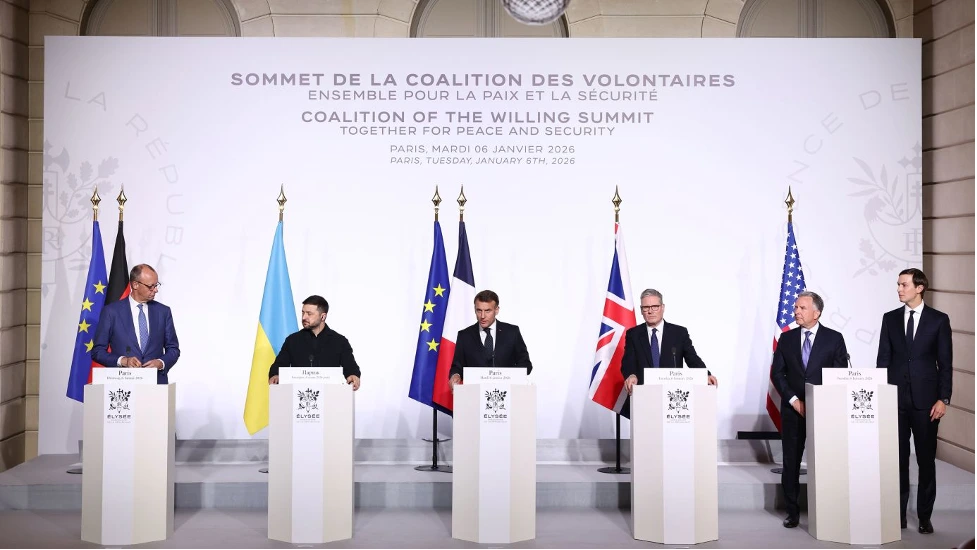
The Coalition of the Willing, composed largely of European leaders, met with representatives of U.S. President Donald Trump in Paris in the early hours of January 6 in order to make progress toward a long-term peace agreement for Ukraine. However, as political tensions rose in Washington and Copenhagen, the leaders of major European countries participating in the Paris meeting issued a statement declaring, “Greenland is part of NATO. Therefore, security in the Arctic must be ensured together with NATO allies, including the United States.”
The Paris meeting was attended by Danish Prime Minister Mette Frederiksen, Trump’s special envoy Steve Witkoff, and Trump’s son-in-law Jared Kushner. [40] The leaders of France, Germany, Italy, Poland, Spain, the United Kingdom, and Denmark issued a joint statement saying, “Arctic security remains a priority issue for Europe and is of critical importance for international and transatlantic security.” [41]
According to a 1952 military directive that the Danish Ministry of Defence has confirmed is still in force, in the event of any attack on Danish territory—including attempts by U.S. forces to seize Greenland—soldiers are required to respond without waiting for orders. The Danish Ministry of Defence and Command stated that the directive in force requires Danish military personnel to “immediately engage in combat” against any attack on Danish territory, even if commanders have not been informed of a declaration of war. [42]
Denmark has so far rejected France’s offer to send troops to Greenland as a gesture of European solidarity, likely in order to avoid provoking the United States. U.S. Secretary of State Marco Rubio has also told U.S. lawmakers that he favors negotiations, implying that the military threat is primarily being used to pressure Denmark into selling Greenland. [43]
There is now a deep division among EU countries over their stance toward the Trump administration on Greenland and Denmark, and consequently over the extent to which they will support Copenhagen. As a result, Juliane Smith, who served as the U.S. ambassador to NATO until Trump was re-elected president, argues that this situation constitutes an existential dilemma for NATO and also carries the “risk of tearing the EU apart.” [44]
Conclusion and Expectations from the Superpower’s Actions
As summarized in this short article, the collapse of NATO over Greenland would run counter to U.S. national interests as defined in the National Security Strategy recently published by the Trump administration. In any case, diplomacy—however difficult—appears to be the most rational option. No European country can withstand global power competition on its own under conditions dictated by the United States, China, and Russia in a race for resources.
First, because it would be easy. Much like the so-called “Operation Absolute Resolve” in Venezuela, Trump could annex Greenland from the comfort of the Situation Room. It would take an hour or two, and there would be no risk of U.S. casualties. The acquisition of Greenland would be welcomed by MAGA ideologues, as it would effectively kill NATO in a single stroke. Denmark could invoke Article 5, which holds that an attack on one ally is considered an attack on all. However, since the United States leads NATO, the treaty would become effectively void. No ally would come to Denmark’s defense. [45]
In this context, European countries such as the United Kingdom, Germany, France, Italy, and Finland—states that have established relatively strong communication channels with the Trump administration—should stand by Denmark and take the lead in efforts to resolve the crisis, much as Europe supported Ukraine during the peace process following Trump’s Alaska summit with Russian President Vladimir Putin. Another figure with close ties to Trump, NATO Secretary General Mark Rutte, should also become more actively involved.
If the darkest hour arrives and the United States annexes Greenland through the use of military force, the essence of NATO’s Article 5 and the very meaning of collective defense would be rendered meaningless. Article 5, regarded as NATO’s most important provision, states that “the Parties agree that an armed attack against one or more of them in Europe or North America shall be considered an attack against them all.” [46]
As Norwegian Foreign Minister Espen Barth Eide recently stated, “If the United States takes Greenland, the idea of NATO will collapse.” For Russia, China, and other adversaries, it would become abundantly clear that there is no longer a credible extended deterrence for Europe or Canada, and that the United States has lost its closest and strongest allies. [47]
Although U.S. President Trump’s threat to “take over” Greenland may appear exaggerated or fantastical, it should, in our view, be taken seriously. Ultimately, the statement by Trump’s Deputy Chief of Staff Stephen Miller—who has openly proclaimed a return to a world in which the strong take what they can and the weak must endure—that “we are a superpower and… we will govern ourselves like a superpower,” can be interpreted as a signal of a premeditated strategic shift.
This would require a coordinated response not only from Greenland and Denmark, but also from their Scandinavian, Arctic, and Baltic Sea allies, as well as from the European Union and NATO. Since the Trump administration has not sought congressional approval for new U.S. military aid to Ukraine, Europe has been financing Ukraine’s defense for more than a year. Nevertheless, even as it seeks to build its own defense industrial base, Europe continues to remain heavily dependent on the United States for the weapons it purchases for Ukraine. [48]
Source: C4Defence
REFERENCE
[1] https://www.trthaber.com/haber/dunya/trumptan-gronland-mesaji-rusya-ve-cine-izin-vermeyecegiz-931150.html
[2] https://www.theparliamentmagazine.eu/news/article/europes-moment-of-truth-arrives-in-caracas
[3] https://www.theguardian.com/politics/2026/jan/08/mandelson-accuses-european-leaders-of-histrionic-reaction-to-trump-greenland-stance
[4] https://www.bloomberght.com/abd-hedef-gronland-in-isgalle-degil-satin-alarak-elde-edilmesi-3765566?page=2
[5] https://www.chathamhouse.org/2026/01/us-intentions-towards-greenland-threaten-natos-future-european-countries-are-not-helpless
[6] https://geopoliticalfutures.com/george-friedman-on-why-the-u-s-cares-about-venezuela-cuba-and-greenland/
[7] https://www.brookings.edu/articles/the-global-implications-of-the-us-military-operation-in-venezuela/
[8] https://tr.euronews.com/green/2026/01/09/trumpin-gronlanda-ilgisi-madencilik-iklim-ve-sis-perdesi
[9] https://www.dw.com/en/us-donald-trump-greenland-strategy-denmark-eu-nato-venezuela/a-75399340
[10] https://www.newyorker.com/news/letter-from-trumps-washington/why-donald-trump-wants-greenland-and-everything-else
[11]https://www.euronews.com/my-europe/2026/01/09/analysis-from-venezuela-to-greenland-the-eu-scrambles-to-find-a-voice-and-a-plan
[12] https://www.euronews.com/2026/01/09/it-may-be-a-choice-between-nato-and-greenland-trump-says
[13] https://edition.cnn.com/2026/01/05/world/analysis-trump-venezuela-greenland-nato-intl-latam
[14] https://www.lemonde.fr/en/international/article/2026/01/08/take-trump-seriously-on-greenland-vance-warns-europe_6749229_4.html
[15] https://www.trtworld.com/article/2eb86019b3f3
[16] https://www.aa.com.tr/en/americas/senior-trump-aide-says-no-country-would-fight-us-over-greenland-s-future/3790832
[17] https://www.pbs.org/newshour/world/a-u-s-takeover-of-greenland-would-mark-the-end-of-nato-danish-prime-minister-says
[18] https://www.epc.eu/publication/why-europe-must-respond-to-us-actions-in-venezuela-greenland/
[19] https://medyascope.tv/2026/01/07/trump-gronlandi-neden-istiyor/
[20] https://www.cumhuriyet.com.tr/yazarlar/mehmet-ali-guller/gronland-ve-nato-gercegi-2468057
[21] https://www.eurotopics.net/en/350732/after-the-us-attack-in-venezuela-will-greenland-be-next
[22] https://www.politico.eu/article/france-emmanuel-macron-us-is-turning-away-from-allies/
[23] https://www.bbc.com/news/articles/c1evnl3201jo
[24] https://jacobin.com/2026/01/venezuela-greenland-us-trump-europe
[25] https://www.theguardian.com/world/2026/jan/07/eu-trump-raids-venezuela-greenland-ukraine-us-president
[26]https://www.euronews.com/my-europe/2026/01/09/analysis-from-venezuela-to-greenland-the-eu-scrambles-to-find-a-voice-and-a-plan
[27] https://www.theguardian.com/world/2026/jan/07/eu-trump-raids-venezuela-greenland-ukraine-us-president
[28] https://www.theguardian.com/world/live/2026/jan/08/russia-ukraine-putin-zelenskyy-greenland-denmark-france-macron-germany-merz-europe-latest-news-updates?page=with%3Ablock-695f85ba8f085fa3d4b402ec
[29] https://www.theguardian.com/politics/2026/jan/08/mandelson-accuses-european-leaders-of-histrionic-reaction-to-trump-greenland-stance
[30] https://www.newyorker.com/news/letter-from-trumps-washington/why-donald-trump-wants-greenland-and-everything-else
[31] https://www.cumhuriyet.com.tr/yazarlar/mehmet-ali-guller/gronland-ve-nato-gercegi-2468057
[32] https://www.dw.com/tr/trump-gr%C3%B6nlandda-askeri-se%C3%A7ene%C4%9Fi-de-de%C4%9Ferlendiriyor/a-75415425
[33] https://www.birgun.net/haber/trump-in-gronland-i-isgal-plani-icin-kisi-basi-100-bin-dolar-iddiasi-682833
[34] https://www.epc.eu/publication/why-europe-must-respond-to-us-actions-in-venezuela-greenland/
[35] https://www.chathamhouse.org/2026/01/us-intentions-towards-greenland-threaten-natos-future-european-countries-are-not-helpless
[36] https://cepa.org/article/greenland-venezuela-and-europes-year-of-pain/
[37] https://www.politico.eu/article/italy-giorgia-meloni-calls-for-europe-to-talk-to-russia/
[38] https://www.chathamhouse.org/2026/01/us-intentions-towards-greenland-threaten-natos-future-european-countries-are-not-helpless
[39] https://www.politico.eu/article/europe-greenland-crisis-nato-allies-us-president-france-russia/
[40] https://www.bbc.com/turkce/articles/c93vl8v8vy0o
[41] https://edition.cnn.com/2026/01/05/world/analysis-trump-venezuela-greenland-nato-intl-latam
[42] https://www.euronews.com/2026/01/08/danish-soldiers-would-shoot-back-if-invaded-government-confirms
[43] https://www.atlanticcouncil.org/dispatches/trumps-quest-for-greenland-could-be-natos-darkest-hour/
[44] https://www.bbc.com/turkce/articles/c93vl8v8vy0o
[45] https://www.eurotopics.net/en/350732/after-the-us-attack-in-venezuela-will-greenland-be-next
[46] NATO Anlaşması 5. Madde : “Taraflar, Kuzey Amerika’da veya Avrupa’da içlerinden bir veya daha çoğuna yöneltilecek silahlı bir saldırının hepsine yöneltilmiş bir saldırı olarak değerlendirileceği ve eğer böyle bir saldın olursa BM Yasası’nın 51. Maddesinde tanınan bireysel ya da toplu öz savunma hakkını kullanarak, Kuzey Atlantik bölgesinde güvenliği sağlamak ve korumak için bireysel olarak ve diğerleri ile birlikte, silahlı kuvvet kullanımı da dahil olmak üzere gerekli görülen eylemlerde bulunarak saldırıya uğrayan Taraf ya da Taraflara yardımcı olacakları konusunda anlaşmışlardır. Böylesi herhangi bir saldırı ve bunun sonucu olarak alınan bütün önlemler derhal Güvenlik Konseyi’ne bildirilecektir. Güvenlik Konseyi, uluslararası barış ve güvenliği sağlamak ve korumak için gerekli önlemleri aldığı zaman, bu önlemlere son verilecektir.”
[47] https://www.atlanticcouncil.org/dispatches/trumps-quest-for-greenland-could-be-natos-darkest-hour/
[48] https://edition.cnn.com/2026/01/08/europe/europe-nato-greenland-trump-crisis-intl