








Wars wear nations down and affect them deeply; nations forge their identities out of these great catastrophes. Over time, they succumb to the influence of comfort and convenience and want to believe that wars have grown distant; yet historical realities catch up with people. The war drums that were thought would never sound on the American continent quickly spread from south to north. Venezuela was struck; Colombia was brought to its knees, and the Greenland test began. The world media is rushing toward breaking news, and the agenda shifts through hours-long visual programming.

From Mechanized Units to Robotic and Infiltration Operations
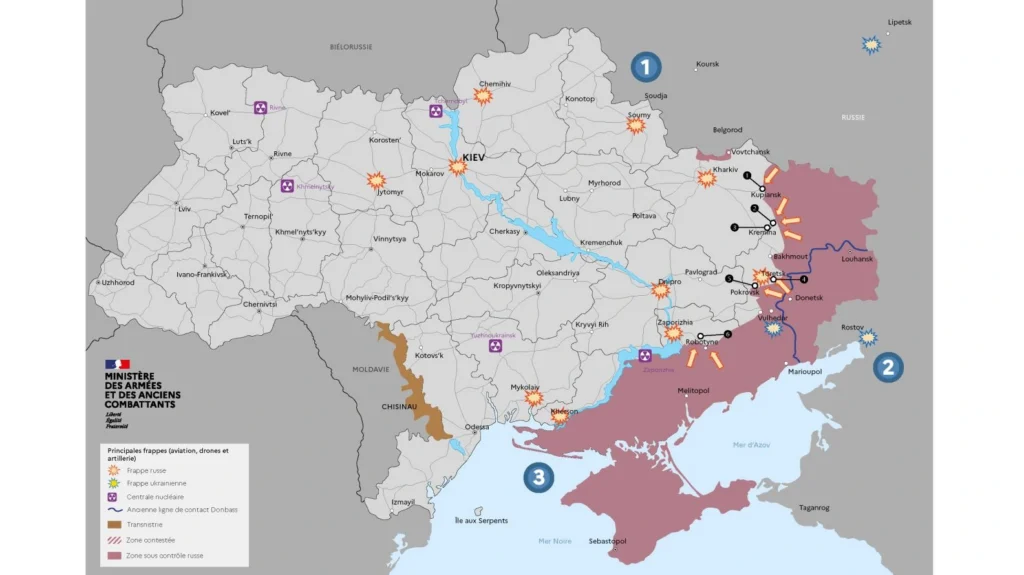
The war between Ukraine and Russia, now in its fourth year in the Black Sea basin, continues at full pace. The necessity of observing it as a major future “school” of modern warfare forces us to focus in this direction. We are in the midst of an important military period in history with a clear before and after. The targets set by the Russian army for 2025 are the seizure of all four provinces incorporated into the Russian Federation and the Odessa corridor. To achieve this objective, it has been observed that the Russian army in the region has reached 700,000 troops, with 170,000 soldiers concentrated solely around the strategic city of Pokrovsk. The strategic shift on the ground is aimed at achieving military gains prior to the establishment of peace or a ceasefire and at wearing down Ukrainian forces to a degree from which they cannot recover. When examining the tactical change, instead of large mechanized unit maneuvers, the preference is for smaller-scale infantry units to rapidly infiltrate and advance through the gaps between Ukrainian defensive lines.
The Ukrainian army’s strategic change for 2025, following the experience of large-scale offensives in 2023, is aimed at remaining on the defensive on the battlefield and preventing the Russians from reaching their objectives by conducting deep strikes against the Russian army. Maintaining military resistance until a ceasefire is achieved with the involvement of global powers is among the diplomatic objectives.
The Russian offensive, which began with the illusion that it would be short-lived, turned into a major war of attrition after four years, and unfortunately the losses on both sides have reached a calculable scale. Having failed to achieve its stated objectives by the end of this year, the Russian army is experiencing serious wear and depletion. In 2024, the Russian army advanced 4,500 km²; despite mobilizing all available resources, this year it was able to advance only 5,500 km² into Ukrainian territory. According to the Ukrainian Minister of Defense, it was stated that 400,000 Russian soldiers have been lost. Expert consensus, however, suggests that the real figures are at least between 160,000 and 200,000 Russian troops killed. When the wounded are also taken into account, it has been observed that 400,000 to 500,000 Russian soldiers have been removed from the battlefield within a year, and that newly recruited personnel have been insufficient to fill this gap.
One of the most important reasons for this picture is the tactical approach adopted by the Russian army, which remained on the offensive throughout the year. Infiltration was carried out along the front line by small-scale groups consisting of few soldiers with high firepower, but the terrain gained was not supported with sufficient armored reinforcements. Ukrainian defenses were deployed in depth and adopted encirclement and destruction tactics against infiltration maneuvers. It has been observed that up to 50 percent of Russian casualties were inflicted by unmanned robotic weapon systems, and that guided munitions providing precision-strike capability have become widespread on the battlefield. The Russian army has preferred to keep the use of armored vehicles largely in a defensive role. Since the beginning of the war, the loss of approximately 35,000 armored tanks, combat vehicles, and personnel carriers has severely restricted the employment of these assets. One of the principal reasons is the inability of air power to establish full dominance over the battlefield. It has been observed that the Russian Air Force has lost approximately 400 aircraft and 350 helicopters, and as a result, there has been a greater shift toward the use of unmanned robotic weapon systems.
The Logistics of the War of Attrition: Energy Terror and Defense Budgets
The preference of both sides for a war of attrition has rendered the front line static and lethal. Failing to achieve its objectives, Russia opted to attack civilian settlements and launched strategic operations aimed at breaking the fighting spirit of the Ukrainian people. By spreading terror in major cities—primarily targeting energy facilities, logistics hubs, and government buildings—it sought to undermine confidence in the Ukrainian leadership. Over the past four months, attacks were carried out against 60 thermal and hydroelectric power plants, 151 transformer substations, and 45 cogeneration plants. It is anticipated that attacks on energy lines will continue throughout the winter, with primary targets including public morale, manufacturing factories, and strategic infrastructure. In 2025, civilian casualties increased by 30 percent; 2,514 civilians lost their lives, and 12,142 civilians were severely injured. We can say that the relatively low level of civilian casualties is due not only to the widespread use of shelters, but also to the society’s experienced, disciplined, and organized self-defense.
For the Ukrainian army, which grows stronger with each passing day, the development of technological weapons and support provided from abroad rank among the top priorities. A society that does not believe Russia genuinely seeks peace has achieved significant progress in weapons production. The Ukrainian army emphasized that in 2025, 40 percent of its military procurements were domestically produced. Reaching an annual production capacity of 4 million unmanned robotic weapons, Ukraine has introduced into service 550 types of new robotic systems, 11 new types of armored vehicles, and 13 types of infantry weapons. It has also achieved the production of 270 different types of ammunition, which constitute one of the most critical needs of the war. Thanks to changes on the front line and tactical innovations, troop losses decreased by 13 percent, while robotic systems were used as a priority.
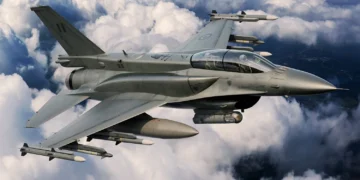
The Ukrainian Air Force has taken delivery of approximately 40 F-16 aircraft; in addition, last year it acquired five Mirage 2000s and nine MiG-29s. With the induction of various helicopters and missiles into service, Ukrainian airspace appears to be largely secured. However, deficiencies in air defense systems still remain; the procurement of an additional 10 Patriot batteries is required.
U.S. deliveries of Patriot missiles have come to a halt, stockpiles have been depleted, and the situation has reached a critical level. As one of the most important weapons supporters, Germany has delivered various types of 35 mm, 120 mm, 122 mm, and 155 mm ammunition and has also begun delivering IRIS-T SLM air defense systems. Likewise, numerous armored vehicles and artillery systems continue to arrive as grants. M1A1 tanks from Australia and vehicles such as the Patria 6×6 APC from European countries have been delivered to the Ukrainian army. Significant steps have been taken to procure advanced radar and electronic warfare systems; with the suspension of U.S. aid, the EU has begun more effective intelligence sharing and has made space-based surveillance satellite capabilities available.
Let us not forget the financial cost of the war. Although the suspension of U.S. aid caused major damage in the short term, the continuation of weapons sales has partially shifted the problem into a different dimension. According to calculations by NATO experts, the annual requirement for the Ukrainian army to continue the war is approximately 43 billion U.S. dollars. A total of 26+3 supporting countries have pledged to cover this budget until 2027; additionally, it is planned to transfer 3 billion euros annually from the proceeds of Russian assets. The fact that aid is expected to exceed 45 billion U.S. dollars in 2025 is an important indicator of this trajectory. Russia’s annual budget allocated to the war is believed to exceed 150 billion U.S. dollars; increases in taxes and the rapid depletion of monetary reserves in the country are also being observed.
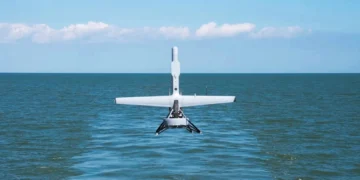
The “Drone Curtain” strategy, which is among Ukraine’s modern warfare methods, has proven its success and has set an example on the evolving battlefield.
Although the strategy of war of attrition is as old as human history, modern combat techniques have profoundly affected the front line.
Modern armies are closely monitoring new tactics, and the defense industry is rapidly adapting to these developments.
The PDF version of the article titled “The War of Attrition and Its Lessons,” written by Sami Atalan for C4Defence Magazine, will be featured in our 153rd issue.
Source:C4Defence