

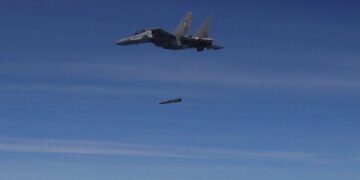






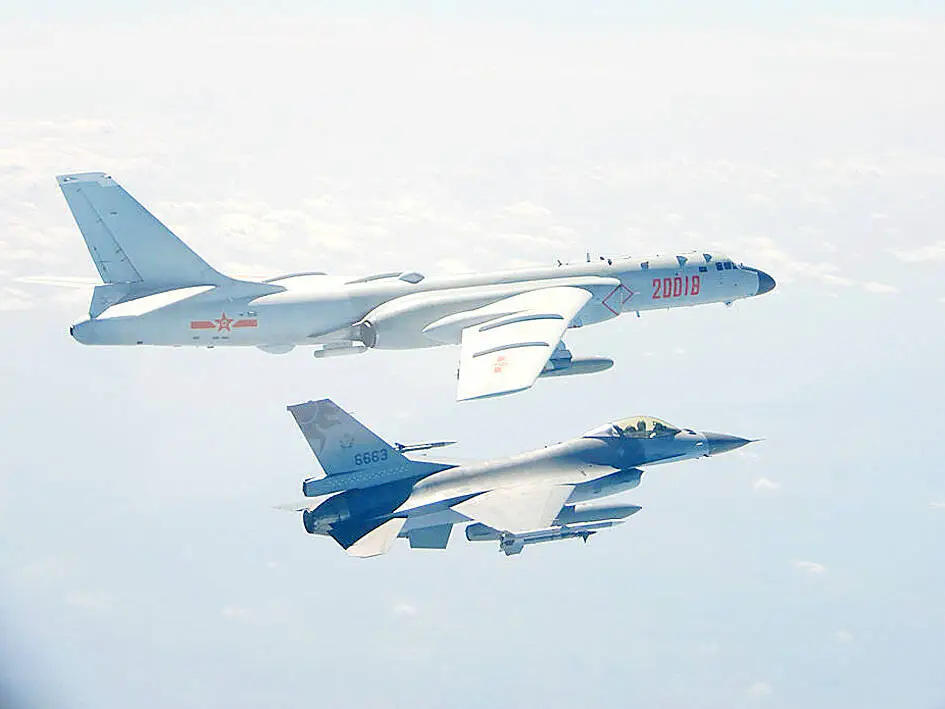
The Chinese People’s Liberation Army Air Force (PLAAF) has elevated its military activities around Taiwan to a strategic level. According to a recent report published by the Democratic Progressive Party (DPP) China Affairs Department, China’s military aircraft incursions around Taiwan’s airspace have increased by approximately 15 times over the past five years.

Routine Operations and Expansionist Strategy
According to a report in the Taipei Times, flights that numbered around 380 annually in 2020 have ceased to be irregular activities and have become Beijing’s “new normal” in the region. The report emphasizes that the Taiwan Strait serves as a “testing ground” for Beijing, stating that the primary objective of these operations is to alter the regional status quo and exhaust Taiwan’s defense resources.
Escalating Tensions in Numbers: Annual Sortie Counts
The dramatic increase in the number of sorties by Chinese military aircraft numerically demonstrates the scale of military activity in the region:
- 2020: 380 sorties
- 2021: 960 sorties
- 2022: 1,738 sorties
- 2023: 4,734 sorties
- 2024: 5,107 sorties
- 2025 (last year): 5,709 sorties
The Department states that this intensity is deliberately planned to deplete Taiwan’s defense resources and to push existing security boundaries.
“Gray Zone” Tactics and Large-Scale Exercises
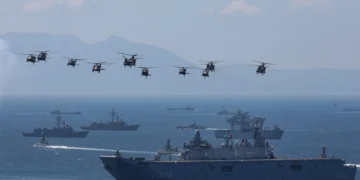
Exercises held in 2025, such as “Strait Thunder-2025A” and “Justice Mission 2025,” demonstrate China’s tactical shift. During these drills, in which naval and air encirclement and precision strike scenarios were tested, Chinese elements approached as close as Taiwan’s 12-nautical-mile limit, increasing psychological and strategic pressure.
The report notes that China’s actions are not limited to Taiwan alone; activities in the Sea of Japan, the Yellow Sea, and the South China Sea are described as products of a single expansionist logic. Actors such as the United States, Japan, Australia, and the EU continue to warn that Beijing’s “gray zone” tactics undermine the rules-based international order and increase the risk of accidental conflict.
Source: C4Defence / Taipei Times