





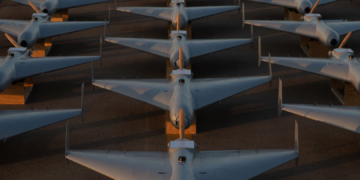






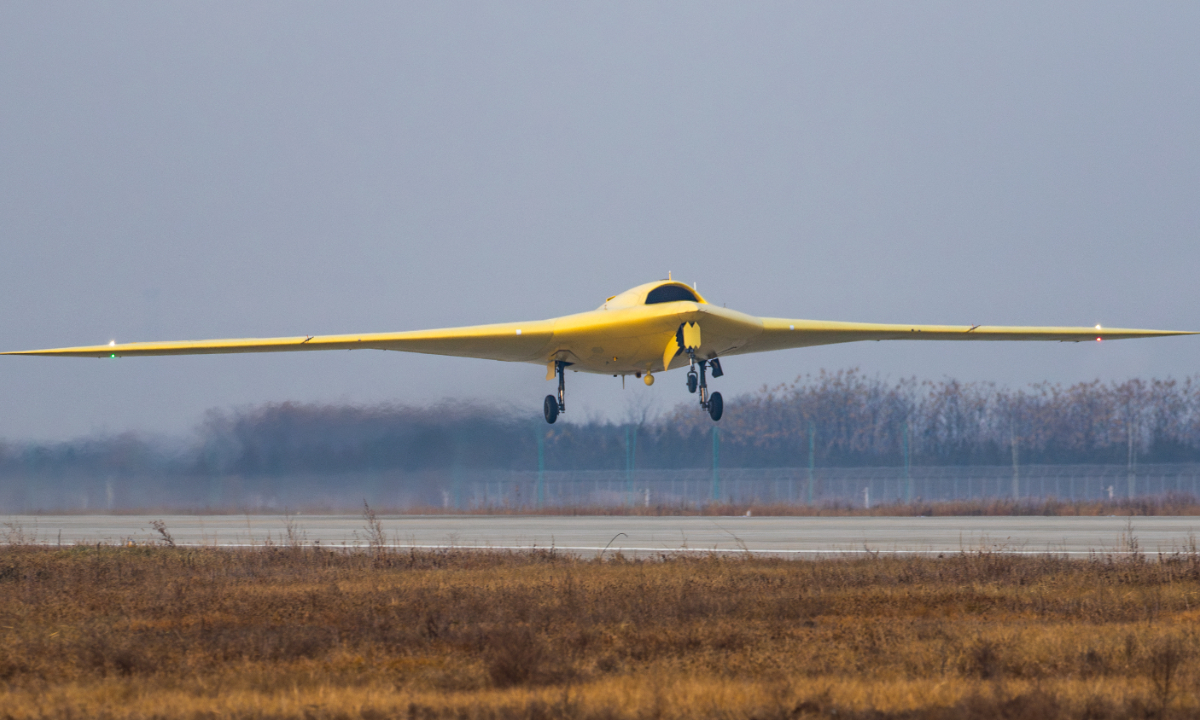
The high-altitude and high-speed unmanned aerial vehicle (UAV) CH-7, developed by the China Aerospace Science and Technology Corporation (CASC), successfully completed its first flight at an airport in Northwest China at the end of 2025.

Key Features and Missions
In a report published on December 15, 2025, Global Times announced that China’s stealth combat aircraft–class CH-7 had carried out its first flight at an airport in northwestern China. The large flying-wing–designed CH-7, which had previously been displayed at the Airshow China exhibition and attracted great attention, has officially entered the flight test phase with this critical flight.
Adopting an aerodynamic structure with a high aspect ratio, the CH-7 is capable of long endurance, high-altitude and high-speed cruising, and can carry various high-performance mission payloads such as visible-light and infrared sensors.
CASC official Li Jianhua stated that, because the flying-wing design involves additional challenges such as directional stability, the first flight of the CH-7 required more critical technology tests compared to other UAVs, making the process more demanding.
During the first flight, basic performance characteristics such as autonomous runway taxiing, takeoff and landing, attitude control, and flight route tracking were successfully tested. The developers noted that additional tests would be conducted in the future to verify flight performance and mission payload functions.
Stealth Takes Priority
First displayed with its actual airframe structure at the Airshow China 2024 exhibition, the CH-7 drew attention with its air intake located on the upper side of the fuselage and its engine exhaust designed in a semi-concealed manner.
While the flying-wing configuration provides optimal stealth from all directions, measures such as radar-absorbing structures and low-observability coatings enable the UAV to conduct covert missions even in symmetrical environments.
Thanks to its high endurance and stealth characteristics, the CH-7 is expected to be capable of carrying out long-duration patrol and intelligence collection/surveillance missions over target maritime areas and, if necessary, to provide mid-course guidance services for long-range precision-guided weapons.
Source: C4Defence / Global Times