








C4 Defence
Saturday, January 31, 2026
C4Defence
C4Defence 20. Yıl C4Defence 20th Anniversary
  • Home Page
  • NEWS
    • All
    • Latest News
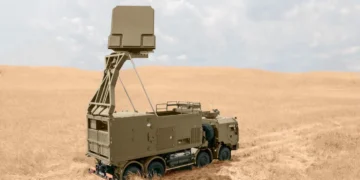
    Thales Ground Master 200 Multi-Mission All-in-One (GM200 MM/A) radar system for Qatar Air Force.

    Qatar Strengthens Airspace Defense with Thales’ Ground Master Radars

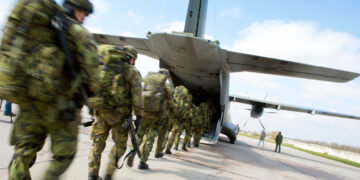
    Görselin İngilizce yayın bölümünde SEO performansını artırması için kullanabileceğiniz Alt Text (Alternatif Metin) önerileri şunlardır: Seçenek 1 (Doğrudan ve Tanımlayıcı): "NATO troops boarding a military transport aircraft for deployment in Eastern Europe.

    Statement from Russia on NATO: ‘The Alliance Is Practically Preparing for a Conflict”

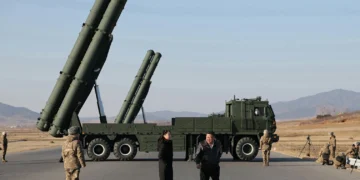
    North Korean leader Kim Jong Un supervises the test-fire of an upgraded large-caliber multiple rocket launcher, January 2026.

    North Korea Missile Administration Tested an Updated Multiple Rocket Launcher System

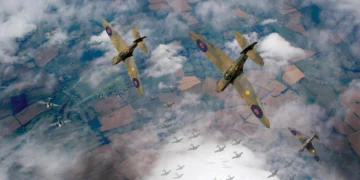
    The British Air Battles: Victory Through Air Superiority in the Defense of the Homeland

    The British Air Battles: Victory Through Air Superiority in the Defense of the Homeland

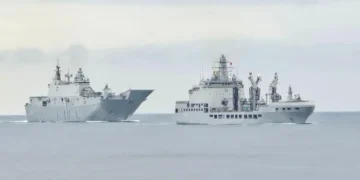
    Anadolu Turkish Maritime Task Group, including TCG Anadolu and TCG Derya, en route to Exercise STEADFAST DART 2026.

    Anatolian Turkish Naval Task Group on Duty for STEADFAST DART 2026

    Prof. Dr. Haluk Görgün, President of the Secretariat of Defense Industries, speaking at the 10th anniversary ceremony of SSTEK

    SSTEK Turns 10: A New Threshold in Deep Technology with a Strategic Investment Model

    Operational command center displaying C5ISRT capabilities for Canadian defense and Arctic sovereignty monitoring.

    Canada’s Arctic and C5ISRT Move in Defense

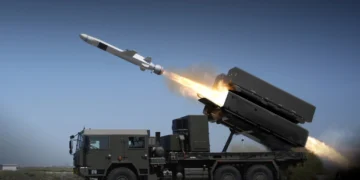
    Naval Strike Missile (NSM) coastal defense system missile launch test.

    The NSM Era Begins in Bulgaria’s Maritime Defense

    L3Harris delivers the first MC-55A Peregrine electronic warfare and ISR aircraft to the US Air Force for the RAAF.

    L3Harris Delivers First MC-55A Peregrine Aircraft

  • Defence Industry Systems
    • All
    • NAVAL VEHICLES
    • TURKISH DEFENCE INDUSTRY
    • LAND VEHICLES
    • AIRCRAFT
    • Space
    Thales Ground Master 200 Multi-Mission All-in-One (GM200 MM/A) radar system for Qatar Air Force.

    Qatar Strengthens Airspace Defense with Thales’ Ground Master Radars

    Görselin İngilizce yayın bölümünde SEO performansını artırması için kullanabileceğiniz Alt Text (Alternatif Metin) önerileri şunlardır: Seçenek 1 (Doğrudan ve Tanımlayıcı): "NATO troops boarding a military transport aircraft for deployment in Eastern Europe.

    Statement from Russia on NATO: ‘The Alliance Is Practically Preparing for a Conflict”

    North Korean leader Kim Jong Un supervises the test-fire of an upgraded large-caliber multiple rocket launcher, January 2026.

    North Korea Missile Administration Tested an Updated Multiple Rocket Launcher System

    Anadolu Turkish Maritime Task Group, including TCG Anadolu and TCG Derya, en route to Exercise STEADFAST DART 2026.

    Anatolian Turkish Naval Task Group on Duty for STEADFAST DART 2026

    Prof. Dr. Haluk Görgün, President of the Secretariat of Defense Industries, speaking at the 10th anniversary ceremony of SSTEK

    SSTEK Turns 10: A New Threshold in Deep Technology with a Strategic Investment Model

    Operational command center displaying C5ISRT capabilities for Canadian defense and Arctic sovereignty monitoring.

    Canada’s Arctic and C5ISRT Move in Defense

    Naval Strike Missile (NSM) coastal defense system missile launch test.

    The NSM Era Begins in Bulgaria’s Maritime Defense

    L3Harris delivers the first MC-55A Peregrine electronic warfare and ISR aircraft to the US Air Force for the RAAF.

    L3Harris Delivers First MC-55A Peregrine Aircraft

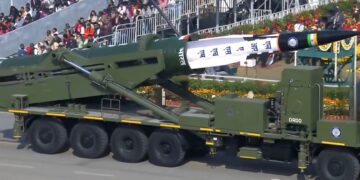
    India's new long-range anti-ship hypersonic missile LRAShM developed by DRDO, showcased at the 77th Republic Day parade

    India’s New Hypersonic Missile LRAShM Displayed for the First Time

  • Modernization Programs
    • All
    • TURKISH ARMED FORCES
    • Turkish MoD Projects
    • ROBOTIC SYSTEMS
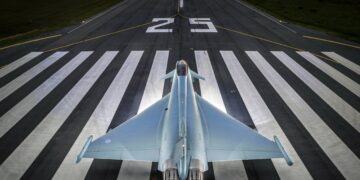
    Royal Air Force (RAF) Eurofighter Typhoon fighter jet on the runway, part of a £650 million radar upgrade and investment program.

    £650 Million Radar Modernization for the UK Typhoon Fleet

    Important Statements from Minister Güler Regarding the F-35 and Eurofighter Procurement Process

    Important Statements from Minister Güler Regarding the F-35 and Eurofighter Procurement Process

    A New Era in Underwater Warfare from Thales: Sonar 76Nano Unveiled

    A New Era in Underwater Warfare from Thales: Sonar 76Nano Unveiled

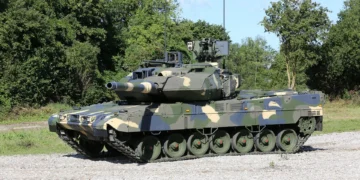
    KNDS Completes Delivery of 44 Leopard 2A7HU Main Battle Tanks to Hungary

    KNDS Completes Delivery of 44 Leopard 2A7HU Main Battle Tanks to Hungary

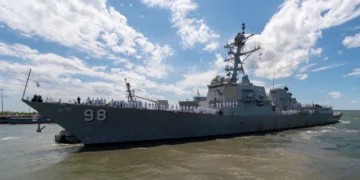
    BAE Systems to Modernize the U.S. Navy Destroyer USS Forrest Sherman

    BAE Systems to Modernize the U.S. Navy Destroyer USS Forrest Sherman

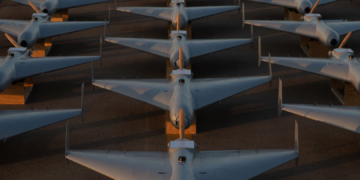
    U.S. Central Command Establishes One-Way Attack UAV Force in the Middle East

    U.S. Central Command Establishes One-Way Attack UAV Force in the Middle East

    MBDA Signs First Export Contract for Sky Warden C-UAS Solution

    MBDA Signs First Export Contract for Sky Warden C-UAS Solution

    Putin’s Digital War Doctrine: A Call for Comprehensive Transformation in the Russian Army

    Putin’s Digital War Doctrine: A Call for Comprehensive Transformation in the Russian Army

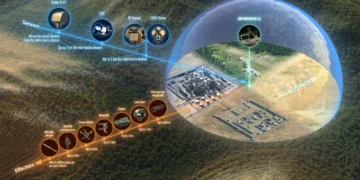
    Pentagon Announces Six Critical Technology Areas for Military Superiority

    Pentagon Announces Six Critical Technology Areas for Military Superiority

  • Articles
    • All
    • Sami Atalan
    • Prof. Dr. Mesut Hakkı Caşın
    • Prof. Dr. Mehmet Eryılmaz
    The British Air Battles: Victory Through Air Superiority in the Defense of the Homeland

    The British Air Battles: Victory Through Air Superiority in the Defense of the Homeland

    President Donald Trump speaking at Davos 2026 about Greenland and the new world order

    Davos Summit in the Shadow of Trump’s Greenland Policy: A Harbinger of the New World Order Replacing the Old World Order?

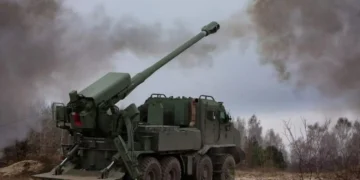
    Modern self-propelled howitzer firing in an open field, representing firepower in the war of attrition

    The War of Attrition and Its Lessons…

    The Critical Messages of Foreign Minister Hakan Fidan’s 2026 Turkish Foreign Policy Roadmap

    The Critical Messages of Foreign Minister Hakan Fidan’s 2026 Turkish Foreign Policy Roadmap

    Will the Greenland Rift in the U.S.–Europe Alliance Trigger an Alarm Over Red Lines in NATO?

    Will the Greenland Rift in the U.S.–Europe Alliance Trigger an Alarm Over Red Lines in NATO?

    Trump’s Venezuela Operation: Under the U.S. Monroe Doctrine, Is the Geopolitical Target the Colombia–Cuba–Mexico Trio, or Beijing–Moscow?

    Trump’s Venezuela Operation: Under the U.S. Monroe Doctrine, Is the Geopolitical Target the Colombia–Cuba–Mexico Trio, or Beijing–Moscow?

    The U.S. Will Govern Venezuela!

    The U.S. Will Govern Venezuela!

    Trump’s Messages on Ukraine and Gaza in Peace Talks: F-35 Aircraft and a 15-Year Guarantorship for Kyiv

    Trump’s Messages on Ukraine and Gaza in Peace Talks: F-35 Aircraft and a 15-Year Guarantorship for Kyiv

  • ABOUT US
    • Masthead
    • Privacy Notice
  • Türkçe
  • English
No Result
View All Result
C4Defence
No Result
View All Result
Home Articles Sami Atalan

Wars Have Surrounded Our World…

Sami Atalan by Sami Atalan
28 September 2025
in Sami Atalan
A A

The world is fixated on the wars in the Middle East and the Black Sea basins, and nearly 80 percent of news broadcasts deal with issues related to these regions. Only five years ago, there were around 60 to 70 active conflict zones on the planet, but today that number has nearly doubled. There are now between 100 and 120 active conflict areas where heavy weapons are being used, causing massive destruction every single day. Cities and towns — once living spaces for ordinary people — are being wiped off the map within hours, while the survivors are forced into long periods of exile.

Although it is almost impossible to follow every single development in this massive chaos, as C4Defence Magazine, we strive to write the truth in an original, independent, and impartial manner. Our priority is to focus on military and security matters that have the potential to affect our country in the short and medium term. In this context, we had brief meetings in Washington, D.C., in October. I will share with you in November the key topics discussed at the AUSA event.
Within this framework, it is expected that the center of gravity for mid-term security and military geopolitical maneuvers will shift to the Pacific Ocean. Peripheral conflicts are increasing in this vast geography where the sound of war drums is getting louder. I do not wish to list all of them here, but one in particular has drawn our attention: the developing conflict process between our friend and ally Pakistan and “Turkey-friendly” Afghanistan.

In fact, for those who are unfamiliar with the region, it may not be easy to grasp why Afghanistan is now involved in the long-standing, unresolved tension between Pakistan and India. What began as limited and localized bilateral frictions occasionally escalates into serious armed clashes — a clear indication that the region’s war scenarios are being rewritten.

All these developments unfold as part of the grand power games drawing in two nuclear-armed states, China, and Afghanistan. While most people are aware of the issues in the Kashmir region, the Afghanistan–Pakistan security dispute — ongoing since the founding of the Pakistani state — remains a particularly neglected crisis area.

The living areas, towns, and villages of the communities known as the “Pashtun tribes” were divided in two by the border agreement signed in 1893, known as the Durand Line. Some of these communities remained within Afghanistan, while the others are located today within what are now the borders of India.

The independent state of Pakistan, separated from British-ruled India, was founded on August 14, 1947, and Turkey was among the first countries to officially recognize it. Afghanistan, however, argued that the one-page “economically motivated” Durand Line agreement signed with the British had become invalid following the establishment of Pakistan.
Afghanistan’s official objection to the entire border line, as well as to the Balochistan and Gilgit-Baltistan regions, led to the emergence of a long-term crisis between the two countries.

During the ten-year Soviet occupation (1979–1989), the government in Kabul, relying on the security provided by the Red Army, claimed that Afghanistan’s borders extended as far as the Indus River, even submitting official demands to that effect. This situation prompted the Pakistani government to increase its military support for the Afghan mujahideen.
Pakistan, on the other hand, maintained that as a party state to the Durand Line agreements concluded under British India’s administration, it remained legally bound by them, and therefore, the validity of the borders was non-negotiable. During this period, numerous outpost raids and armed clashes occurred along the frontier.

In essence, this summarizes the situation. The fact that what was expected to remain a regional border dispute evolved into a global issue began with the Soviet military intervention. Seeking to balance Soviet presence in the region and resolve the dispute, the Pakistani government invited the United States to become a strategic partner in the area.

Pakistan’s territory subsequently became a base and logistical hub during the organization of the Taliban — initially under the banner of supporting the Afghan mujahideen with U.S. assistance. The Pakistani Intelligence Service (ISI) began organizing local Pashtun fighters against the Soviet Army and quickly rose to the position of a key player.

While all this was happening, the core border issue remained unresolved and even evolved into a form of irregular warfare. The ISI, supported by the U.S., played a crucial role extending even to the Taliban’s command hierarchy. After the Soviet Union’s hurried withdrawal from Afghanistan, the overthrow of the government established in 1992 was once again shaped by the relationship between Pakistan and the Taliban.

Even during the periods when Pakistan had the strongest influence over the Afghan government, the border dispute persisted. The U.S. Special Forces’ operation in Afghanistan, which resulted in the overthrow of the Taliban regime, brought the ISI and U.S. agencies into direct confrontation.

The new U.S.-backed Afghan government, led by Hamid Karzai, openly declared in all official meetings that he opposed the Durand Line and emphasized the need for its renegotiation. All subsequent U.S.-supported Afghan governments also rejected the legitimacy of the border.

In 2011, the Pakistani Army came under attack from Afghan forces along the border and had to defend its isolated frontier outposts by force. Towns and military control zones became targets of various “terrorist” attacks, resulting in significant losses.

In response, the Pakistan Air Force (PAF) began launching airstrikes on terrorist centers inside Afghan territory, and these operations are still ongoing. Most recently, after a major target in Kabul was struck, clashes reignited along the border and the two armies came face-to-face once again.

India’s Role

The United States’ unilateral decision to withdraw its military forces from Afghanistan — without any negotiation with the Afghan government or allied NATO states — paved the way for the Taliban’s return to Kabul. Seeking to free itself from the influence of the Pakistani ISI, the Taliban government made the unexpected move of involving India in this process.

Over the past eight years, India–Afghanistan relations have developed significantly. Throughout the period of U.S. and NATO presence in Afghanistan, intense logistical cooperation was maintained with India. The ISAF forces operating in Afghanistan often relied on Indian engineers for the maintenance of vehicles and electronic systems used by the Afghan army.

Personnel trained in the Indian army — which uses Soviet and Russian-made weapon systems — worked in infrastructure, mining, power plants, and all modern electronic systems, including those under the UN and Afghan military frameworks. The cooperation was so active that in 2016, the Mi-35 attack helicopters, retired from Indian service, were donated to the Afghan army.

After the chaotic withdrawal of Western forces, the Taliban government found itself isolated, with no other governments willing to cooperate. While both military and civilian needs persisted, investment had dwindled to almost nothing. The Afghan-Taliban army remained dependent in all aspects — a situation India was quick to turn to its advantage.

India’s rapid re-engagement brought with it a new strategic formation. This development created the possibility of encircling Pakistani territory, leading to the emergence of two critical fronts. Recently, a brief yet significant conventional engagement occurred between India and Pakistan, and soon after, the Afghan army attacked border outposts — a sequence that must be evaluated strategically.

The claim that these were merely responses to the Pakistan Air Force’s airstrikes against Tehrik-i-Taliban Pakistan (TTP) terrorist groups around Kabul is far from convincing.

Let us recall: the Kashmir clashes of May 2025 and India’s calls for revenge.
India’s reopening of its embassy in Kabul and the increase in economic agreements by late summer this year signify a deepening strategic partnership that adds new dimensions to regional military dynamics. The visit of Afghan Foreign Minister Amir Khan Muttaqi to India this October should be seen as a natural continuation of this process.

Meanwhile, the Pakistani government continues to construct a long border wall along the Durand Line.
The risk that this region could become a conflict zone among three nuclear-armed military powers constitutes a threat that concerns the entire world.

Sami Atalan

Sami Atalan

Related Posts

Modern self-propelled howitzer firing in an open field, representing firepower in the war of attrition
Articles

The War of Attrition and Its Lessons…

22 January 2026
The U.S. Will Govern Venezuela!
Articles

The U.S. Will Govern Venezuela!

3 January 2026
War Preparations Depend on the Defense Industry
Articles

War Preparations Depend on the Defense Industry

30 November 2025
NATO: Short Passes in a Narrow Field…
Sami Atalan

NATO: Short Passes in a Narrow Field…

28 September 2025
Global Armament and Turkey’s Position…
Sami Atalan

Global Armament and Turkey’s Position…

28 September 2025
Peace, the Only Struggle Worth Fighting For…
Sami Atalan

Peace, the Only Struggle Worth Fighting For…

28 September 2025
Next Post
ABD Başkanı Trump’ın Asya Seyahatinde Ticari ve Askeri Yeni Yol Haritası: Başarılar ve Belirsizlikler

The New Commercial and Military Roadmap in U.S. President Trump’s Asia Visit: Achievements and Uncertainties

C4Defence

Mildata Ltd. © 2012–2025

Türkiye’nin ilk online savunma dergisi. Turkey’s first online defence magazine.

  • Turkey’s first online defence industry magazine.”

Bizi Takip Edin Follow Us

No Result
View All Result
  • Home Page
  • News
    • Agenda
    • Fair
  • Defence Industry
    • Turkish Defence Industry
    • Land Vehicles
    • Aircraft
    • Naval Vehicles
    • Projects
  • Modernization Programs
    • Turkish Armed Forced
    • Turkish SSB Projects
    • Turkish MoD Projects
    • Military Projects
    • Robotic Systems
    • Auxiliary and Subsystems
  • Articles
    • Sami Atalan
    • Prof. Dr. Mesut Hakkı Caşın
    • Prof. Dr. Mehmet Eryılmaz
  • About Us
    • Masthead
    • Privacy Notice
  • Menü ögesi
  • Menü ögesi
  • Türkçe
  • English

Mildata Ltd. © 2012–2025