


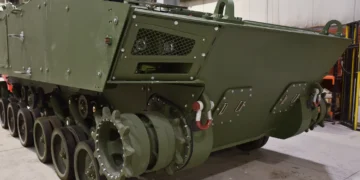
















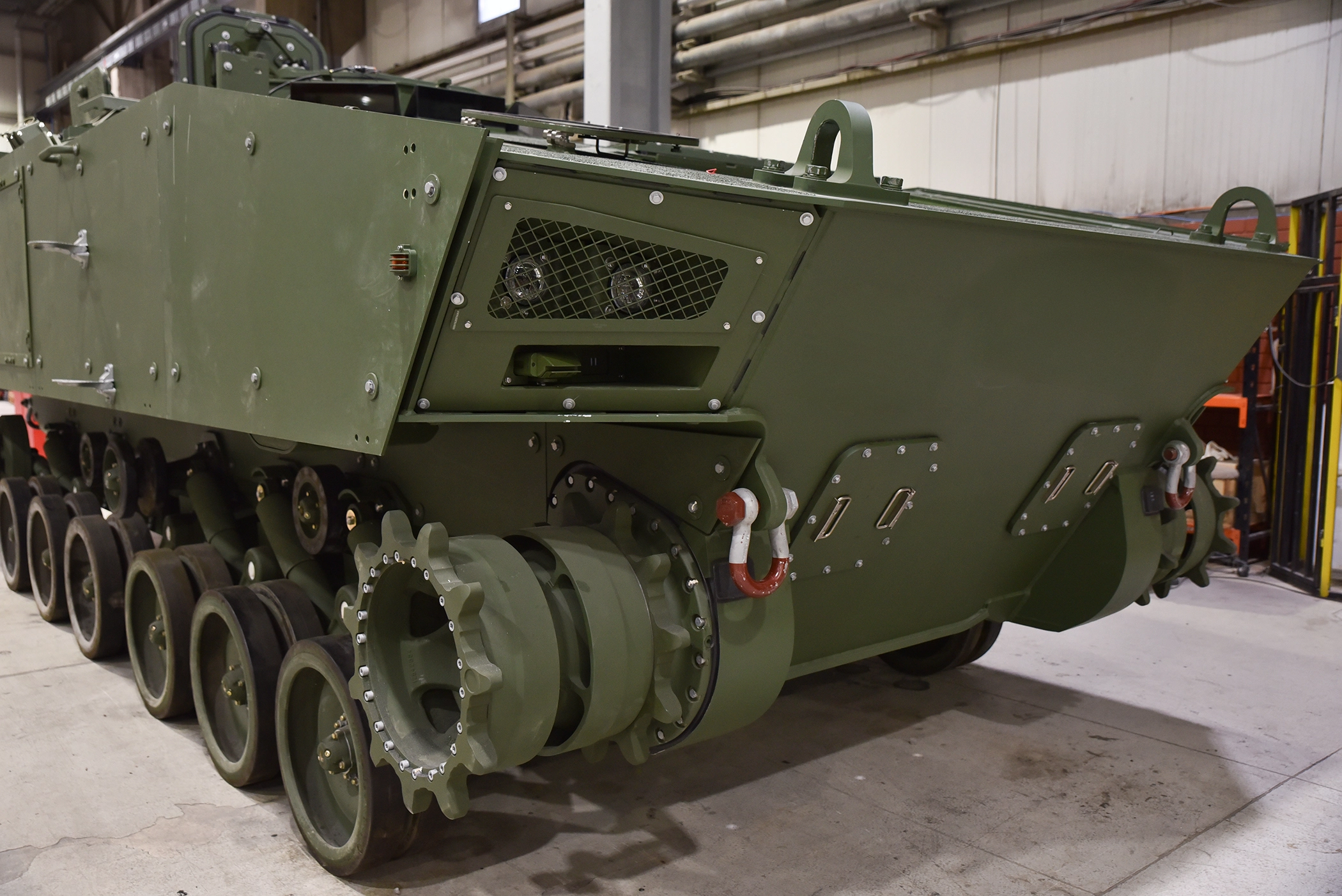
FNSS has passed another critical milestone in the KAPLAN Armored Personnel Carrier (APC) program developed in line with the requirements of the Indonesian Army. It has been reported that the assembly process of the first vehicle produced in Türkiye within the scope of the project has reached its final stage.

Delivery Schedule and Production Process
The development and production contract signed between FNSS, PT Pindad, and the Indonesian Ministry of Defense in February 2024, based on the main contract, is progressing in accordance with the planned schedule. Following the completion of the first prototype, whose manufacturing process is ongoing at facilities in Türkiye, comprehensive vehicle tests are planned to begin in the first half of 2026. Within the scope of technology transfer and local production, the second vehicle will be manufactured in Indonesia. At the end of all these processes, it is envisaged that deliveries will be completed before the end of 2026 and the vehicles will enter the inventory of the Indonesian Army.
Key Technical Features
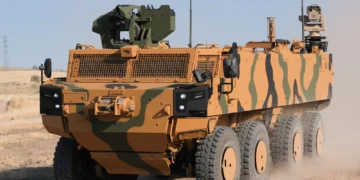
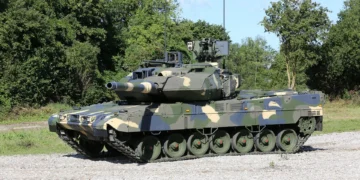
Positioned in the 30-ton class, the KAPLAN APC has been designed to meet the harsh conditions of the modern battlefield and high survivability requirements. With a personnel carrying capacity of 13, including gunner, driver, and commander, the vehicle is equipped with an engine producing 23 horsepower per ton and an automatic transmission, providing the mobility required to conduct joint operations with modern main battle tanks. Featuring advanced ballistic protection and best-in-class mine protection systems, the platform also offers an option for an active protection system against anti-tank missiles and rockets. Thanks to its 360-degree situational awareness cameras and open-architecture electronic infrastructure, various mission equipment can be easily integrated, allowing the vehicle to deliver high performance in all climate and terrain conditions.
Modular Design and Logistical Advantages
Thanks to its modular structure, the KAPLAN APC can be employed in a wide range of missions such as mechanized infantry, reconnaissance, command and control, ambulance, and combat engineering roles. The vehicle provides a platform suitable for the integration of light and medium-caliber weapons, as well as 120 mm mortar and ATGM (Anti-Tank Guided Missile) turrets.
One of the project’s most significant logistical advantages is subsystem commonality. The KAPLAN APC draws attention with its extensive use of common parts and subsystems shared with the Kaplan MT (Harimau) tank and the ZAHA (Amphibious Assault Vehicle) in the inventory of the Turkish Naval Forces. This commonality offers significant cost advantages to the user in maintenance and sustainment processes.
Source: C4Defence / FNSS