























The annual “China Military Power Report” submitted to Congress by the U.S. Department of Defense (Pentagon) has revealed Beijing’s aggressive expansion plans in naval aviation and aircraft carrier programs. According to the report, the People’s Liberation Army Navy (PLAN) aims to establish a massive fleet of nine aircraft carriers by 2035.

According to the Pentagon report analyzed by the U.S. Naval Institute (USNI), the PLAN is conducting the largest aircraft carrier construction program in the region since World War II. Beijing plans to add six new ships to its existing fleet by 2035, reaching a total force of nine aircraft carriers.
2035 Vision: From Regional Power to Global Fleet
The Pentagon’s annual “China Military Power Report” submitted to Congress emphasizes that the PLAN’s capabilities are increasing year by year. Currently holding three aircraft carriers in its inventory, China aims not only to close the quantitative gap but also the qualitative gap with the U.S. Navy with its nine-ship target. This expansion will triple Beijing’s ability to deploy carrier strike groups (CSGs) globally.
Flagship of Modernization: Type 003 Fujian
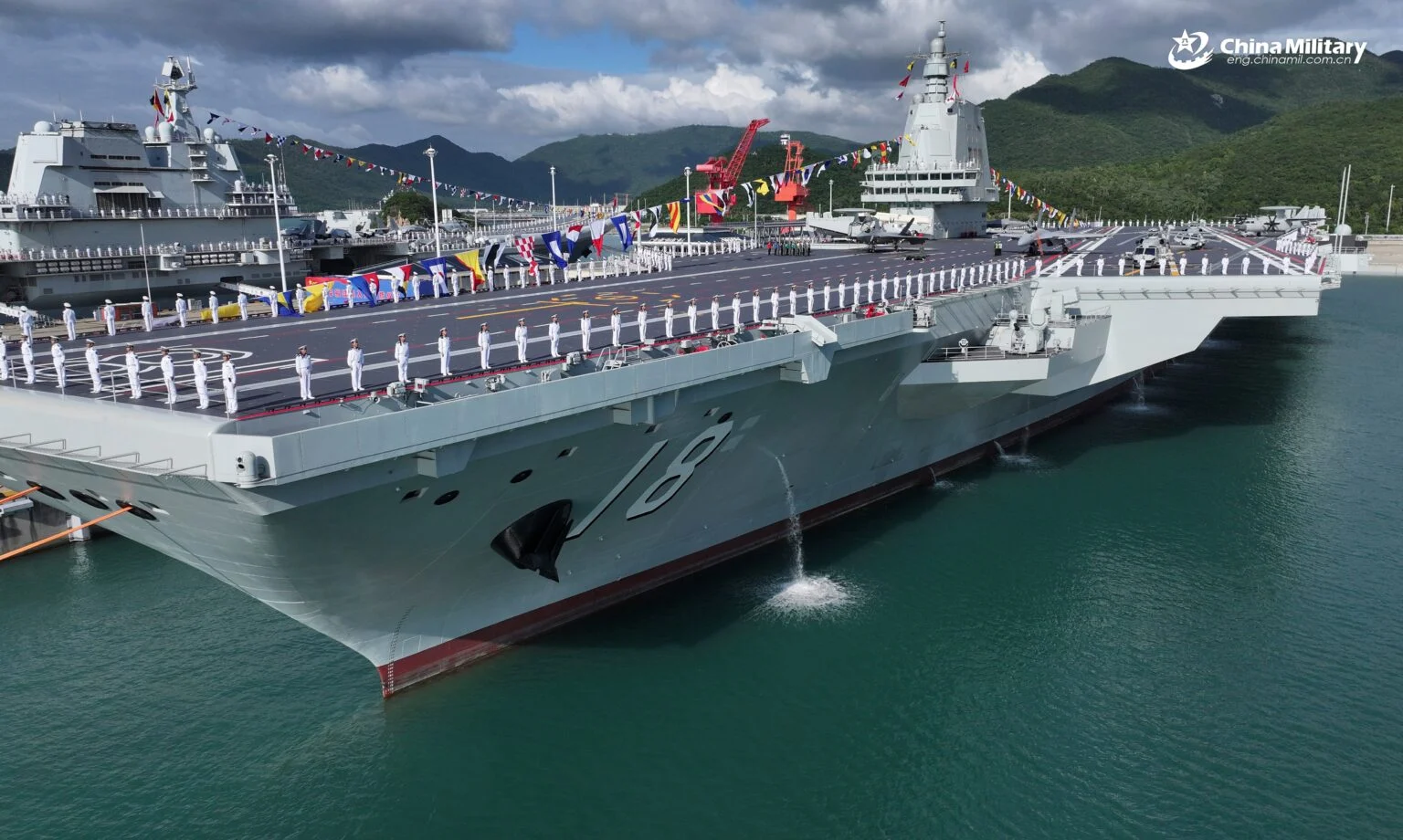
The report identifies the Type 003 Fujian aircraft carrier, which began sea trials in 2025 and is expected to become operational soon, as China’s most critical military development. With a displacement of 80,000 tons, the ship signals a doctrinal shift with the following technical features:
Advanced Air Wing: Fujian will be equipped with fifth-generation J-35 fighter jets and KJ-600 Airborne Early Warning & Control (AEW&C) aircraft, enhancing operational range and situational awareness.
Electromagnetic Aircraft Launch System (EMALS): Replacing the “ski-jump” design of older carriers, this system allows aircraft to take off with more munitions and fuel at shorter intervals.
Unmanned Systems and the Type 076 Factor
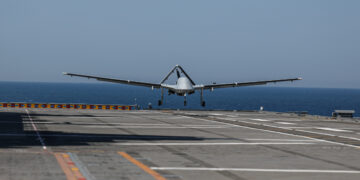
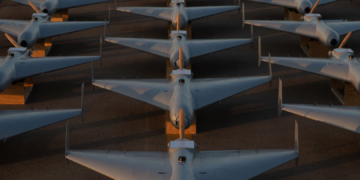
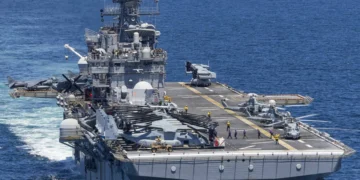
Another notable feature highlighted in the report is the Type 076-class amphibious assault ships. Although not full-fledged aircraft carriers, the Pentagon notes that these ships, equipped with electromagnetic catapults, will serve as specialized platforms for fixed-wing UAVs/drone aircraft. The class’s lead ship, Sichuan (51), began sea trials this fall. These platforms represent PLAN’s new vision for unmanned naval aviation.
Taiwan and Regional Deterrence
The Pentagon report emphasizes that China used its aircraft carriers in operations simulating a Taiwan blockade during “Joint Sword” exercises. These moves are described as a cornerstone of the Anti-Access/Area Denial (A2/AD) strategy, designed to prevent “third-party powers” (especially the U.S. Navy) from intervening in the region in the event of a conflict.
Nuclear-Powered Future: Type 004
One of the most striking sections of the report is the initiation of work on the Type 004 aircraft carrier. Prototype reactor developments for maritime applications confirm that China intends to transition to nuclear-powered aircraft carriers in the next phase, aiming for unlimited operational range worldwide.
Source: C4Defence