

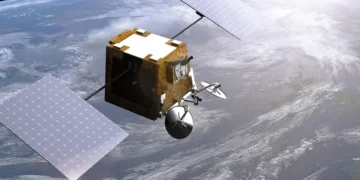





















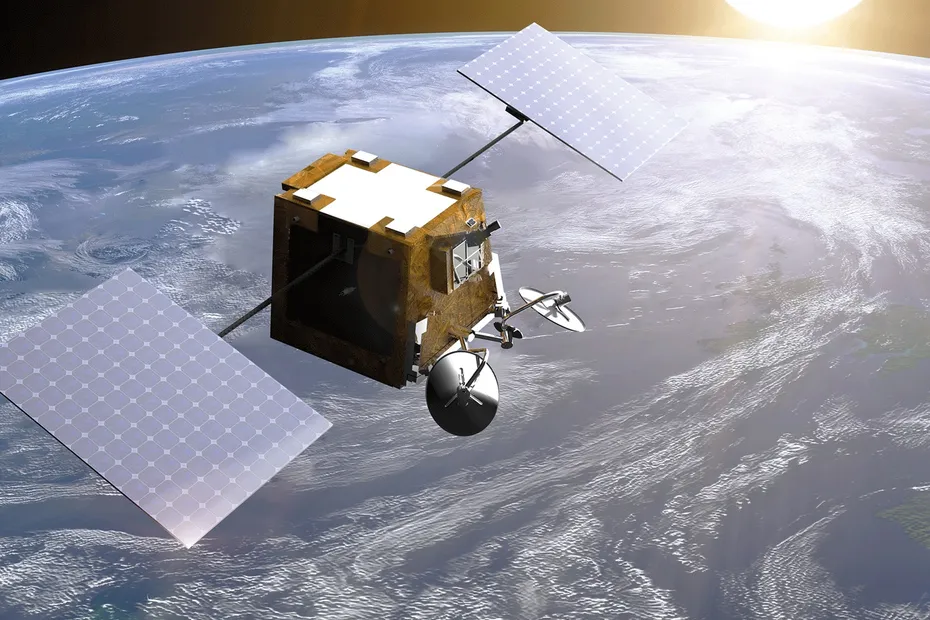
Airbus Defence and Space will produce 340 additional low Earth orbit (LEO) satellites for the OneWeb constellation under an expansion contract signed with Eutelsat. With this move, the total number of satellites on Airbus’s production line will reach 440, while Europe’s independent connectivity capacity in space is being secured.

Operational Continuity in the OneWeb Constellation
Eutelsat has taken a strategic step to strengthen the OneWeb LEO (Low Earth Orbit) network, which provides high-speed and low-latency connectivity on a global scale. In addition to the initial batch of 100 satellites ordered in December 2024, Airbus has been tasked with the construction of 340 more new satellites. Consisting of more than 600 satellites operating at an altitude of approximately 1,200 km across 12 synchronized orbital planes, the OneWeb network provides internet access to every corner of the world. The newly ordered satellites will be used to ensure full operational continuity of the system and to maintain service quality as the units in the existing constellation reach the end of their service life.
Serial Production Era in Toulouse
The production of the satellites covered by the contract will be carried out at Airbus Defence and Space’s Toulouse facilities, its headquarters in France. The new production line, specially designed for the project and equipped with the latest technology, has been optimized to enable serial manufacturing of satellites. At this facility, where the most up-to-date techniques of modern satellite engineering will be employed, the delivery process is planned to begin from the end of 2026. This new line in Toulouse stands out not only as a production center, but also as a strategic infrastructure investment representing Europe’s serial production capability in the space industry and its competitive strength in the global market.
Strategic Importance for Europe: Independence and Competitiveness
This expansion contract between Airbus and Eutelsat goes beyond a purely commercial partnership and directly aligns with Europe’s objectives of sovereignty in space. While increasing Europe’s own independent satellite connectivity capacity, the project aims to preserve the continent’s competitiveness against giant constellations based in the United States and China. LEO networks, which are of vital importance for critical sectors such as defense, aviation, and maritime activities due to their low latency, will continue to serve as a stronghold of Europe’s technological independence with this new investment.
Source: C4Defence / Airbus Defence and Space