





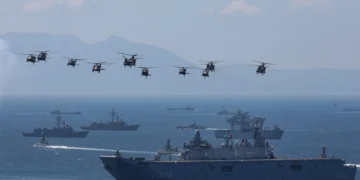









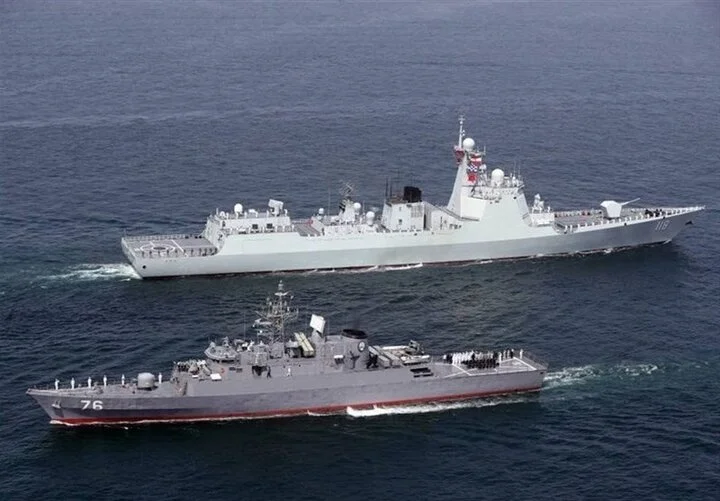
The naval forces of Iran, Russia, and China are coming together for the “Maritime Security Belt 2026” exercise, aimed at strengthening maritime security in the strategically vital Strait of Hormuz and the northern Indian Ocean.

One of the most critical chokepoints for global energy transit, the Strait of Hormuz is set to host a large-scale military exercise. In a statement by Russian Presidential Aide Nikolay Patrushev, it was announced that Russia, China, and Iran have deployed naval assets to the region to participate in the drills. Conducted amid rising tensions with the United States, the exercise highlights the deepening military cooperation among the three countries.
Strategic Coordination and Operational Readiness
According to Iran’s Mehr News Agency (MNA), this series of exercises has been held annually since 2019 under the initiative of the Iranian Navy. The primary objective is to ensure stability along key maritime routes that serve as lifelines of global trade. Participating nations aim to enhance maritime security, prevent modern piracy activities, and establish a joint line of defense against maritime terrorism.
As part of the exercise, the three navies will test coordinated search-and-rescue operations and rapid response procedures, demonstrating operational synchronization to safeguard international waterways.
Regional Balance of Power and Participating Assets
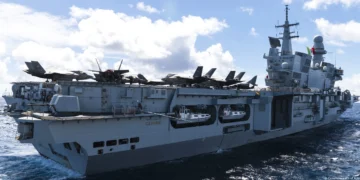
The timing of the exercise is notable, as it coincides with the deployment of the USS Abraham Lincoln and USS Gerald R. Ford carrier strike groups in the region.
The following assets are expected to participate:
China: The Type 052DL guided-missile destroyer Tangshan (D122) and the Type 903A replenishment ship Taihu (K889).
Russia: The Udaloy-class frigate RFS Marshal Shaposhnikov (F543) along with supporting vessels.
Iran: Frigates from the Iranian Navy and the Islamic Revolutionary Guard Corps Navy (IRGCN), as well as logistical platforms such as IRINS Makran.
Officials describe the exercise as a demonstration of commitment to regional security cooperation and the protection of international sea lanes. Experts, however, assess the trilateral maneuver as an effort to establish an “alternative security axis” to the Western-centered maritime security architecture.
Defense-Related News on the Topic
Source: C4Defence / Mehr News Agency