“Peace, stability, and prosperity fully established in our region will benefit us all. The time has long come to break free from the ring of fire surrounding us and to extinguish the fires that are burning. Our region has had enough of blood, tears, and wars. Now, we want to talk about peace and tranquility and to increase cooperation.”
President of the Republic of Türkiye Recep Tayyip Erdoğan [[1]
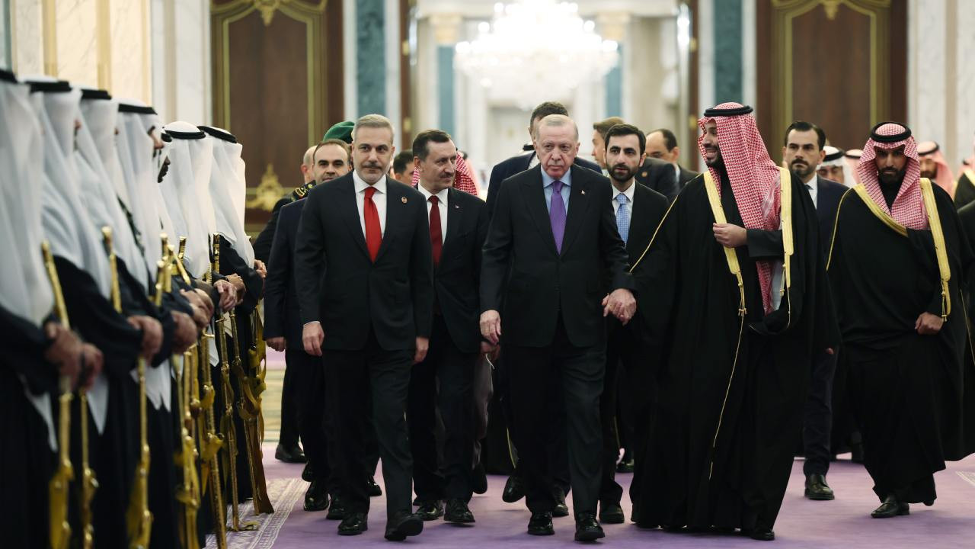
The intense diplomatic traffic generated by President Erdoğan’s visits to Saudi Arabia and Egypt, carried out as part of his first overseas trips in February 2026, conveys messages—in terms of timing—of producing joint solutions within the framework of regional cooperation against the Iran–Gaza–Syria crises, as well as of deep, defense/energy-oriented strategic partnership and economic integration. [2] These moves, which reinforce Türkiye’s role as a mediator/security partner in the Gulf and the Eastern Mediterranean, are assumed to aim at reducing external dependency and ensuring regional stability through joint projects. [3] The military and geopolitical landscape that has taken shape in the Eastern Mediterranean in recent years is, on the surface, read through alliances, bases, and defense systems. However, upon closer examination, it is seen that this picture is the product of a broader strategic design aimed at encircling Türkiye and narrowing its room for maneuver. A security architecture centered on the United States, Israel, and Greece seeks to generate integrated military pressure along the Cyprus, Aegean, and Eastern Mediterranean lines. This diplomatic balancing conducted along the Libya, Egypt, Lebanon, and Syria axis will continue to erode the military pressure Türkiye faces in the Eastern Mediterranean without entering into direct conflict. Through the relations it has established with these countries, Ankara will disrupt the internal cohesion of counter-bloc formations and largely prevent the establishment of a single-centered security architecture in the Eastern Mediterranean. The impact of strategies aimed at militarily isolating Türkiye will diminish. This is because attempts at military encirclement are sustainable only when supported by diplomatic and political absolutism. Türkiye’s multidimensional diplomatic moves, however, are capable of eliminating this absolutism. [4]
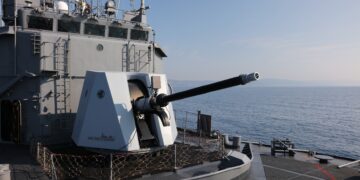
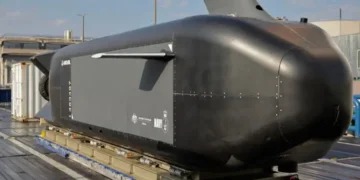
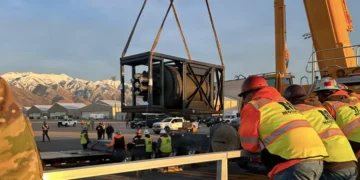
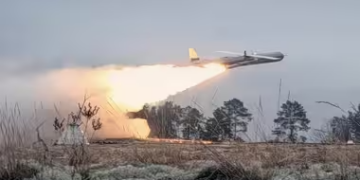
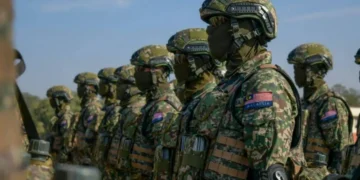
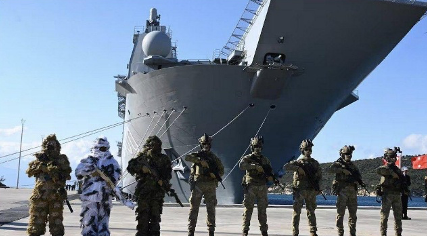
The Turkish Army, with Land–Sea–Air elements, during the NATO STEADFAST DART-26 Exercise
By using its diplomatic and geopolitical power rationally, Türkiye is taking the lead as an active game-setter in the new World Order, keeping the Anatolian and Mediterranean waterways open by taking the right steps within the framework of international maritime law, and acting on the axis of trust and mutual interests with regional countries. In this respect, the results of President Erdoğan’s first diplomatic visits in 2026 can be expected to become clearer in the coming days. In this article, it is necessary to note that, within the Saudi Arabia–Egypt–Somalia triangle, Türkiye has been gradually putting into effect its medium- and long-term decisions based on peace and stability in the new balance and regional security architecture. Türkiye is successfully demonstrating that it is an important and reliable partner of NATO, neutralizing all kinds of isolationist pressure. In this context, despite some negative commentaries, the Turkish Armed Forces are participating in Steadfast Dart-26—NATO’s most comprehensive exercise of this year, to be held in Germany between 8–20 February and organized by NATO Allied Joint Force Command—with a force of approximately 2,000 personnel composed of land and naval elements. [5] This complex deployment operation has concretely demonstrated in the field the capability of the Turkish Armed Forces known as “Power Projection.” This capability means the ability to rapidly and effectively project military power to distant regions when required. The simultaneous deployment of the Turkish Task Force to a target thousands of kilometers away with both air and naval elements stands out as a significant indicator of planning and execution capability. [6] This assessment reveals that the alliances Türkiye has established both with NATO and with regional countries reflect correct and rational strategic calculation. Indeed, this assessment has also been confirmed by Greek Minister of Defense Nikos Dendias. Dendias stated that Türkiye has increased its influence in recent years through military and diplomatic moves, especially in Africa, and said, “They have truly been extremely successful.” Noting that he frequently visited Africa during his tenure as Minister of Foreign Affairs, Dendias used the following expressions: “Wherever I went, I encountered a Turkish presence. They have established a strong structure on the ground diplomatically and politically.” [7] As the second step of this vital assessment, Greek Prime Minister Kyriakos Mitsotakis’s official visit to Türkiye on 11 February, in response to the invitation of President Recep Tayyip Erdoğan, demonstrates that the military alliance Greece has established with Israel in the Aegean and the Mediterranean does not affect Ankara’s peace-oriented and solution-based policies. [8]
As is known, the current international system is experiencing an environment of uncertainty in which the UN order established after the Second World War and the balance of power in which law prohibited war are rapidly changing. States, international organizations, and the global system are passing through a historical breaking point defined by new bloc formations. In today’s international order, states are entering into new alliance searches not only to protect their sovereignty and territorial integrity, but also to preserve their position as effective and decisive actors within a democratic political order that respects the rule of law and human rights, and to strengthen their defense potential against wars and occupations. In this context, the global geopolitical landscape of 2026 is facing a test of transition toward a fragmented, multipolar order in which middle powers exert significant influence.
Rising Tensions in the Persian Gulf in the Shadow of U.S.–Iran Negotiations and Türkiye’s Role
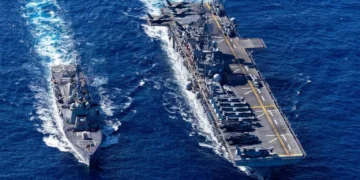
The systematic U.S.–China rivalry that has replaced the U.S.–USSR bipolar nuclear power balance of the Cold War period, the rapid arms race, President Trump’s intervention in Venezuela, his demand for territory from Greenland, the search for solutions to the Ukraine War outside NATO, and the option of using military force in the Persian Gulf should Iran fail to suspend its ballistic missile production, together constitute the current strategic landscape. Compared to missiles—on which it is unlikely that Khamenei and his generals would make any concessions—the bargaining margin regarding the nuclear program is broader. Much like the logic of not completely abandoning the nuclear program, Khamenei may prefer to use these missiles in a fight for survival rather than relinquish them and leave Iran particularly vulnerable to future attacks. [9]
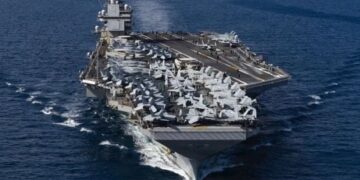
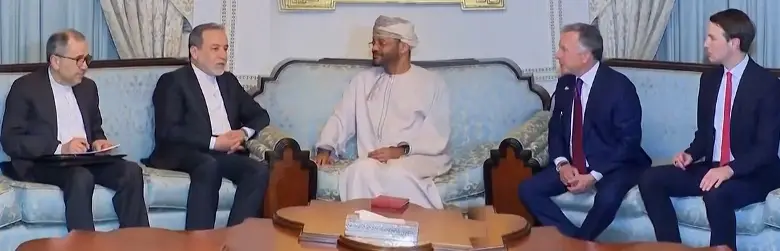
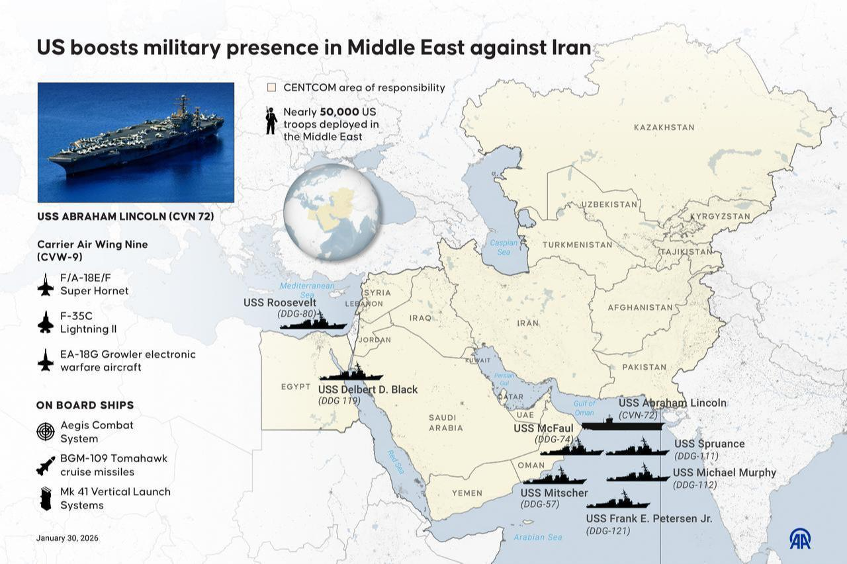
Following the inconclusive outcome of talks held after the 12-day war launched by Israel against Iran in June, U.S. and Iranian delegations met in Oman. During the war, the United States bombed Iran’s nuclear facilities, and it was stated that these attacks may have destroyed a large number of centrifuges enriching uranium to near weapons-grade purity. Israel’s attacks, meanwhile, dealt a heavy blow to Iran’s air defense systems and targeted its ballistic missile capacity. [10] Trump stated, “Today we had very, very good talks with Russia and Ukraine, and likewise we had very good talks with Iran. Iran appears to want to make a deal, and they want it very much.” Recalling that a large naval force had been deployed to the region against Iran, Trump asserted, “It will be there soon. We will see how this turns out.” Describing the meeting between the U.S. negotiating team—consisting of his special envoy Steve Witkoff and his son-in-law Jared Kushner—and Iranian Foreign Minister Abbas Araghchi as talks conducted between “high-level representatives,” Trump said, “It is clear that if there is no agreement, the consequences will be very severe. Accordingly, everyone knows their cards.” Expressing that he very much wanted to see an agreement reached with Iran under acceptable conditions, Trump stated, “But above all, there will be no nuclear weapon.” [11]
The Oman Talks Between the Iranian and U.S. Delegations
Iranian Foreign Minister Abbas Araghchi, in his speech at Iran’s National Foreign Policy Congress on 8 February, stated that “there is no option other than negotiation,” noting that he conveyed the same message to American representatives during the talks. Araghchi declared, “We will eliminate any ambiguity regarding Iran’s nuclear program… We are not asking anyone to recognize our rights. Our rights are official.” [12]
Nevertheless, war against Iran is essentially Israel’s primary priority, and it is argued that this does not fully align with the political–security doctrine proclaimed by Trump. Trump’s approach and the U.S. national security strategy prioritize “protecting the Western Hemisphere” and strengthening the sphere of influence (the Monroe Doctrine). Within this framework, the United States being “drawn back” into the Middle East would amount to a repetition of the mistakes made by the neoconservatives through the interventions in Afghanistan and Iraq in 2001 and 2003. Every major crisis into which the United States has been dragged in the Middle East has provided rival powers—Russia and China—with opportunities to reposition themselves on the global stage. For this reason, a new military adventure against Iran is regarded as a “more severe” mistake that could produce heavier consequences than in the past. [13]
Another important issue that must be emphasized is that, within Türkiye’s strategic roadmap of the Turkish Century, the 2026 National Vision reflects a quest to establish a balanced structure between sovereignty, stability, development, and global influence at a time when regional wars, global economic pressures, energy crises, and intense diplomatic tensions are reshaping world politics. However, in our view, the main issue is not how ambitious this vision is, but whether Türkiye can sustain the continuity, discipline, and societal trust that constitute the spirit of these goals. [14] As the Eastern Mediterranean–Red Sea–Persian Gulf triangle is being driven into a critical phase by the ongoing Israel–Gaza War, the danger of a possible U.S. military intervention against Iran, and the continuing uprisings in Somalia, Türkiye is closely monitoring developments. Following the Gaza occupation, which has shaken the regional security architecture, Saudi Arabia, Egypt, and Qatar—close U.S. allies in the Middle East—are approaching with concern new developments that could endanger the traditional balance of power and the status quo. Middle Eastern countries view the rapid spread of a possible military intervention as a serious scenario and support a diplomatic solution. Within this foggy and uncertain picture, Türkiye’s strategic role in the Eastern Mediterranean may offer opportunities for new alliance initiatives with these countries.
It is directly related to the approach that Türkiye has systematically advocated in recent years, namely that “regional problems should be resolved by regional countries.” Ankara argues that crises in the Middle East should be managed not through external interventions, but through regional ownership, the initiative of local actors, and mechanisms of interdependence. The contacts with Saudi Arabia and Egypt demonstrate that this vision has moved beyond being an abstract principle and has transformed into a concrete diplomatic architecture. Türkiye’s relations with Saudi Arabia and Egypt are now evolving into another phase. Erdoğan’s visits to Riyadh and Cairo reflect a search for a flexible, inclusive, and non-exclusionary strategic cooperation in which regional problems are to be addressed by regional countries themselves. In this sense, the Türkiye–Saudi Arabia–Pakistan line that has come to the fore in recent days can be read not as a classical military pact, but as a platform shaped along the axes of security consultation, defense industry cooperation, and political coordination. The possibility of Egypt being integrated into this framework is a development that could increase the capacity to produce balance along the line extending from the Eastern Mediterranean to the Red Sea. [15]
Türkiye–Saudi Arabia Energy and Defense Industry Partnership
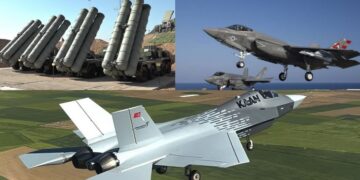
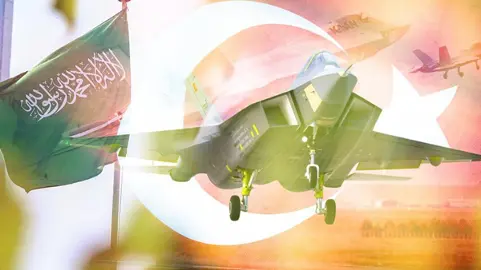
“KAAN is not merely a fighter aircraft. KAAN is a symbol of Türkiye’s engineering capability and its independent defense will. We have received many positive and complimentary responses regarding KAAN. There is a matter of joint investment with Saudi Arabia in this regard. We can realize this joint investment at any moment.”
President of the Republic of Türkiye Recep Tayyip Erdoğan [16]
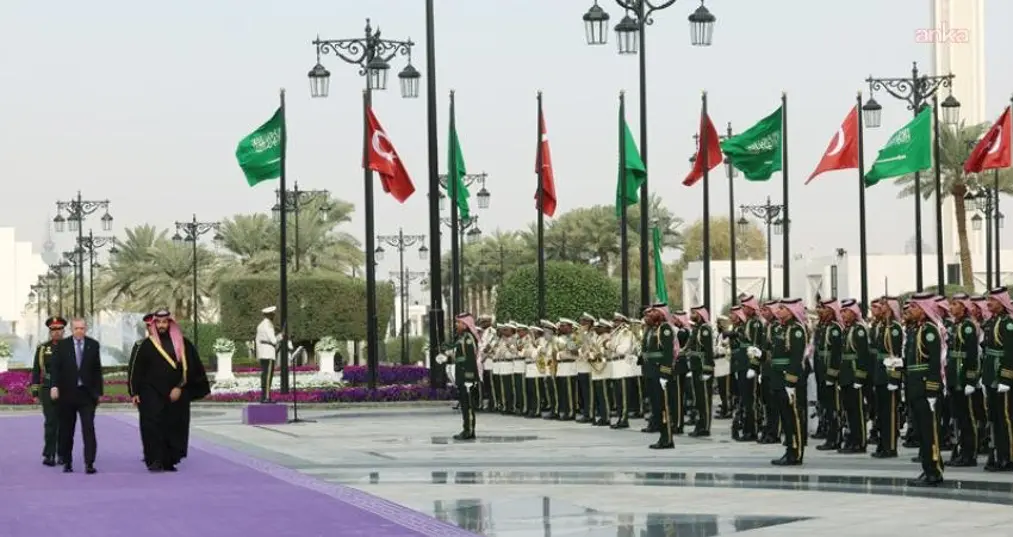
President Recep Tayyip Erdoğan stated that relations between Türkiye and Saudi Arabia are of strategic importance in terms of regional peace, stability, and prosperity, and expressed that Türkiye is ready to assume a mediating role between Iran and the United States. Emphasizing that there are significant opportunities not only in the fields of economy, trade, and investment, but also in energy, tourism, transportation, and logistics services, President Erdoğan confirmed that it is unacceptable for these opportunities to remain merely on paper. He stated that he wishes to strengthen this cooperation step by step through concrete projects based on the principle of mutual benefit and to elevate relations between the two countries to the highest levels. [17]
While President Erdoğan described Türkiye and Saudi Arabia as “two friendly countries with historical and deep-rooted relations,” he also endowed this friendship with a clearer strategic meaning. His statement that the relations are “of strategic importance for regional peace and prosperity” establishes a framework that goes beyond classical diplomatic courtesy. For this reason, his emphasis on defense industry cooperation as a pillar that increases mutual trust and expands capacity is significant. In the joint statement, the defense dimension appears to be articulated in a language of coordination that is not limited merely to procurement issues. [18]
The meeting held in Riyadh on 3 February 2026 between President Recep Tayyip Erdoğan and Saudi Crown Prince Mohammed bin Salman indicates that a new phase has been reached in the long-standing normalization process between the two countries. In essence, the meeting should be read not only as a step toward normalization, but also as a response to the shifting balance of power in the Middle East. This is because the rapprochement is driven less by ideological alignment than by uncertainties such as Iran’s regional influence, the increased fragility of the region following the Gaza War, and the unpredictability of U.S. engagement in the Middle East, all of which place Ankara and Riyadh before similar challenges. In this context, the question of whether this rapprochement is merely conjunctural or represents the first step toward a regional security and cooperation architecture is of particular importance.
The increased fragility of the region and rising security concerns following the Gaza War, the humanitarian crisis in Yemen, instability in Syria, Iran-centered tensions, and the unpredictability of U.S. intervention patterns indicate that the timing of the meeting was not coincidental. As can be seen from the Palestinian–Israeli issue and diplomatic initiatives in Libya, Türkiye has assumed a normative role in regional crises, placing international law and human rights at the center. While this role strengthens Ankara’s regional influence capacity, it also increases the cost of acting alone. Saudi Arabia, for its part, prioritizes stability and economic security in Yemen, in relation to Iran, and in Gulf security, yet does not wish to take risks by entering into direct conflict.
The costs that emerge bring together Türkiye and Saudi Arabia—whose positions are not fully aligned—on a pragmatic basis. Seeking to reduce and manage the risks of unilateral action, the two actors prefer to assess their capacities collectively. When the 31-article joint statement issued after the meeting is examined, the prominent themes of defense industry cooperation, increasing investment and trade volume, energy, and regional security should be evaluated within this framework. In the articles related to security, expressions that would evoke a classical military alliance—such as a common threat definition or mutual defense commitments—were deliberately avoided; instead, project-based headings such as counterterrorism, technical cooperation in the defense industry, and capacity building were included. It is understood that the two countries wish to draw closer in the defense industry and security fields without transforming this relationship into a formal alliance. In this way, Saudi Arabia aims to diversify its security procurement and reduce its dependence on the United States, while Türkiye gains the opportunity to position its strengthening defense industry as a diplomatic and economic instrument. [19]
Suriye’de Birlik ve TopraMessage of Unity and Territorial Integrity in Syria: Referring to the reconciliation initiatives being carried out between the Syrian government and the Syrian Democratic Forces, Erdoğan stated that Türkiye’s priority is to protect the country’s territorial integrity and to strengthen national unity. Erdoğan emphasized that Syria’s attainment of a structure that does not allow space for terrorist organizations and that encompasses all segments of society on the basis of equal citizenship is critical for regional stability.
Diplomacy and Humanitarian Aid in Sudan: President Erdoğan stated that Türkiye continues its diplomatic initiatives to bring an end to the ongoing conflicts in Sudan. Noting that Türkiye has increased its humanitarian assistance in Sudan, Erdoğan announced that 12,600 tons of aid supplies and 30,000 tents have been sent.
Erdoğan also stated that the opening of a TİKA office and a Ziraat Bank branch, along with Turkish Airlines flights, has strengthened regional connectivity.
Somaliland Crisis and Support for Somalia: Erdoğan stated that Israel’s decision to recognize Somaliland is not legitimate and said that Türkiye will continue to defend Somalia’s territorial integrity. He expressed that the steps taken by the government of Israeli Prime Minister Benjamin Netanyahu threaten stability in the Horn of Africa.
Mediation Message in the U.S.–Iran Tension: Erdoğan stated that the tension between the United States and Iran poses a risk to regional security and expressed that Türkiye supports the search for solutions through diplomacy and dialogue. Noting that Türkiye continues its mediation initiatives in coordination with Saudi Arabia and Pakistan, Erdoğan stated that the possibility of a new war in the region must be prevented. [20]
Strategic Partnership in Türkiye–Egypt Relations
“Our region is very rapidly becoming prone to crises and turbulence. We need to deepen and firmly consolidate this cooperation with Türkiye so that we can reach sustainable political solutions in the region as soon as possible. We will increase cooperation with Türkiye on issues that concern both countries at the regional and international levels.”
Egyptian President Abdel Fattah el-Sisi [21]
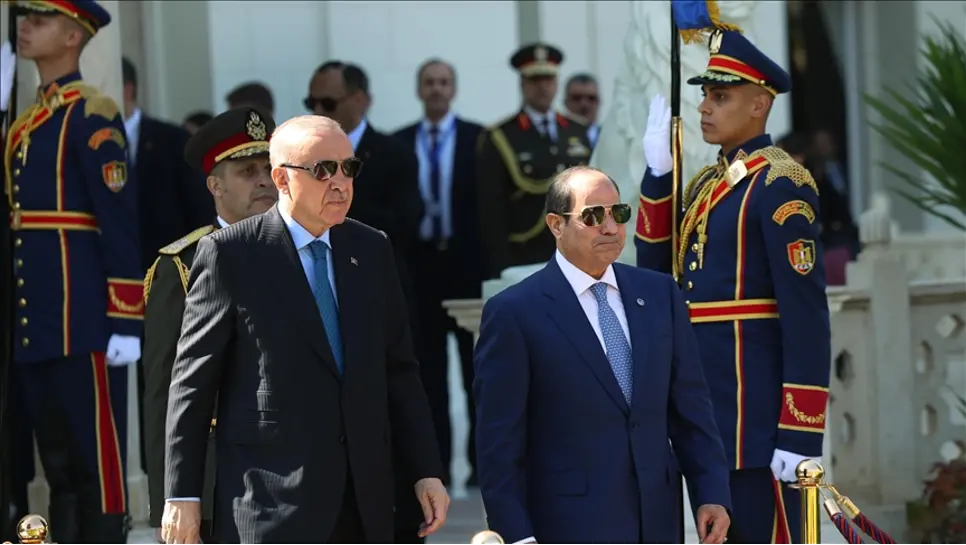
The effects of the rapprochement between Türkiye and Egypt have extended beyond Libya. The two countries adopted a common stance against Israeli military operations in Gaza and also share similar interests regarding the civil war in Sudan. Trump’s Gaza ceasefire signing ceremony was held at the Egypt Sharm El-Sheikh Peace Summit. At the summit, which was attended by the leaders of 35 countries, four leaders stood out at the peace table: the agreement was signed by Trump, and by Erdoğan, Sisi, and Al Thani as guarantor countries. [22] The diplomatic normalization process between Türkiye and Egypt, which has regained momentum over the past two years, appears to have acquired an institutional and strategic framework with the second meeting of the “Türkiye–Egypt High-Level Strategic Cooperation Council,” held in Cairo on 4 February 2026. The messages delivered at the joint press conferences by the President of the Republic of Türkiye, Recep Tayyip Erdoğan, and Egyptian President Abdel Fattah el-Sisi indicate that relations have entered a new phase not only at the bilateral level but also within the context of regional geopolitical equations. The most striking aspect of this meeting is the clear demonstration of the parties’ will to move relations beyond “normalization” and place them within the framework of a “multidimensional strategic partnership.” [23]
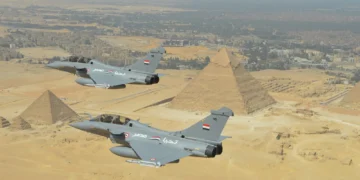
During President Recep Tayyip Erdoğan’s visit to Cairo on 4 February, the defense ministers of the two countries signed a military framework agreement. This framework agreement signed between Türkiye and Egypt is regarded as a noteworthy development in that it paves the way for deepening future military cooperation between two countries that possess significant military power in the Eastern Mediterranean. Türkiye has NATO’s second-largest army and has recently sought to increase its influence in the Mediterranean and Africa, particularly through investments in its naval forces. The agreement between Türkiye and Egypt is also important in terms of altering and rebalancing the power equation in the Eastern Mediterranean, which in recent years had developed to Türkiye’s disadvantage. During the period when relations with Türkiye were strained, Egypt had enhanced military cooperation with the Republic of Cyprus and Greece and had conducted military exercises with Greece with the participation of the United Arab Emirates. Another step as significant as military cooperation was the signing of a maritime delimitation agreement between Greece and Egypt in the Mediterranean.
During the same period, the EastMed Forum—of which Türkiye was not a part—was established, and a project was brought onto the agenda to transport natural gas extracted by Israel, the Republic of Cyprus, and Egypt in the Eastern Mediterranean to Europe via a joint pipeline. Another military axis closely monitored by Türkiye in the Eastern Mediterranean developed among Greece, the Republic of Cyprus, and Israel. The deepening of military cooperation among these three countries, and Israel’s sale of advanced missile systems to Greece, particularly for deployment on the Aegean islands, were developments that drew Ankara’s reaction. The military cooperation agreement signed by Türkiye and Egypt is also significant in that it coincides with a period in which these steps were being taken in the Eastern Mediterranean. [24] The two countries share common ground on many issues that are likely to be positively affected by their rapprochement, such as Sudan, Somalia, Red Sea security, the Palestinian issue, and Libya. Cairo and Ankara, each in line with their own methods, influence, and capabilities, are working to extinguish the flames of regional conflicts and chronic crises.
The Middle East is afflicted by deep wounds, and for this reason both capitals are striving to transform it from an arena of destructive rivalry into a laboratory of constructive cooperation. [25] Speaking at a joint press conference with Egyptian leader Sisi, President Recep Tayyip Erdoğan stated that external intervention against Iran would pose a risk for the entire region, adding, “The resolution of problems through diplomatic means is important.” Egyptian President Abdel Fattah el-Sisi stated, “Egypt can be considered Türkiye’s primary partner on the African continent. We will work with all our strength to increase trade volume to 15 billion dollars. Our region is very rapidly prone to crises; many developments are taking place. We need to consolidate this cooperation in depth.” [26]
One of the most evident strategic consequences of the Türkiye–Egypt rapprochement is emerging in Eastern Mediterranean geopolitics. These two actors, which possess long coastlines and deep historical maritime experience in the Mediterranean basin, had previously stood on opposing sides due to Libya-centered rivalry and energy projects. During that period, Türkiye’s exclusion from the regional energy equation and Egypt’s positioning within alternative alliances drew attention. Recent developments—highlighting maritime trade, transportation, and maritime security—indicate that the two countries are moving toward developing a complementary rather than conflictual strategy in the Mediterranean. Egypt’s goal of becoming an energy distribution hub and Türkiye’s natural role as an energy transit corridor lay the groundwork for a more balanced distribution of power in the face of unilateral initiatives by other regional actors. This situation points to a process in which power balances in the Eastern Mediterranean are being redesigned.
Turkish Military Power in the Fight Against Terrorism in Somalia
“Preserving Somalia’s unity and territorial integrity under all circumstances is a top priority for us. Israel’s decision to recognize Somaliland is illegitimate and unacceptable.”
President Recep Tayyip Erdoğan [27]
The foundation of Türkiye’s Somalia policy lies in expanding the economic interests of both sides. Cooperation in areas such as petroleum, space technologies, and infrastructure demonstrates that Ankara is aiming for a long-term presence in the region rather than a temporary one. Somalia has long been struggling with piracy, irregular migration, human trafficking, and the threat of terrorism. Al-Shabaab, the East African branch of Al-Qaeda, continues to pose the greatest security threat to the central government. Attempts by the Somaliland and Puntland administrations to act independently of the central government, port and sovereignty disputes with Ethiopia, and increasing competition among external actors in the Horn of Africa further deepen the country’s fragility. [28] Türkiye has deployed F-16 fighter jets to Somalia by extending its military presence to the Horn of Africa. These aircraft, which will support the fight against Al-Shabaab, will be commanded by Turkish pilots and are expected to alter regional balances. [29]
Türkiye’s desire to increase its influence in the Horn of Africa, where another strategic chokepoint—the Bab al-Mandeb Strait—is located, has also been assessed. Somalia, which surrounds Ethiopia, Eritrea, and Djibouti, is one of the most important countries in the Horn of Africa in terms of energy security, international trade, and geographical position. In parallel with Türkiye’s construction of a multidimensional and deepening relationship with Somalia through diplomatic, economic, humanitarian, and development assistance, as well as security and strategic cooperation, it is observed that Ankara has increased its geostrategic influence in the region during this process. Indeed, Türkiye–Somalia relations, which became closer in the 2000s, intensified markedly following the famine that occurred in Somalia in 2011. After the high-level Istanbul Somalia Conference held in 2010, relations that expanded into the economic and diplomatic spheres in 2012 continued between 2013 and 2016 with political, economic, military, and human rights-oriented support under the “New Deal” process. [30]
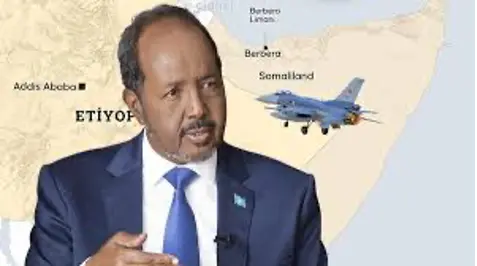
The strategic waters of the Red Sea and the Gulf of Aden have recently once again turned into a point of tension. Recent developments indicate a dangerous escalation that could disrupt already fragile balances and suggest that international investments may be deliberately targeted. While Israel places access to the Red Sea and the Gulf of Aden at the center of its regional strategy, Türkiye is strengthening its presence in Somalia through long-term projects encompassing energy, infrastructure, and space technologies. Following Israel’s decision to recognize Somaliland, Somali President Hassan Sheikh Mohamud paid a critical visit to Türkiye. The strategic waters of the Red Sea and the Gulf of Aden have once again become a focal point of tension in recent days. Recent developments point to a dangerous escalation that could upset already fragile balances and indicate that international investments could be deliberately targeted. [31] While Israel centers access to the Red Sea and the Gulf of Aden within its regional strategy, Türkiye continues to reinforce its presence in Somalia through long-term projects covering energy, infrastructure, and space technologies. Following Israel’s decision to recognize Somaliland, Somali President Hassan Sheikh Mohamud paid a critical visit to Türkiye. [32]
President Mohamud emphasized that Israel’s decision to recognize Somaliland constitutes a clear attack on Somalia’s territorial integrity, stating, “This step is an intervention in Somalia’s sovereignty and territorial integrity. It is also a serious security issue affecting Africa, the Red Sea, and global trade. We will absolutely not allow a possible Israeli military base in the region.” [33]
The presence of Turkish F-16 fighter jets operating in Somali airspace has given a sense of security to the people in Mogadishu and its surroundings. Along with demonstration flights, there has been an increase in morale and a sense of confidence among the local population, while a message drawing the attention of both regional and international actors has been conveyed. The deployment of Turkish F-16s in Somalia is being assessed as an effort to strengthen deterrence against elements that threaten regional stability, foremost among them the increasing Al-Shabaab threat in the country’s northeast. Local administrative representatives have noted that these aircraft enhance not only morale but also the tangible sense of security. Images of Turkish F-16 fighter jets conducting patrol flights yesterday over Somali airspace—where Türkiye has signed energy investment agreements—were shared on social media. The flight of Turkish aircraft over Mogadishu was welcomed with enthusiasm by the local population. [34]
In a statement, the Ministry of National Defense (MoND) confirmed that air force elements in Somalia have been strengthened through new deployments. MoND sources stated: “The Somalia-based Somali–Turkish Task Force and the Air Component Command continue to contribute to the development of Somalia’s counterterrorism capacity through military assistance, training, and advisory activities. Our Air Component Command in Somalia has been reinforced with new deployments. These newly deployed elements will also contribute to Somalia’s fight against terrorism.” [35]
Somali Minister of Defense Ahmed Moalim Fiqi made an official statement confirming that Türkiye has deployed F-16 fighter jets to Somalia. The statement noted that Turkish F-16s are conducting operational flights over Mogadishu and that the deployment was carried out within the framework of support for the Somali armed forces. [36]
From a military perspective, the entry of Turkish F-16s into Somali airspace elevates air support—previously limited to unmanned aerial vehicles—to a qualitatively higher level. Manned fighter aircraft offer advantages such as greater payload capacity, rapid response, and enhanced deterrence. Even in the absence of confirmed strike missions, the presence of jets creates a serious element of uncertainty that restricts Al-Shabaab’s freedom of movement. The F-16 deployment came immediately after Türkiye’s first documented participation in a direct ground operation against Al-Shabaab within the same week. In the Middle Shabelle region, near Jabad-Godane, approximately 20 kilometers from the Qorilow base, Somali forces launched intense artillery fire targeting Al-Shabaab positions. Türkiye’s move is interpreted as a military-level confirmation of its support for Somalia’s territorial integrity against Somaliland’s separatist process. The deployment of F-16s and direct participation in combat demonstrate Ankara’s determination to act not only diplomatically but also as a balance-shaping actor on the ground. This move also conveys a message to Israel and other potential actors that active resistance will be shown against initiatives aimed at weakening Somali unity. [37]
Conclusion
In the U.S. strategic plan released by President Trump, the United States views Türkiye, Saudi Arabia, and Egypt as important actors in the future of the Middle East. In this context, global strategic think tanks and diplomatic circles assess the Türkiye–Saudi Arabia–Egypt alignment as a highly strategic asset of the 21st century. [38] The visits indicate that, in the face of Gaza-centered crises and security uncertainties, a regional ownership and cooperation architecture has been established among Türkiye, Saudi Arabia, and Egypt.
Defense and Energy Partnership: Agreements signed with Saudi Arabia in the fields of the KAAN fighter aircraft and renewable energy (a 5,000-megawatt wind/solar power plant) confirm that relations have moved from an economic dimension to a strategic/security dimension.
Economic Integration and Investment: Egypt’s need for foreign investment and tourism, combined with Saudi Arabia’s Vision 2030 objectives, position Türkiye as a common economic partner.
Mediating and Balancing Role: By strengthening its role as a stabilizer, crisis mediator, and security provider along the Gulf and Eastern Mediterranean axis, Türkiye aims to reduce dependence on external actors in the Middle East.
Durability of Political Rapprochement: By grounding political rapprochement in an economic foundation through business forums and concrete investments, the objective is to make relations permanent.
These visits demonstrate that Türkiye is an actor that takes initiative in regional crises and increases its geopolitical weight through economic and defense partnerships.