

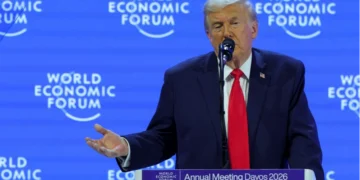




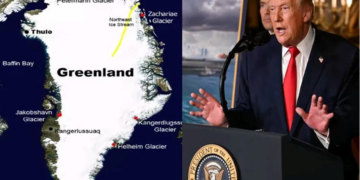





“We won World War II. If we hadn’t won, they would all be speaking either German or Japanese. No country other than the United States is in a position to ensure Greenland’s security. It is extremely crucial and of great strategic importance. We will take it, but we will not use brute force. If you don’t give Greenland, we won’t forget. I want to quickly negotiate Greenland being taken by the United States. The only thing the United States wants is Greenland. If I used excessive force, we would be unstoppable, but I won’t do that.”
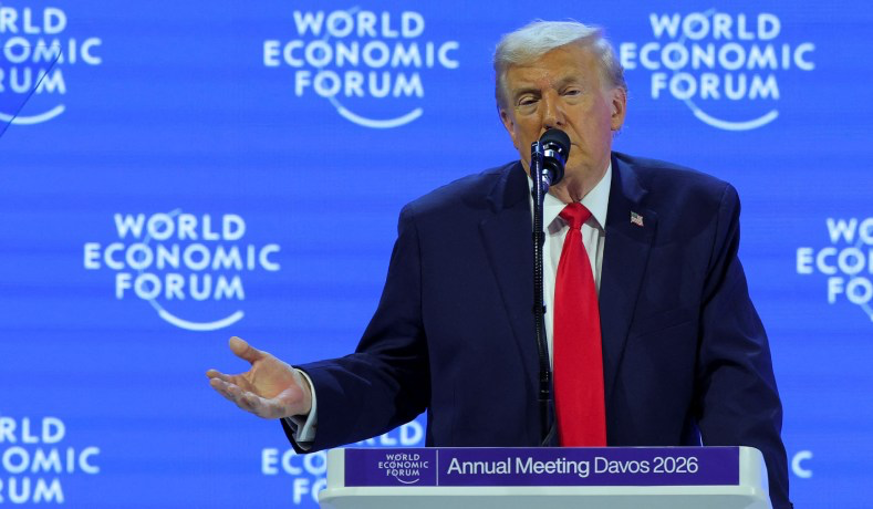
U.S. President Donald Trump [1]
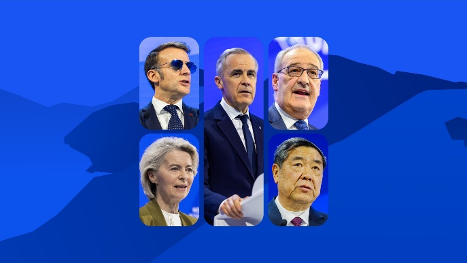
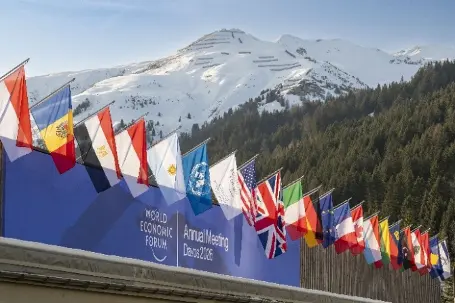
The 56th Annual Meetings of the World Economic Forum (WEF) began in Davos under the theme “Spirit of Dialogue,” at a time of extraordinary geopolitical upheavals. The high-level summit in 2026 is taking place amid U.S. President Donald Trump’s obsession with Greenland and renewed threats of tariffs. French President Emmanuel Macron stated, “We prefer respect over bullying.”

U.S. President Donald Trump, in his speech at the World Economic Forum, reiterated the United States’ claims over Greenland, stating that negotiations must begin immediately, and warned NATO not to block the U.S. expansion plan. Trump claimed that no state or group of states other than the U.S. could protect Greenland or ensure its security, saying, “We need Greenland for our strategic national security and international security.”
Speaking at the Davos summit, Trump used threatening language toward Denmark. He accused Denmark of ingratitude and argued that only the U.S. could protect Greenland, stating, “If you don’t give Greenland, we won’t forget.”
Donald Trump argued that Greenland, which would become part of the U.S., would not pose a threat to NATO, and therefore NATO should not block the U.S.’s territorial expansion plan. He claimed that Greenland must be part of the U.S. for its defense, adding, “This will also be good for Europe.”
European Commission President Ursula von der Leyen warned that new U.S. tariffs on the EU would be a “mistake.” The U.S. delegation is already present there, advocating the “America First” agenda that is shaking the global order. Eight European countries warned that if the White House does not change its stance, a “dangerous downward spiral” could occur.
Trump sent troops to capture Venezuelan President Nicolás Maduro; he claimed that Ukraine is more reluctant than Russia to embrace peace, and he threatened to attack Iran if protests continue to be suppressed. He surprised European leaders by threatening punitive tariffs, including on allies such as the United Kingdom, if they do not support the Greenland annexation plan.
In his speech, he also attacked what he believes has ruined Europe, including the “green scam,” “uncontrolled mass migration,” and “endless foreign imports.” Upon taking the stage, he said, “I love Europe and I want Europe to do well, but it is not moving in the right direction.”
President Trump described Greenland, a prominent island in the geopolitical equation, as a “large, beautiful piece of ice” and argued that the U.S. must own it due to rising security strategy concerns against the China-Russia duo. While the possibility of armed conflict between NATO allies and the U.S., who sent troops to the island, is anticipated, his statement that a “framework for a future agreement” has been reached has been welcomed by some European states. Nonetheless, as this article shows, it reveals that the post–Cold War Atlantic Alliance is facing new realities.
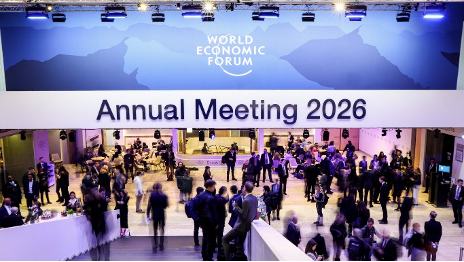
Davos 2026 has turned into a kind of emergency meeting organized for the world’s elites to face two simultaneous and ultimately interlinked threats. The first is President Donald Trump and his provocation of a trade war; the second is a much more complex force threatening to destabilize the global order, known as the K‑shape economy. In doctrine, a term popularized by economist Peter Atwater, this refers to the increasingly widening chasm between the rich and the poor since 2020. Although the pandemic affected everyone at the same time, the recovery from this shock occurred along two different paths; the wealthy became even richer while the poor grew poorer.
Trump’s statements and policies on diverse issues such as Venezuela, Greenland, and Iran — not to mention his aggressive tariff policies — have upended the world order and raised questions about the role of the U.S. in the world. Indeed, French President Emmanuel Macron interpreted the rapidly changing geopolitical landscape as “we are undergoing a deep global transformation,” and argued that “in the face of the world’s hardening, France and Europe must champion effective multilateralism,” “which serves the interests of both us and everyone who refuses to bow to the use of force.”
On the other hand, in an age marked by rapidly increasing complexity, rising fragmentation, and exponential innovation, the need for a reliable and neutral platform for dialogue has never been greater. One of the core focal points of the discussions will be the paradigm shift in technology — from artificial intelligence and quantum computing to next‑generation biotechnology and energy systems; this shift, while reshaping the ways we live and work, will create new engines of growth.
The annual summit that brings together political and economic elites is seen, from Europe’s perspective, as one of the greatest tests to date in terms of relations with Washington, the economic model, and the security architecture. According to regular attendees of Davos, the period leading up to the world’s largest economic and political summit has been unusually eventful compared to usual. There are strong expectations that this year’s World Economic Forum will be very different from previous years.
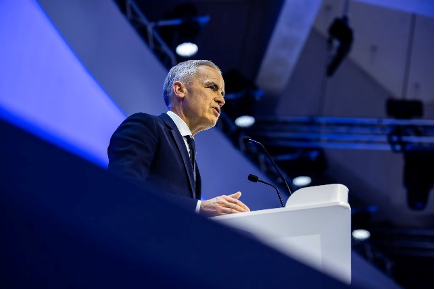

In this mountain town in Switzerland, normally known for its tranquility, the tension felt with the arrival of world leaders has been steadily increasing. The summit is expected to become a turning point where the foundations of the current international order will be fundamentally questioned. Trump had recently threatened European NATO allies who did not support the attempt to acquire Greenland from Denmark with tariffs. Following these statements, some European countries have deployed military personnel to Greenland. These moves have caused serious unease in European capitals. European leaders believe that this approach to taking control of Greenland, whether they like it or not, weakens the foundations of NATO and puts the transatlantic alliance, shaped during World War II, at risk.
European Union leaders described Trump’s threat to impose new tariffs in response to his Greenland acquisition attempt as “blackmail.”
“No person or president has done more for NATO than President Donald J. Trump. If I hadn’t come, NATO wouldn’t exist today! It would be in the dustbin of history. Sad but true!”
Trump boasted that the alliance stands only “because of him” while announcing a meeting planned to finalize the purchase of the region. Ursula von der Leyen drew a red line, describing Trump’s tariff threats as a “mistake” and pledging “uncompromising” retaliation if Washington proceeded.
Regarding Greenland, Trump said: “We will find something that will make both the U.S. and NATO very happy.” In a press conference, President Donald Trump expressed confidence that Washington and NATO would reach an agreement on Greenland that would “satisfy both sides.” Trump said, “I think we will find a solution that NATO will be very happy with, and we will also be very happy, but we need it for security,” adding that the alliance would not be very strong without the U.S.
Can Greenland in the Atlantic Ocean Destroy the Europe-U.S. Alliance?

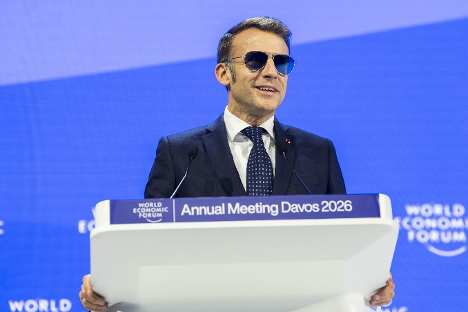
At the World Economic Forum in Davos, Switzerland, Trump stated that a framework had been agreed upon for the Greenland deal and that he was abandoning the planned tariffs on European countries in this regard. He also stepped back from the threatened tariffs on European goods. This statement came hours after his speech in which he reiterated his demands for negotiations to acquire the region, while refusing U.S. military intervention to seize Greenland. He also described Denmark as “ungrateful” for refusing to hand over the territory. The Danish Foreign Minister, however, called Trump’s move to avoid military action or tariffs “positive” but emphasized that the dispute over Greenland is not yet resolved. A NATO spokesperson confirmed that “negotiations between Denmark, Greenland, and the United States will continue.”
NATO Secretary General Mark Rutte said that the current chaos has diverted the world’s attention away from Moscow’s ongoing full-scale war in Ukraine. Rutte stated, “The main issue right now is not Greenland; the main issue is Ukraine,” adding, “I am a little concerned that by focusing so much on other issues, we might be sidelining the main point.” He continued, “They need our support now, tomorrow, and the day after. I want European allies to remain focused on this issue.”
European Commission President Ursula von der Leyen, in a private speech, detailed Europe’s efforts to establish new trade relations and adapt to the era of U.S. tariffs and protectionism. She stated, “Europe will always choose the world, and the world is ready to choose Europe.” In a period when the U.S. threat to seize Greenland persisted, von der Leyen added that Europe must “adapt to a new security architecture.”
At the summit, French President Emmanuel Macron strongly criticized U.S. President Donald Trump’s threat to impose high tariffs if Europe did not allow the U.S. to take Greenland, stating that Europe would neither bow to bullies nor be intimidated. While other European leaders sought to take a measured stance to prevent the transatlantic dispute from escalating, Macron took a firm position. Macron, saying that France and Europe “will not passively accept the law of the strong,” added at the World Economic Forum in Davos that otherwise they would face “vassalization.” Instead, he emphasized that Europe will continue to defend territorial sovereignty and the rule of law, despite what he described as a shift toward a lawless world. This could include retaliating with the EU’s own strong trade sanctions. Macron said, “We prefer respect over bullying,” and further stated, “And we prefer the rule of law over violence.”
German Chancellor Friedrich Merz, meanwhile, sent a message to ease trade tensions with the U.S., stating, “We do not want a trade fight with the U.S. However, if we face tariffs we deem inappropriate, we must respond.” Similarly, German Finance Minister Lars Klingbeil emphasized Europe’s united stance, saying, “We, Germany and France, agree that we will not bow to blackmail.”
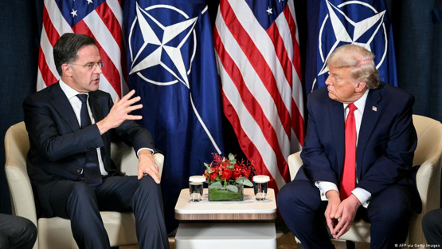
A Difficult Compromise Formula Between the U.S. and NATO in Davos
U.S. President Donald Trump, who was in Davos for the World Economic Forum, made statements that helped lower the rising tension in the Greenland crisis. Previously, no president had crossed the Atlantic after threatening to seize a sovereign piece of European territory regardless of the will of its people. Trump’s attempt to take Greenland may have caused irreparable damage to NATO, the world’s most successful military alliance. The U.S.’s antipathy toward values it once shared with Europe, such as international law, also carries the risk of another fracture. And U.S. leaders rarely, when preparing for such trips, accuse a British prime minister of committing a “major folly” or label a French president as an ineffective leader. Yet Trump and his aides did all this and more in a wave of aggression fueled by unlimited personal and national power. This transformation of America has surprised many in Europe who viewed the United States as a savior, protector, and partner. The question now is no longer whether the United States is still a friend, but whether it has become an enemy.
U.S. Treasury Secretary Scott Bessent, in Davos, called on allies to avoid “reflexive anger” in response to President Donald Trump’s threats to regain control of Greenland, a semi-autonomous NATO territory under Denmark, by any means including military intervention. Bessent advised the leaders at the World Economic Forum: “Take a deep breath. Do not succumb to the reflexive anger and ruthlessness we are seeing,” adding, “Why don’t they sit down and wait for President Trump to come here and listen to his arguments?”
Following European Commission President Ursula von der Leyen’s statement that the bloc would be “uncompromising” in the face of Trump’s relentless pressure campaign and French President Emmanuel Macron labeling the U.S. leader a “bully,” Bessent criticized the recent reactions from the EU and France as “provocative.”en son tepkileri “kışkırtıcı” olarak eleştirmiştir.
Trump said, “Eleven months ago I inherited a mess, and I am fixing it. We are ready for a kind of economic boom the world has never seen before.” 2026 will be a test of Trump’s leadership as the country moves toward midterm elections that will determine control of the House of Representatives and the Senate.
After meeting with the NATO Secretary General, Trump stated, somewhat surprisingly, that they had reached a draft agreement on Greenland. He also noted on Truth Social that this agreement would be a great deal for the U.S. and all NATO countries. This came after intense domestic backlash to Trump’s Greenland plans. Republican senators had warned that using the military for Greenland could be grounds for impeachment.
President Trump, arguing that Greenland’s transfer to the U.S. would not harm NATO, emphasized that NATO would in fact be stronger in this case. Trump explained that the U.S. demands “ownership and possession rights” over Greenland, stating that a place cannot be properly defended without owning it: “You cannot defend a place with a lease; legally, it cannot be defended that way. You have to own it.”
Trump noted that the Arctic region would play a central role in any future conflict and would be critical for missile defense planning, saying, “If a war breaks out, most of the fighting will occur on this ice sheet. Imagine: missiles will fly right through the center of that ice sheet.”
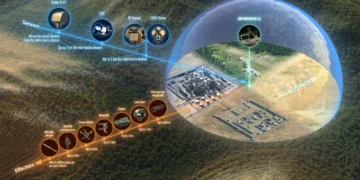
Trump stated that they had reached a framework for an agreement on Greenland and would therefore abandon tariffs that would have affected European allies. He said, “We have established the framework for a future agreement concerning Greenland and even the entire Arctic region. If implemented, this agreement will be very positive for the U.S. and NATO countries.” Following this agreement, Trump said he would not implement the tariffs planned to take effect on February 1, adding, “Discussions continue on our golden dome project, which will also cover Greenland.”
NATO Secretary General Mark Rutte told U.S. President Donald Trump, “If the U.S. is attacked, you can be absolutely sure your allies will stand with you.” Rutte conveyed to Europeans that he always emphasizes the U.S.’s commitment to NATO, noting that the “only troubling issue” is that Europe does not spend as much on defense as the U.S., but that this was resolved at the The Hague Summit. Regarding Trump’s statement that he doubts Europe would come to America’s aid if attacked, Rutte said: “Let me tell you, they will run to help. As you know, they did in Afghanistan. For every American who paid the highest price, there was a soldier from another NATO country, especially the Netherlands, Denmark, and others, who could not return to their family.”
On the other hand, global military spending has now reached $2.7 trillion (£2 trillion), representing an annual increase of 9.4%—the steepest rise seen since the end of the Cold War. Countries around the world have entered a race to increase war expenditures in response to perceived threats from Russia, China, and the U.S., as well as the events of 2026 alone.
As UN Secretary-General António Guterres reviewed world leaders’ 2026 priorities in Davos, he stated, “When leaders disregard international law—choosing and separating which rules to follow—they not only undermine the global order but also set a dangerous precedent.” Russia may have initiated this process by invading Ukraine; conflict in the Middle East, particularly Israel’s near-total bombardment of Gaza, has raised serious concerns regarding war crimes. However, it is the behavior of the United States that has brought the post-war international order to the brink. Guterres noted, “The erosion of international law does not happen in the shadows.”
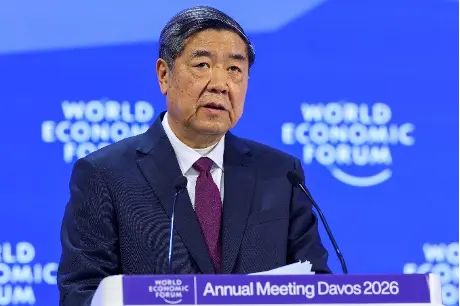
In this context, the calls of China’s Vice Premier responsible for economic relations, Hu Lifeng, and International Monetary Fund (IMF) Managing Director Kristalina Georgieva were particularly notable. Georgieva stated, “The best way forward is to find a path to an agreement. This will be beneficial for everyone.” Meanwhile, Hu Lifeng called for the “protection of the multilateral international trading system” at a time when U.S. President Donald Trump is attempting to reshape global trade.
Conclusion
Global stock markets rose again; U.S. President Donald Trump stepped back from the threatened tariffs related to Greenland. By reaching a compromise on an agreement that addressed Trump’s legitimate security concerns while also respecting the sovereignty of NATO allies, Trump, who attended the annual summit of the World Economic Forum in Davos, Switzerland, stated after meeting with NATO Secretary General Mark Rutte that they had agreed on the “framework for a future agreement” regarding Greenland.
America’s display of power here and on the geopolitical stage made Trump an inevitable topic at an event remembered for billion-dollar deals, lavish parties, and technical panels on multilateralism and free trade. This also reflected how, in the first year of his second term, Trump upended the global order, captivating and alarming world leaders with an unpredictable, personality-driven style of governance that left little room for opposition.
Von der Leyen stated, “Nostalgia will not bring back the old order. If this change is permanent, Europe must also change permanently. It is time to seize this opportunity and build a new, independent Europe.”
German Chancellor Friedrich Merz, in a related assessment, called on Davos participants to “look at the bigger picture.” Merz said, “The world around us is changing at an unprecedented speed. The direction it is taking should concern us. The world of great powers is a new reality. Europe has received the message. Germany has received the message. We must overcome this challenge, and we will. This historic task lies ahead of us. Germany wants to play a key role in accomplishing this task.” With this statement, he sent the message that Europe has pressed the button for the New World Order.
Source: C4Defence
REFERENCES
https://www.hurriyet.com.tr/dunya/abd-baskani-trump-davosta-avrupa-taninabilir-halde-degil-43089842
https://www.dw.com/tr/davosta-trumptan-nato-m%C3%BCttefiklerine-gr%C3%B6nland-uyar%C4%B1s%C4%B1/a-75597249
https://www.hurriyet.com.tr/dunya/abd-baskani-trump-davosta-avrupa-taninabilir-halde-degil-43089842
https://www.dw.com/tr/davosta-trumptan-nato-m%C3%BCttefiklerine-gr%C3%B6nland-uyar%C4%B1s%C4%B1/a-75597249
https://www.dw.com/en/davos-world-economic-forum-2026-live-updates/live-75560683
https://www.theguardian.com/business/ng-interactive/2026/jan/18/davos-2026-donald-trump-us-wef-world-economic-forum
https://www.euronews.com/my-europe/2026/01/21/trump-says-there-is-no-going-back-on-greenland-before-davos-meetings-with-european-leaders
https://edition.cnn.com/2026/01/14/business/k-shaped-economy-delta-nightcap
https://www.aljazeera.com/economy/2026/1/20/world-economic-forum-at-davos-2026-dates-location-and-what-to-expect
https://www.weforum.org/stories/2026/01/heads-of-state-gathering-davos-2026-what-they-saying/
https://www.genevaenvironmentnetwork.org/events/world-economic-forum-annual-meeting-2026/
https://tr.euronews.com/2026/01/19/dunya-davosa-kilitlendi-trump-gronland-ve-yeni-kuresel-duzen
https://www.aljazeera.com/economy/2026/1/20/world-economic-forum-at-davos-2026-dates-location-and-what-to-expect
https://www.anews.com.tr/world/2026/01/20/trump-says-he-has-saved-nato-from-ash-heap-of-history
https://www.anews.com.tr/world/2026/01/20/trump-on-greenland-well-work-out-something-to-make-us-and-nato-very-happy
https://www.aljazeera.com/news/liveblog/2026/1/21/trump-live-news-us-president-in-davos-as-greenland-threats-spark-outrage
https://tr.euronews.com/2026/01/21/davos-2026-dunyanin-en-onemli-siyaset-ve-is-dunyasi-zirvesinde-kim-ne-dedi
https://www.weforum.org/stories/2026/01/heads-of-state-gathering-davos-2026-what-they-saying/
https://www.reuters.com/world/europe/trump-shares-messages-frances-macron-offering-g7-meeting-after-davos-2026-01-20/
https://www.fokusplus.com/ozetle/2026-davos-zirvesi-diyalog-ruhu-temasiyla-devam-ediyor
https://edition.cnn.com/2026/01/20/politics/trump-nato-hosts-davos-greenland-analysis
https://www.dw.com/en/davos-world-economic-forum-2026-live-updates/live-75560683
https://www.euronews.com/2025/12/18/trump-claims-economic-successes-in-national-address-despite-growing-disapproval
https://www.aljazeera.com/news/liveblog/2026/1/21/trump-live-news-us-president-in-davos-as-greenland-threats-spark-outrage
https://www.bloomberght.com/trump-tan-davos-ta-kritik-aciklamalar-3766941?page=7
https://www.ntv.com.tr/galeri/dunya/trump-davosta-konusuyor-yeniden-gronlandi-istedi-ancak-biz-koruyabiliriz-1708343
https://www.aa.com.tr/tr/dunya/nato-genel-sekreteri-rutte-saldiriya-ugramasi-halinde-muttefiklerin-abdnin-yaninda-olacagini-soyledi/3807198
https://www.theguardian.com/business/ng-interactive/2026/jan/18/davos-2026-donald-trump-us-wef-world-economic-forum
https://bigpara.hurriyet.com.tr/haberler/ekonomi-haberleri/uzlasi-arayisina-trump-golgesi_ID1623723/
https://tr.euronews.com/business/2026/01/22/piyasalar-yukseldi-guvenli-limanlar-dustu-trump-gronland-anlasmasini-ovuyor
https://www.washingtonpost.com/politics/2026/01/20/trump-davos-greenland-europe-denmark/
https://www.theguardian.com/business/live/2026/jan/22/davos-nato-ukraine-rutte-stubb-trump-greenland-deal-live-updates