










“Never in the field of human conflict was so much owed by so many to so few”
Winston Churchill, 20 August 1940
On 7 September 1940, 300 German bomber aircraft bombed London. This large-scale air operation constituted the first of 57 consecutive nights of bombardment carried out in British airspace. This violent “blitzkrieg” bombing campaign in the skies, launched by the German Air Force against Britain during the Second World War, continued until May 1941. Geopolitically, Germany’s occupation of Norway and France enabled it to extend from the Baltic and gain control over the Atlantic maritime and airspace. After the occupation of Paris, the Germans turned their gaze beyond the English Channel toward Britain and London. Hitler wanted an obedient and neutralized Britain so that he could focus on his plans in the East—namely, the land invasion of the Soviet Union—without interference. Since June, attacks had been carried out against British ships in the English Channel, and Germany had conducted air battles over Britain in order to wear down the Royal Air Force as preparation for a land invasion. However, when Germany failed to paralyze Britain’s air power—especially during the Battle of Britain—Hitler changed his strategies. Since a land invasion was no longer realistic, it was set aside; instead, Hitler chose sheer terror as a weapon.[1]

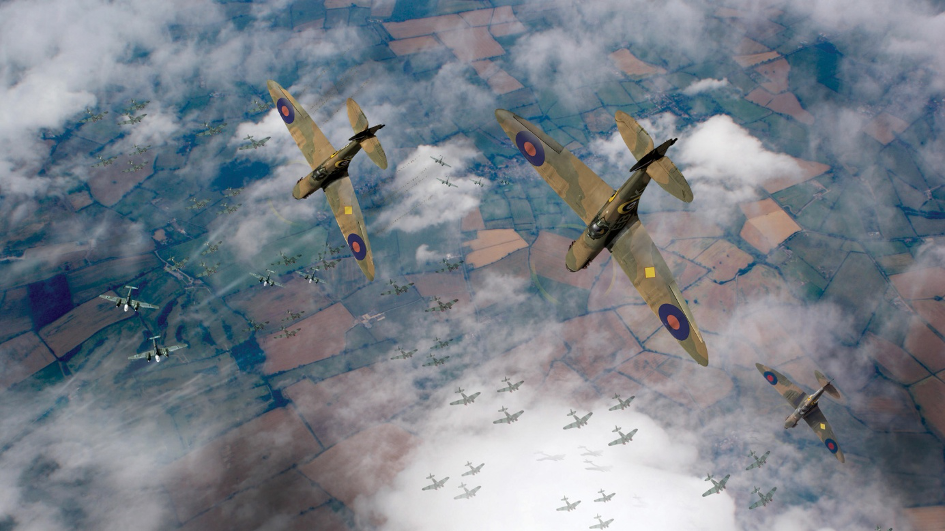
The Battle of Britain was a major military campaign of the Second World War, taking place primarily between 10 July and 31 October 1940. Following the fall of France, Norway, and the Benelux countries, Britain faced the threat of German invasion, known as “Operation Sea Lion.” The British Royal Air Force (RAF), particularly through Fighter Command equipped with advanced aircraft such as the Hurricane and Spitfire, played a vital defensive role. Germany’s air force, the Luftwaffe, aimed to achieve air superiority over southern England in order to facilitate a land invasion. Initially outnumbered, the British air forces employed innovative radar technology and strategic tactics to counter German attacks. Despite suffering heavy losses, the resilience of the RAF led to critical victories, especially on 15 September 1940, which is regarded by many as a turning point of the battle. As a result, Hitler’s invasion plans were postponed indefinitely, marking a crucial moment in which Britain demonstrated its ability to resist and repel Nazi aggression. The battle not only helped preserve British sovereignty but also altered American perceptions, leading to increased support for the Allies in the conflict.[2]

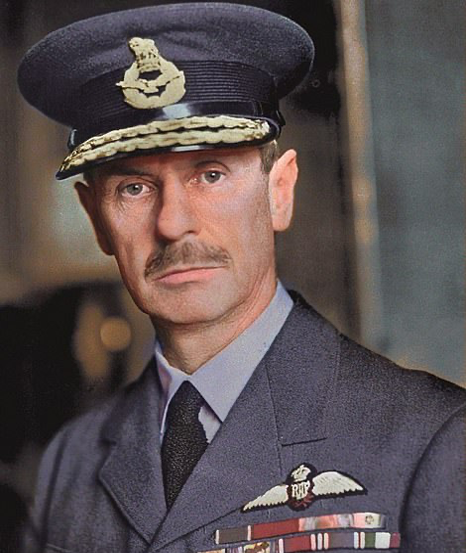
Reichsmarschall Hermann Göring, Commander-in-Chief of the Luftwaffe, and British Air Marshal Hugh Dowding
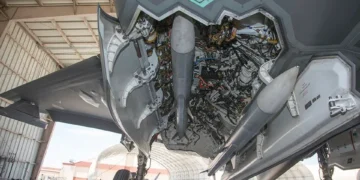
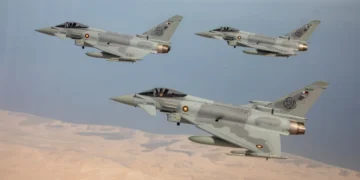
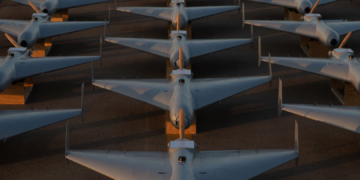
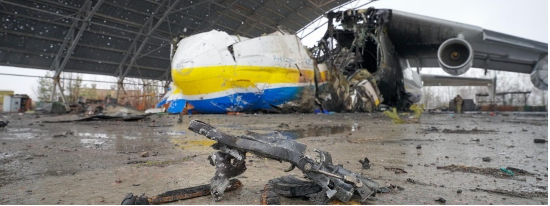
Today, air power stands out as a key element in the projections of a new war. As the Russia–Ukraine War enters its fifth year, fighter aircraft, ballistic and hypersonic missiles, and UAVs have emerged as the most prominent strategic weapons systems. Ukraine’s Antonov-class giant transport aircraft, Russian AWACS and strategic bomber aircraft were destroyed on the ground through UAV raids and surprise attacks.[3] Although Ukraine initially claimed that it had destroyed “more than 40” aircraft in the raid, it later revised this figure to “at least 13.” Nevertheless, cameras on some unmanned aerial vehicles and commercial satellite imagery showed that many aircraft suffered heavy damage, including the Tu-195 “Bear” and Tu-22 “Backfire” bombers, which are no longer in production and cannot be replaced. Ukraine’s SBU security service stated that these aircraft were targeted because they frequently launched large numbers of cruise missiles at Ukraine from within Russian airspace. In addition, an A-50 “Mainstay” airborne early warning and control aircraft and cargo aircraft were also struck.[4]
The short-lived U.S.-backed Israel–Iran War in 2025 revealed the difficulties of the strategic air defense of nuclear power plants, missile launchers, radars, city centers, and air bases, as well as the pressure exerted by the forces participating in package attacks; /strategic intelligence/electronic warfare and bomber aircraft/. [5]
On the other hand, in the Pakistan–India air engagements, pilots’ training levels, the capabilities of air-to-air missiles, electronic intelligence, and warfare techniques have brought serious changes to classical air-to-air combat. [6] This operation may be one of India’s most significant and bold military attacks against Pakistani targets since the 1971 Bangladesh Liberation War. The five-day conflict that took place between 6 May and 10 May 2025 offers many military lessons. Among these are aspects that functioned extremely well, but there are also aspects that need to be considered for preparation for future conflicts. If the key takeaways regarding Operation Sindoor are presented and it is detailed how India’s preparedness shaped the outcome and what more is required to strengthen future preparedness; Key Takeaways: Clearly defined objectives provide space for punitive strikes on the escalation ladder. Air power, once considered an escalation tool, has now become normalized. When combined with long-range precision weapons, air power offers attractive options to expand the threshold of the nuclear overhang. For the first time since 1971, military asymmetry between India and Pakistan has been decisively established. China is becoming increasingly involved indirectly through its assistance to Pakistan. The short but intense conflict highlights the need for persistent intelligence, surveillance, and reconnaissance (ISR). An even more critical requirement is the networking of various platforms, such as the integrated air defense system that proved effective during Operation Sindoor. The key capabilities that stood out during the conflict went through a long development curve, such as the supersonic cruise missile BrahMos and its integration with Su-30 fighter aircraft. In the area of modernization, some delays turned out to be a hidden blessing, such as legacy air defense guns that emerged as a cost-effective solution against small drones. Recent conflicts provided better resilience while preparing for the latest conflict. The emergency procurement process has thus become the preferred route, as it remains cumbersome. Perhaps the biggest lesson lies here. Finally, the Indian armed forces have reached a higher level of jointness through an incremental process accelerated by the appointment of the Chief of Defence Staff, combining centralized planning with decentralized execution. [7]
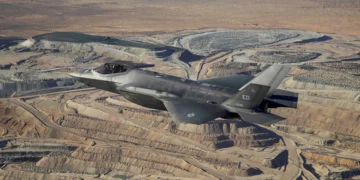
The Chinese Air Force, with its aircraft carriers, 5th-generation and 6th-generation fighter and strategic bomber fleets, and long-range hypersonic missiles, has not only challenged the invasion of Taiwan and Japan, but has also started the hourglass for the “GOLDEN STRIKE” that would end the United States’ strategic superiority in the Pacific region. The People’s Liberation Army Air Force’s advancement in stealth jet technology has reached a new level with the arrival of the carrier-capable 5th-generation J-35 aircraft and two previously unseen new 6th-generation stealth aircraft, the J-36 and J-50. The People’s Liberation Army Air Force (PLA AF) currently possesses a strong fleet consisting of approximately 300 5th-generation J-20 aircraft. The PLA’s 5th-generation, carrier-capable stealth fighter J-35 is currently operational, albeit in limited numbers, and it is entirely possible that the newly developed three-engine stealth fighter-bomber hybrid J-36 and the 6th-generation J-50 will also be capable of ocean-based takeoff. The entry of these three aircraft into inventory brings with it as many questions as concerns, given that very little is known about their computing power, sensing capabilities, weapons interfaces, and targeting ranges. An equally, if not more, important question appears to concern production. Simply put, how quickly can the People’s Liberation Army (PLA) produce these aircraft in effective quantities? How long will it take for J-35s to appear in numbers large enough to rival the United States’ hundreds of F-35s? Will China’s production of the J-36 and J-50 surpass the United States’ F-47 production rate and scale? The answer to this question is likely to generate a degree of concern in the Pentagon, given the People’s Republic of China’s well-known and frequently discussed “civil-military fusion.” China has warned the United States that it is ready for “any kind” of war after retaliating against the increased trade tariffs imposed by U.S. President Donald Trump. China’s embassy, resharing a line from a government statement, said, “If what the U.S. wants is war, whether it is a tariff war, a trade war, or any other type of war, we are ready to fight to the end.” [8]
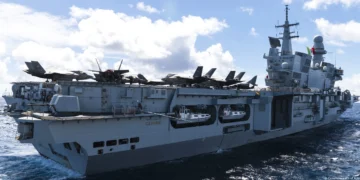
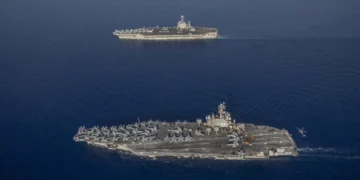
U.S. Secretary of Defense Pete Hegseth, making a rare admission, stated that China’s hypersonic missiles could destroy all U.S. aircraft carriers in just 20 minutes. Hegseth said, “So far, [the U.S.’s] entire power-projection platform consists of aircraft carriers and, in this way, the ability to project power strategically around the world.” However, Hegseth added that China’s 15 hypersonic missiles could “destroy 10 aircraft carriers in the first 20 minutes of a conflict.” [9]
Can China’s hypersonic missiles destroy all of America’s aircraft carriers within 20 minutes? Hegseth stated that China has built a military force “specifically dedicated to defeating the United States”; that the hypersonic missiles of the People’s Liberation Army (PLA) could sink all of America’s aircraft carriers “in the first minutes of a potential conflict”; and that in all simulation war games conducted by the Pentagon against China, the U.S. has lost “every single time.” [10] A top-secret assessment by the U.S. government concluded that China would prevail in a war over Taiwan, dealing a heavy blow to American military superiority in the region. [11]
Unlike the defined divisions between government and the private sector in the United States, the People’s Republic of China essentially “merges” the two in a way that greatly accelerates rapid, high-volume production capacity. [12] On 26 December 2024, China conducted test flights of the J-36 and J-XX fighter aircraft. That day was also Chairman Mao’s birthday, and the Chinese marked the occasion by celebrating a major milestone in the development of their air combat capabilities. The J-36 and J-XX are tailless sixth-generation fighter aircraft. By unveiling their prototypes, China signaled that it has surpassed both U.S. and Russian technologies by integrating artificial intelligence, enhanced stealth features, “hypersonic speeds, and advanced weapons systems.” These two sixth-generation fighters not only have an estimated power generation capacity of around 1 MW, but could also alter the balance of power in the Indo-Pacific through their integrated network systems. [13]
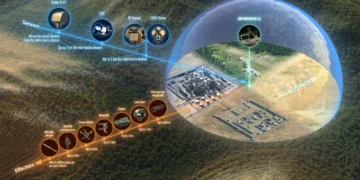
China’s “aircraft carrier killer” missiles are a core component of its broader A2/AD strategy, which aims to push U.S. naval forces beyond effective strike range. This strategy was influenced by the 1996 Taiwan Strait Crisis, during which China felt humiliated by its inability to counter the presence of U.S. carrier strike groups. China has developed a “Kill Chain” consisting of advanced reconnaissance satellites, over-the-horizon radars, and unmanned aerial vehicles to locate, track, and provide targeting data for its anti-ship missiles. In the event of a conflict, China would likely launch coordinated, high-volume anti-ship missile salvos to overwhelm the defenses of a carrier strike group. In a war triggered by the invasion of Taiwan, the Chinese military has developed its ballistic missile force and anti-ship missile arsenal to deny U.S. Navy carrier strike groups access to the Western Pacific. [14]
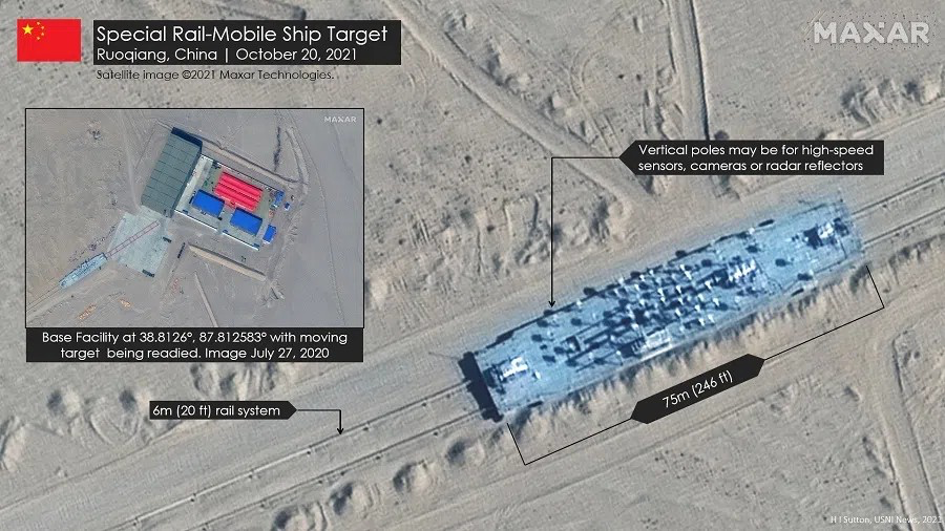
Satellite images released by Maxar Technologies in October 2021 reveal a new target range in the Taklamakan Desert in southwestern Xinjiang, showing full-scale mock-ups of U.S. warships that could be used by the Chinese military as training targets. [15]
The race for air superiority among rival countries has definitively shifted to the field of sixth-generation fighter aircraft; these are aircraft designed beyond fifth-generation features such as stealth, supersonic cruise, and advanced sensors. [16] China became the first country to fly an aircraft it refers to as a sixth-generation fighter. The People’s Liberation Army Air Force (PLAAF) is already in good shape and developing rapidly; however, according to the Pentagon’s 2024 annual report on Chinese military power, it still cannot yet compete with the air combat capabilities of the U.S. Air Force (USAF). The report states that China has expanded the capabilities of its unmanned aerial systems (UAS), which are now comparable to USAF systems. The report also notes China’s progress in air-to-air missiles, electronic warfare, bombers, and fifth-generation fighter aircraft, in some of which it is approaching U.S. standards. China continues to develop a suitable powerplant for the J-20 and is still gradually transitioning away from its preferred Russian engines. The aircraft’s exercise experience is quite limited. The J-20 was first displayed at a local air show in 2016.
In November 2024, the Aviation Industry Corporation of China (AVIC) did not fly abroad or offer for export the two-seat J-20 variant known as the J-20S for an air show or an exercise. Nevertheless, while J-20s conduct limited operational patrols in the South and East China Seas, London-based GlobalData Plc stated in 2022 that the cost of the Chengdu J-20 was 100 million dollars per aircraft and that the total cost of the entire project was 30 billion dollars.
For comparison, the U.S. Air Force has more than 180 F-22s, very few of which have been used in combat. Similarly, the U.S. armed forces have approximately 630 F-35s, with around 1,800 more planned to be acquired. The F-35 program is expected to target a stable production rate of approximately 156 aircraft per year for at least the next five years.
These cover approximately 20 global customers. As of July 2024, the average unit delivery costs are as follows: 82.5 million dollars for the F-35A, 109 million dollars for the F-35B, and 102.1 million dollars for the F-35C, and the F-35s—including the Israeli variant “Adir”—have taken part in major conflicts in Western Asia. The United States is far ahead in fifth-generation aircraft and technologies, but this gap will decrease significantly by 2035. In China’s other fighter aircraft inventory, there are the reverse-engineered Russian designs Shenyang J-11 (225) and Shenyang J-16 (280). The Chengdu J-10 (588) evolved from the Sino-Israeli Lavi program. China also possesses Russian-built Sukhoi Su-27UBK, Su-30MKK, and Su-35 (24) aircraft. All of these are fourth-generation aircraft.
The People’s Liberation Army Navy (PLAN) operates approximately 350 combat aircraft; among the most important of these are 72 Shenyang J-11B/BS, Shenyang J-15s, and 24 Sukhoi Su-30MKKs. As of September 2023, the U.S. Air Force has 375 F-15s, 726 F-16C aircraft, and 261 F-10C aircraft. The U.S. Navy (USN) has 30 F-35Cs and 421 F/A-18 Super Hornet aircraft. The U.S. Marine Corps (USMC) operates 127 F-35B/Cs, in addition to 87 AV-8B Harrier II vertical takeoff jets and 138 multirole F/A-18A/C/D aircraft.
The U.S. Air Force operates 860 transport aircraft. Among these are 52 C-5 Galaxy aircraft and C-17 Globemaster III aircraft. The U.S. Navy has approximately 150 transport aircraft, including a significant number of C-130s. China, by comparison, has around 260 transport aircraft. Among the larger ones are 26 Ilyushin Il-76s and 70 Xian Y-20s. The relatively smaller cargo fleet currently indicates a lack of global objectives. However, the number of Y-20s is increasing, and the aircraft is capable of transporting heavy loads. [17]
This marks the first time since the end of the Second World War that a country has developed aircraft technology more advanced than that of the United States. Given that U.S. military superiority is particularly dependent on air superiority, this could mark the beginning of a significant shift in regional and global air power dynamics. The combat range of the new jets can exceed 2,500 kilometers, meaning they could reach U.S. military bases in Guam, Diego Garcia, and even Alaska. Sixth-generation fighter aircraft are expected to operate at speeds above Mach 2, and with refinements in design, they could reach maximum speeds close to Mach 3, especially at high altitudes where the air is thinner.
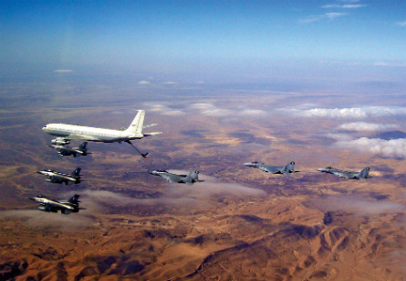
These aircraft are designed to act as the main node of a cluster composed of unmanned systems, such as unmanned aerial vehicles (drones), that will operate kilometers ahead of the aircraft. By integrating manned and unmanned systems—including Unmanned Combat Aerial Vehicles (UCAVs) serving as loyal wingmen—Chinese designers have increased the aircraft’s effective combat range by several hundred kilometers. [18]
In testimony to the U.S. Senate Armed Services Committee, U.S. Indo-Pacific Command Commander Admiral Samuel Paparo stated that China is rapidly developing its air combat capabilities and that Beijing is in a position to “deny” U.S. air superiority along the first island chain in East Asia, consisting of Taiwan, Japan, and the Philippines. Earlier this month, Admiral Paparo warned the Senate Committee, saying, “China’s unprecedented aggression and military modernization pose a serious threat to our homeland, our allies, and our partners (in the Indo-Pacific),” adding that the People’s Liberation Army (PLA) increased its military pressure on Taiwan by “300 percent” in 2024. Admiral Paparo also emphasized that after building the world’s largest naval force, China is now rapidly advancing its air combat capabilities as well. [19]
In the Middle East and the Mediterranean, Israel–Greece–Greek Cypriot Administration of Southern Cyprus (GASC) have reinforced an anti-Turkey alliance with air and naval power, setting sail on an adventurous and highly dangerous course against Ankara with a historic challenge. In the Black Sea, certain UAV attacks and tanker strikes aimed at testing the airspace of NATO member Turkey are being carried out, deliberately pressing on sensitive nerves. While Turkey closely monitors these dangerous developments that question its national sovereignty and survival at the highest level, it continues its preparations. This article is written with a historic central idea, aiming in particular to highlight the importance of impending air wars and to further intensify urgent measures for the defense of the Turkish homeland.
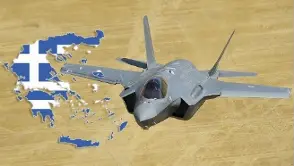
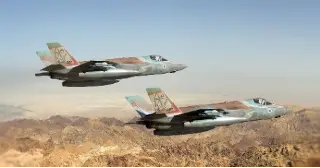
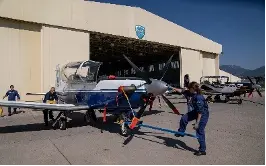
Greek and Israeli Air Force F-35 aircraft, with Israel providing training to Greek pilots at Greece’s Kalamata Air Base…
The trilateral cooperation developing among Israel, Greece, and Southern Cyprus in the Eastern Mediterranean is a strategic partnership encompassing the fields of energy, security, and diplomacy. Natural gas discoveries form the basis of this rapprochement, while joint military exercises and U.S.-backed diplomatic mechanisms (the 3+1 format) have institutionalized the cooperation. Turkey views this alliance within this equation as a bloc formation aimed at excluding it from the Eastern Mediterranean. Ankara, in response, seeks to establish a balance through an emphasis on maritime jurisdiction areas, the Libya agreement, and military–energy moves on the ground. It argues that lasting stability in the region cannot be achieved by excluding Turkey.
Israeli Prime Minister Benjamin Netanyahu delivered a striking message this week at a summit with Greek Prime Minister Kyriakos Mitsotakis and Greek Cypriot Administration Leader Nikos Christodoulides. Netanyahu stated, “To those who imagine they can reestablish an empire over our countries, I say this: Forget it. It will not happen. Do not even think about it.” There was little need to speculate about whom these remarks were directed at. Netanyahu’s target was clearly Turkey and President Recep Tayyip Erdoğan. At the summit, it was announced that a joint “rapid reaction force” would be established against threats in the Eastern Mediterranean. In fact, such polarization is not new. The Eastern Mediterranean Gas Forum, established in 2019, had emerged as an energy and security cooperation model that excluded Turkey. The structure—comprising Israel, Egypt, Greece, Southern Cyprus, Italy, Jordan, the Palestinian Authority, and later France—was designed to organize natural gas production and marketing in a way that bypassed Turkey. [20] In what has been described as an irony of history, Israel is positioning itself alongside Greece and Southern Cyprus against Ankara’s regional influence, perceived as that of a “resurgent Ottoman” power. It is known that President Erdoğan previously described this trilateral structure as an “axis of evil,” and that Turkish media has portrayed the initiative as a threat directed at Turkey. [21]
The U.S. Department of State has approved a Foreign Military Sales (FMS) case to Greece for up to 40 fifth-generation F-35A fighter aircraft and 42 Pratt & Whitney F135-PW-100 engines (40 installed, 2 spares), with an estimated value of 8.6 billion U.S. dollars. The United States Defense Security Cooperation Agency (DSCA) notified Congress of the possible sale on 26 January 2024. [22]
As is well known, the Battle of Britain is described as the first strategic air campaign in the history of aviation. Essentially, the Battle of Britain in 1940 was initiated as retaliatory attacks in response to the air strikes carried out by the Royal Air Force against German territory and Berlin. Indeed, Hitler stated, “If they threaten our cities, then we will wipe out theirs.” There is no doubt that during the Second World War, Hitler regarded Britain as the “center of gravity” of the Allies. In fact, in May 1939, defining Britain as the main enemy, Hitler said, “England is the driving force against Germany… The objective will always be to force England to her knees.” Nevertheless, until July 1940, the plan to invade Britain had not been clarified. Germany neither planned a prolonged war against London nor intended to eliminate its great enemy outright. After Dunkirk in May 1940, Britain was not invaded, because there was no plan to do so, and no one could land nine or more divisions across the Dover Strait without a plan. [23]
By the end of June 1940, Nazi Germany and the forces of its allies had come to dominate Western Europe. In July, Adolf Hitler turned his attention to Britain, which refused to surrender despite its seemingly hopeless military situation. Adolf Hitler aimed to force Britain into submission through bombing, naval blockade, or, if necessary, invasion. However, to achieve this, he needed air superiority. Therefore, in the summer and autumn of 1940, several thousand airmen fought a relentless struggle in the skies over Britain. Compared to the later battles of the Second World War, this was a small event. Yet the stakes were enormous—the outcome depended on Britain’s survival and the result of the entire war. [24]
As thousands of metal warplanes with gleaming wings took to the air for battle, the skies over Europe burned; the fate of the world hung in the balance. From 1939 to 1945, Allied and Axis forces waged a constant struggle for dominance over land, sea, and air. Early engagements clearly demonstrated that Hitler’s Luftwaffe was the dominant air power in Europe.
The Allied high command had to catch up with German air power. Both sides devoted vast resources to the development and production of new fighter aircraft to serve this purpose. Unlocking the secrets of technologies such as jet engines and radar would become the focus of scientists around the world, and young men seeking adventure and wishing to serve their countries would be sent into the skies to fight and die for their homelands. [25]
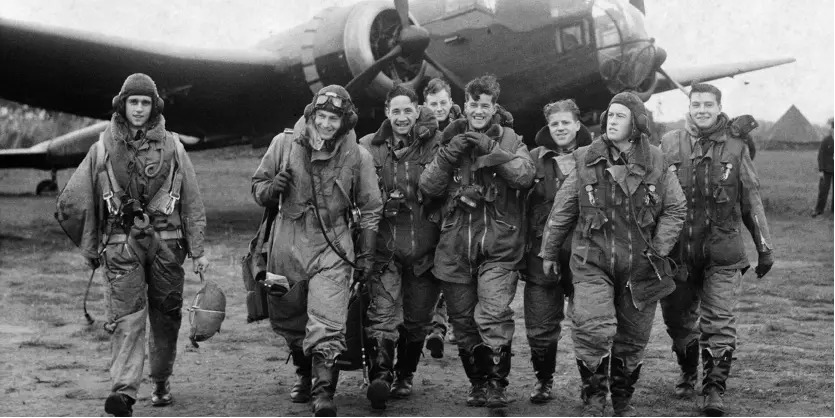
RAF No. 83 Squadron bomber aircrews in front of a Handley Page Hampden bomber at RAF Scampton, Lincolnshire, October 1940.
On 4 September, Hitler spoke of a major retaliation in his usual aggressive manner: “We will destroy their cities! Tonight we will put an end to their parties.” The Luftwaffe could not destroy cities—certainly not Greater London. It was only able to disrupt normal life in a few areas. The number of Luftwaffe bombers was far too small to achieve such success. [26]
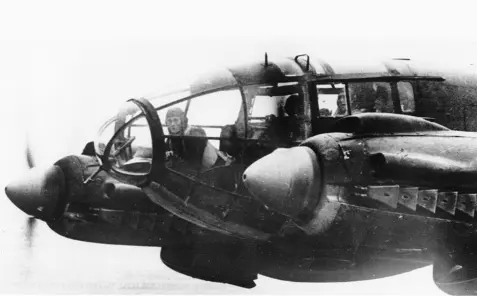
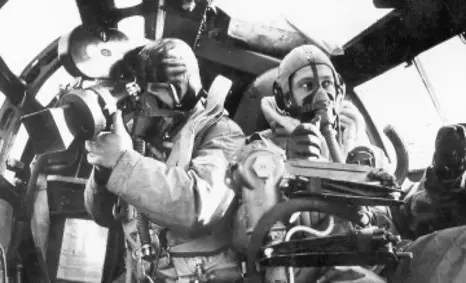
In November 1940, aboard a German Heinkel He 111 bomber over England, the machine gunner in the nose fighting position, with the pilot and the intelligence officer on the right.
The Battle of Britain was the largest air battle the world has ever seen—and it still is. This battle of the Second World War was a hard-fought struggle that lasted four months, from 10 July 1940 to 31 October 1940. By the spring of 1940, the Second World War had begun only a few months earlier, yet it already seemed as though it might end within the year.
French resistance against the Germans ranged from poor to virtually nonexistent, and the British Expeditionary Force evacuated Dunkirk in mid-June while French Marshal Philippe Pétain sought an armistice with Germany. In a statement to Parliament on 18 June, Churchill said, “The Battle of France is over. I expect that the Battle of Britain is about to begin.” [27] On 10 July 1940, the Battle of Britain began. This marked the start of a three-month campaign in which Hitler hoped to establish air superiority over Britain and, as a result, carry out a full-scale invasion. [28]
The Battle of Britain was the first major conflict in history fought entirely with aircraft. To compare it with the age of spaceflight, imagine waking up one night to watch hundreds of satellites at orbital altitude firing firefly-like flashes at one another. Only then can one imagine what the British might have felt when they saw hundreds of aircraft flying at 300 miles per hour filling the skies over Britain. The Battle of Britain ostensibly marked the beginning of a seaborne invasion of England, but even Adolf Hitler doubted that his air force and army could achieve this. Preventing the Royal Navy from annihilating any invasion fleet would have required complete air superiority—something the Luftwaffe never came close to achieving. More likely, Hitler hoped that defeating the RAF would force the British into peace negotiations. [29]
INTRODUCTION
By June 1940, with Germany having overrun the Netherlands and France, Britain was left to face Adolf Hitler’s forces alone in Western Europe. British military leaders assumed that a German invasion across the English Channel could begin in the near future. Although the Royal Navy controlled the seas immediately surrounding Britain, its forces were strained by the need to protect Atlantic supply routes used by American supply ships from German submarine attacks.
Approximately fifty-five army divisions could be assembled for the defense of the island, but most of these divisions were only at half strength. The fact that British forces fleeing Dunkirk in early June had been forced to abandon much of their equipment while retreating from German forces further complicated the prospects for defending against a German ground assault.
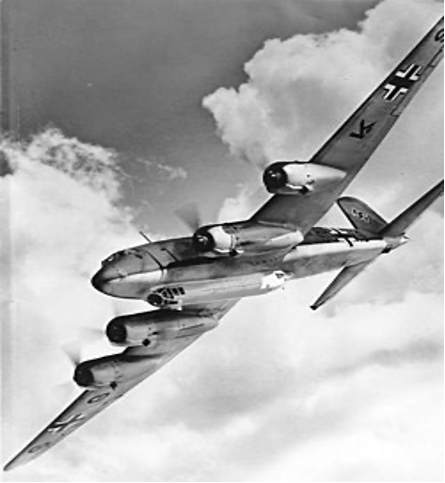
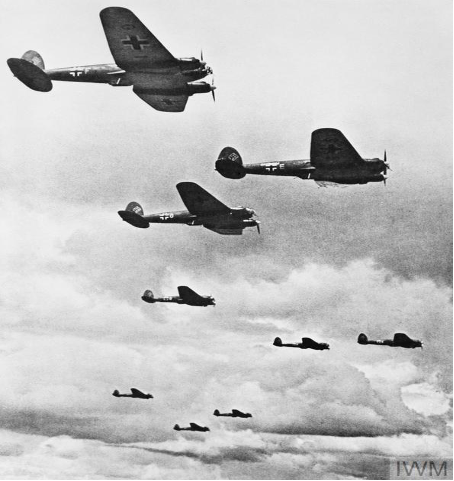
German bomber aircraft
Hitler’s invasion plan followed the successes in the conquest of France and the Low Countries. First, the enemy air forces would be destroyed by the Luftwaffe, which would allow German mechanized infantry and tank units to break through enemy lines without the threat of air attack. The rapid advance of these units was made possible solely by the absence of enemy aircraft that could interfere with their movements or prevent the Luftwaffe’s attacks from softening defensive positions ahead of the ground advance. The Luftwaffe failed to achieve this objective and could not destroy the RAF’s fighting capability; as a result, an invasion of Britain became impossible.
In contrast, the Allies achieved this air superiority prior to their attacks against Europe in June 1944, enabling them to advance into German territory in the same way the Germans had seized territory at the beginning of the war. At no point in the war did either the Axis or the Allies capture large areas of territory without air superiority over their enemy, demonstrating that air superiority was the driving force behind the ultimate Allied victory.
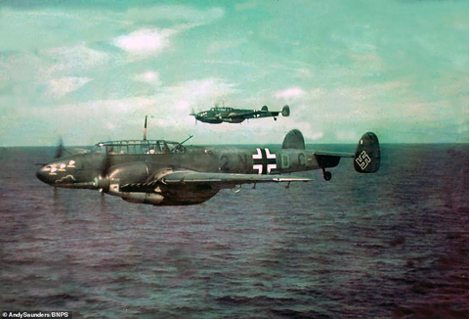
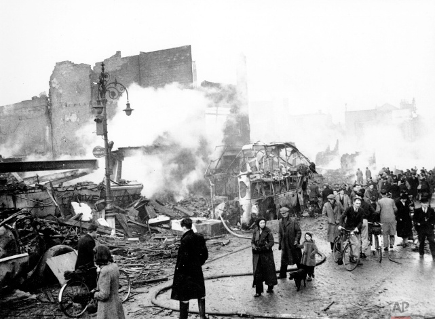
Bf 110 bomber aircraft over the English Channel and the streets of London after the attack
The German air force was at a serious disadvantage against its RAF counterparts during the air campaign due to several critical flaws in aircraft design. First, the Luftwaffe lacked a heavy bomber. Prewar efforts to develop a large four-engine bomber, the Dornier D-17 Ural design, ended in failure. Although possessing such a bomber would not have had a decisive effect on the Battle of Britain, medium and light bombers based in France were able to reach targets in England without needing the range of heavy bombers, and such aircraft would have been valuable for attacking targets on the Eastern Front. The failure of the program in the mid-1930s made German aircraft designers reluctant to pursue new bomber designs, leaving the Luftwaffe dependent on obsolete bombers to attack England. Luftwaffe commander Hermann Göring is reported to have said of the failed D-17 program, “The Führer will not ask me how big our bombers are; he will ask how many we have.”
This approach essentially revealed a critical flaw in tactical thinking: focusing on producing large numbers of low-quality aircraft rather than building aircraft that would provide the greatest tactical and strategic advantage. German bombers were inadequate, and their fighter aircraft were also insufficient. The Bf-190 was initially superior to British fighters, but as the RAF produced faster aircraft, the Germans were forced to continuously modify the Bf-109, sacrificing fundamental characteristics such as turning ability in favor of raw speed. What seriously hampered German offensive operations, however, was the production of the Bf-110. Designed as a heavy fighter for bomber escort, it had exceptional range but was vastly inferior in maneuverability compared to some early-war RAF fighters. This rendered many Luftwaffe fighters nearly unusable during the Battle of Britain and ultimately proved to be a major waste of prewar resources, costing the Germans dearly in their expectations of victory. [30]
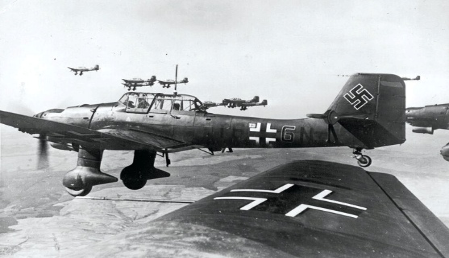
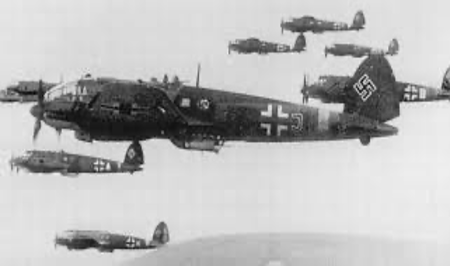
J-87 Stuka dive bomber and Heinkel He 111 bomber aircraft
On 15 September 1940 (now known as Battle of Britain Day), the German Luftwaffe attempted a major assault against Britain’s defenses. However, the Germans failed, as Britain’s deployment of its tactical squadrons inflicted heavy losses on the German side. As a result, RAF Fighter Command declared the battle a decisive victory over the German Luftwaffe. [31]
The Battle of Britain was a major air campaign fought largely over southern England during the summer and autumn of 1940. Following the evacuation of the British Expeditionary Force from Dunkirk and the fall of France, Germany planned to gain air superiority in preparation for the invasion of Great Britain. RAF Fighter Command pilots, flying iconic aircraft such as the Hurricane and Spitfire, were supported throughout the battle by an extensive network of ground personnel. As a result, the Luftwaffe Fighter Command was defeated, and Adolf Hitler was forced to abandon his invasion plans. [32]
This was a war without armies. There were no rifles, no tanks, no barbed wire. In the summer of 1940, the skies over Britain became the battlefield for the Royal Air Force and the German Luftwaffe. The Nazis had conquered much of Western Europe, and Britain stood alone. The Luftwaffe was the first arm of the German military giant to strike the British Isles. Its mission was simple: to repeat its performance in Poland and France and eliminate the enemy air force. This would have facilitated an invasion for which the Germans had no reason to believe they would fail. The Luftwaffe’s elite pilots included figures such as the bold and stubborn Adolf Galland and the deadly tactical genius Werner Mölders, many of whom had been experienced since the Spanish Civil War in 1936.
The RAF was vastly outnumbered in terms of numbers, firepower, and manpower. This is where the significance of the Battle of Britain lies. Later referred to by Prime Minister Winston Churchill as “The Few,” the RAF not only defended Britain against the Luftwaffe, but also bore the responsibility of defeating German pilots and thwarting Hitler’s invasion plan. Despite German numerical and tactical superiority, leaders at the upper levels of the RAF proved to be more strategically flexible than their counterparts in the Luftwaffe and better able to adapt to the conditions and parameters of the battle. [33]
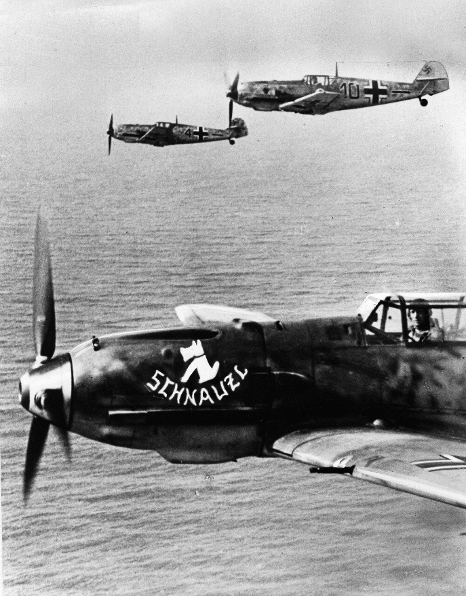
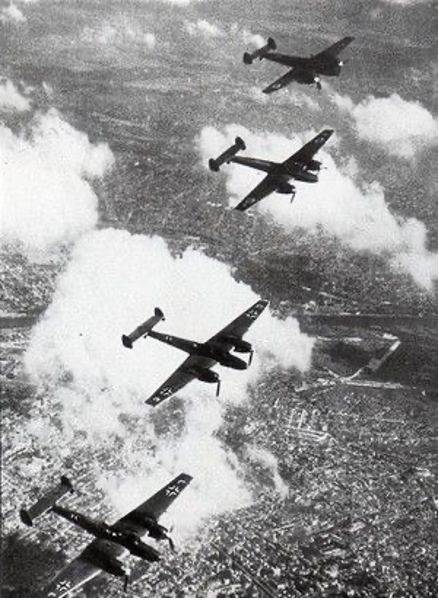
A formation of Messerschmitt Bf 110s over southern England, August 1940, with Bf 109 fighter aircraft flying at low altitude over the sea.
Hitler and most of his generals were unprepared to invade Britain. Göring, however, was confident that the Luftwaffe, using German bomber aircraft, would rapidly destroy the RAF and thereby prevent, or at least delay, the need for a full-scale invasion; Hitler granted him approval to prove this. On 10 July 1940, the Luftwaffe began attacking Britain by carrying out reconnaissance missions and targeting coastal defenses, ports, and radar stations. However, these efforts inflicted little damage on the RAF.
By mid-August, the Luftwaffe—primarily using single-engine Messerschmitt Bf 109 fighter aircraft—began attacking Britain’s airfields, fighter aircraft production facilities, and engaging RAF Supermarine Spitfire and Hawker Hurricane aircraft in the air.[34] German air attacks over Britain continued until October, but mid-September is generally regarded as the point at which Luftwaffe aircraft losses, and especially pilot losses, became unsustainable.
The battle consisted of three distinct phases:
July–August – Initial attacks on British shipping in the English Channel and assaults on airfields and radar installations along the southern coast.
August–September – Intensive Luftwaffe attacks on RAF airfields.
September and thereafter – Bombing attacks against British cities. The final phase of the Battle of Britain overlaps with the Blitz, during which German air attacks focused increasingly on civilian and industrial targets.
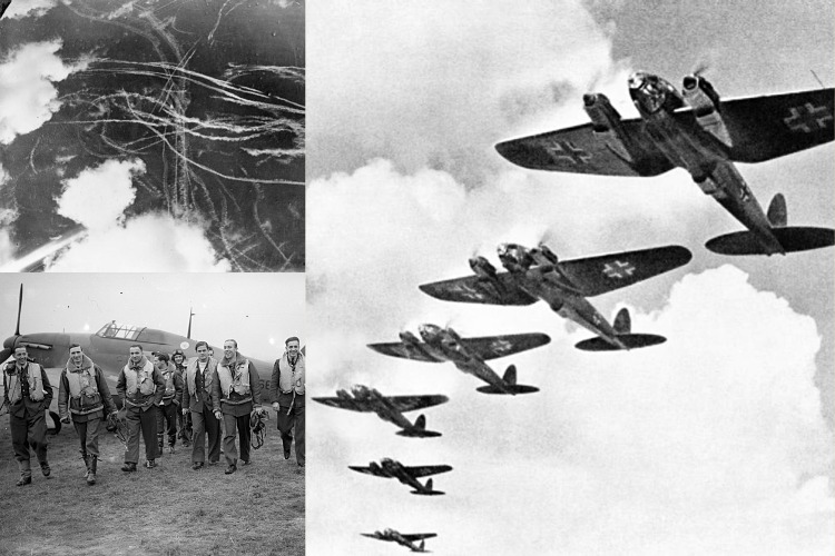
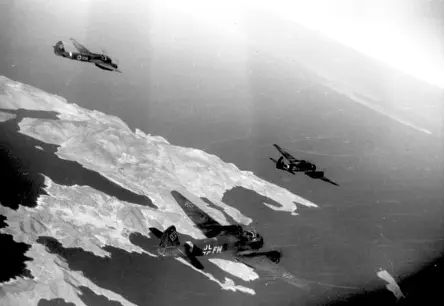
German and British air battles, British fighter-bomber pilots, German bomber aircraft
August was an especially intense month for the Royal Air Force. Pilots were often required to fly more than one sortie per day. However, despite heavy losses in both personnel and aircraft, the fact that they were fighting over their own territory and close to home gave them a significant advantage. [35]
The continuation of Prof. Mesut Hakkı Caşın’s article on military history is in C4Defence Magazine, Issue 153
Source : /C4Defence
References
[1] https://www.history.com/this-day-in-history/september-7/the-blitz-begins
[2] https://www.ebsco.com/research-starters/military-history-and-science/battle-britain
[3] https://www.abc.net.au/news/2025-06-07/russian-military-bloggers-react-to-ukrainian-drone-strike/105385296
[4] https://www.airandspaceforces.com/experts-weigh-in-on-lessons-learned-from-ukraines-drone-attack/
[5] https://www.twz.com/air/b-2-strikes-on-iran-what-we-know-about-operation-midnight-hammer
[6] https://www.tbsnews.net/features/big-picture/india-pakistan-fought-china-won-1149541
[7] https://carnegieendowment.org/research/2025/10/military-lessons-from-operation-sindoor?lang=en
[8] https://www.bbc.com/news/articles/c4gmd3g2nzqo
[9] https://interestingengineering.com/military/chinas-could-sink-all-us-carriers
[10] https://www.thinkchina.sg/politics/can-china-sink-all-us-carriers-20-minutes
[11] https://www.express.co.uk/news/us/2144906/china-will-sink-us-carrier-minutes-pentagon-secret-files
[12] https://warriormaven.com/news/china/do-china-s-5th-6th-gen-stealth-jets-erode-us-air-advantage
[13] https://thediplomat.com/2025/02/chinas-6th-generation-fighter-potential-game-changer-for-air-superiority-in-asia/
[14] https://nationalsecurityjournal.org/to-the-bottom-in-minutes-china-has-countless-missiles-ready-to-sink-u-s-navy-aircraft-carriers/
[15] https://www.thinkchina.sg/politics/can-china-sink-all-us-carriers-20-minutes
[16] https://thedefensewatch.com/military-ordnance/chinas-sixth-generation-fighter-accelerates-as-u-s-jet-project/
[17] https://airpowerasia.com/2025/12/26/usa-vs-chinese-air-power-is-china-catching-up/
[18] https://thediplomat.com/2025/02/chinas-6th-generation-fighter-potential-game-changer-for-air-superiority-in-asia/
[19] https://www.eurasiantimes.com/china-could-deny-u-s-air-superiority-in-the-first-island-chain/
[20] https://www.sde.org.tr/ortadogu/haaretz-israil-turkiye-nin-artan-bolgesel-gucune-karsi-kibris-ve-yunanistan-a-dayanarak-kendini-koruyamaz-haberi-62229
[21] https://gazeteoksijen.com/dunya/haaretz-gazetesi-analizi-akdenizde-kurulan-israil-yunanistan-grky-ittifaki-turkiyeyi-nasil-etkiler-260910
[22] https://theaviationist.com/2024/01/27/greece-f-35-sale-approved/
[23] Mesut Hakkı Caşın: ‘’ İkinci Dünya Savaşı’’, Nobel Yayınevi, 2. Cilt, Ankara, 204, s. 91-95.
[24] https://www.historyextra.com/period/second-world-war/battle-of-britain-ww2-facts-what-happened-who-won-spitfire-raf-luftwaffe/
[25] For information regarding the Luftwaffe and its impact on early Nazi success in the war seek the following sources: R.J. Overy, The Air War, 1939-1945, (New York: Stein & Day, 1980); Douglas C. Dildy, “The Air Battle for England: The Truth Behind the Failure of the Luftwaffe’s Counter-Air Campaign in 1940”. Air Power History 63, no. 2 (2016): 27-40.; Williamson Murray. Strategy for Defeat: The Luftwaffe 1933-1945 (New York: Chartwell Books, 1986). The sources listed here provide great insight into Allied air power during all phases of the war: Marshall L. Michel “The P-51 Mustang: The Most Important Aircraft In History.” Air Power History 55, no. 4 (2008): 46-57.; Kenneth P. Werrell “Flying Training: The American Advantage in the Battle for Air Superiority against the Luftwaffe.” Air Power History 61, no. 1 (2014): 34-47. The following sources provide a great deal of information on both Allied and Axis technological development during the war: Hermione Giffard “Engines of Desperation: Jet Engines, Production and New Weapons in the Third Reich.” Journal Of Contemporary History no. 4 (2013) 821- 844.; A. D. Harvey, “German Aircraft Design during the Third Reich.” Air Power History 61, no. 2 (2014): 28-35.; Fred Strebeigh “How England hung the `curtain’ that held Hitler at bay.” Smithsonian 21, no. 4, (1990): 120-129.
[26] Adolf Hitler, “Führer Directive 16: On preparations for a landing operation against England” (July 16, 1940) World War II Database.
[27] https://warfarehistorynetwork.com/article/the-battle-of-britain-leadership-and-logistics-in-britains-skies/
[28] https://www.londonmintoffice.org/blog/27-military/lest-we-forget/263-remembering-the-battle-of-britain-79-years-on?utm_source=google&utm_medium=cpc&utm_campaign=victory80-pmax-2025&utm_id=22697465404&gad_source=1&gad_campaignid=22687829997&gbraid=0AAAAAD2D2K-pb6FKOKpk7fggoCS2T4erE&gclid=Cj0KCQiAgbnKBhDgARIsAGCDdle3gBdBLohitivjjEBYfQyBPddFASKCeh4gWtbB4igbzBW0YF454scaAq6IEALw_wcB
[29] https://www.historynet.com/learned-battle-britain/
[30] Chandler Dugal: ”A war won in the skies: Air superiority in the Second World War”, James Madison University JMU Scholarly Commons, Fall 2018, pp.7-12.
[31] https://blesma.org/battle-of-britain-day/
[32] https://www.iwm.org.uk/history/8-things-you-need-to-know-about-the-battle-of-britain
[33] https://warfarehistorynetwork.com/article/the-battle-of-britain-leadership-and-logistics-in-britains-skies/
[34] https://www.history.com/articles/battle-of-britain
[35] https://www.cwgc.org/our-work/blog/everything-you-need-to-know-about-the-battle-of-britain