










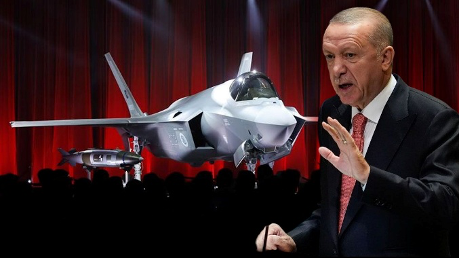
The President of the United States, Donald Trump, drew attention to Europe and the Middle East by hosting Ukrainian President Zelensky and Israeli Prime Minister Benjamin Netanyahu in Florida. The Trump administration wants the ceasefire to move to its second phase in January; at this stage, a technocratic government will be established in Palestine, an international security force will be deployed, Hamas will be disarmed, Israeli troops will withdraw, and the reconstruction of the devastated territories will begin. [1] The first phase of the ceasefire agreement included halting the war, Israel’s partial withdrawal, the exchange of all Israeli hostages (living and deceased) in return for the release of hundreds of Palestinians held by Israel, and the delivery of “full humanitarian aid” to Gaza. [2] Donald Trump and Benjamin Netanyahu held talks on the Gaza agreement and Iran’s nuclear enrichment program. Trump stated that he wanted to move to the second phase of the Gaza agreement “as quickly as possible” and claimed that Hamas would “pay a heavy price” if it did not disarm. Trump also noted that the United States could support another major attack against Iran if Iran were to begin rebuilding its ballistic missile or nuclear weapons program. [3] However, Trump acknowledged the ongoing disagreements between the United States and Israel, particularly regarding the West Bank. Trump opposed Israel’s annexation of the region and shared this view with many Western and Arab countries. Trump stated, “We have been having a major debate about the West Bank for a long time, and I cannot say that we are 100 percent in agreement on the West Bank.” [4]

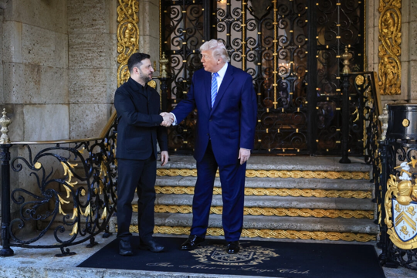
Ukrainian President Volodymyr Zelensky met with U.S. President Donald Trump in Florida on December 28. The two leaders discussed the latest peace efforts aimed at ending Russia’s full-scale war in Ukraine, which has been ongoing for nearly four years. Trump offered a vague perspective on the talks regarding a revised 20-point peace plan, saying that the war would “either end or continue for a long time with much greater losses.” He also added that there was no deadline for reaching a peace agreement and that he believed both Russian and Ukrainian leaders wanted a deal. [5]
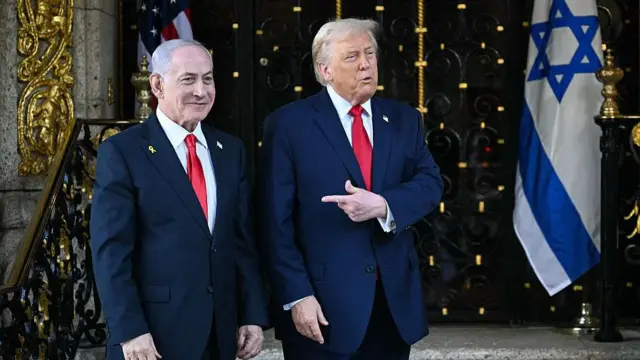
In contrast, Russian President Vladimir Putin, during a phone call with U.S. President Donald Trump, said that Ukraine’s drone attack on a presidential residence located in Russia’s northwestern Novgorod region “would not go unanswered,” according to his aide. [6]
As is known, U.S. President Donald Trump implied in September that he could be open to allowing the sale of F-35 fighter jets to Türkiye. In this context, U.S. Ambassador Tom Barrack emphasized that most of the important issues in Türkiye–U.S. relations had been resolved. The ambassador stated that he believed problems such as the delivery of F-35 fighter jets to the Turkish Air Force, which constitute the most serious issue between the two countries, would be resolved in the short term. [7]
The continuation of tensions in the Russia–Ukraine war despite peace talks, the shift in European allies’ relations with Ankara, the signing of the sale of Eurofighter fighter jets, Türkiye’s contributions to the Gaza ceasefire, and, above all, the continuation of a favorable atmosphere and dialogue in Trump–Erdoğan relations have strengthened the common ground that 2026 could be a more productive year for Ankara–Washington relations. In light of the above reasons, U.S. President Donald Trump, in his assessment of Türkiye–Israel relations and the sale of F-35s, stated: “I know President Erdoğan very well; he is a very good friend of mine. I respect him. Bibi also respects him.” Indicating that they were “seriously considering” the sale of F-35 fighter jets to Türkiye, U.S. President Donald Trump said, “They will never use them against Israel, I promise.” [8]
While Trump spoke in laudatory terms about Netanyahu, he also praised President Recep Tayyip Erdoğan for his roles both in the regime change in Syria and in the Israel–Palestine ceasefire process. When asked about a possible conflict between Israel and Türkiye, Trump said of Erdoğan: “I know President Erdoğan very well and, as you all know, he is a very good friend of mine. I respect him, and Bibi (Netanyahu) respects him as well, and they will not have a problem. You have seen me do things with Erdoğan and Türkiye that no one else could do. We will not have a problem.” He added, “It was President Erdoğan who provided great help in removing Syria’s very bad leader (Bashar al-Assad); do not forget that. He never asked for praise for this, but he truly deserves it. Bibi agrees with this as well.” Stating that the reconstruction of Gaza would begin as soon as possible, Trump responded to a question about relocating Palestinians in Gaza to another area by saying, “If they were shown a better place, I think more than half would go, but I don’t want to talk about that now.” [9]
While President Trump’s message regarding the sale of F-35s to Türkiye set off alarm bells in Tel Aviv and Athens, the “two-day” detail drew attention. In a report titled “There may be surprises in the next two days: The U.S. is considering selling F-35s to Türkiye,” Israeli outlet i24 emphasized Trump’s good dialogue with President Recep Tayyip Erdoğan, noting that “The U.S. President speaks highly of Erdoğan at every opportunity. While Trump stated that the sale of F-35s to Türkiye is being seriously considered, Netanyahu remained silent at his side, apparently content with the situation. Surprise decisions regarding the sale of F-35s to Ankara, one of Israel’s red lines, may be taken within two days.” Stating that he wanted to move to the second phase of the ceasefire agreement reached in October, Trump said that this phase would include the deployment of an international peace force to Gaza. Ahead of the meeting, Trump said that he would discuss with Netanyahu the possibility of deploying a Turkish peace force in Gaza. This issue gains importance in light of Trump’s relationship with President Recep Tayyip Erdoğan, whom he frequently praises, while it stands out as a sensitive matter for Tel Aviv due to Israel–Türkiye relations progressing on a more cautious footing. [10]
Tel Aviv–based Calcalist used the phrase “Trump has once again given the green light to the sale of F-35s to Türkiye,” stating that “Trump promised that if Türkiye were to possess F-35s, he would not allow them to be used against Israel.” The report also noted that “Türkiye’s acquisition of F-35s would undermine Israel’s air superiority in the region and constitute a threat element. Washington needs to take all of this into account.” Ynet, in its report titled “Trump announced that there will be surprises this week,” stated that “The U.S. President has once again brought up the sale of F-35s to Türkiye and said that the evaluation is continuing in a serious manner. His close friendship with Erdoğan undoubtedly has a major influence on this decision. He also responded ‘I think it’s a good thing’ to the question about Turkish military presence in Gaza. In other words, it appears that Trump is determined to include Türkiye in the stabilization force that will operate in Gaza.” [11]
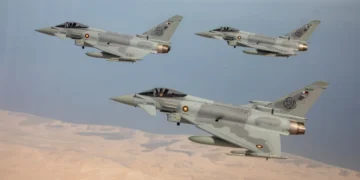
Trump also said that regional developments, particularly those involving Iran and Syria, would be discussed. [12] Trump claimed that following the major U.S. strike against Iran in June, the Tehran administration might be rebuilding its ballistic missile and nuclear programs at new sites. “They may not be using the facilities we destroyed, but they may be building in other places. We know exactly where they are and what they are doing,” Trump said, adding that they could support a new attack with B-2 bombers if necessary. [13]
U.S. President Donald Trump stated that they were “much closer, perhaps very close” to reaching an agreement with Ukrainian President Volodymyr Zelensky to end the war in Ukraine, while also acknowledging that the fate of the Donbas region remains a major unresolved issue. Zelensky believes that an agreement on security guarantees for Ukraine can be reached. The future of Donbas and other regions that Russia is trying to seize remains uncertain. [14]
Ukrainian President Volodymyr Zelensky claimed during talks with Donald Trump in Florida on a revised peace plan that the United States had offered Ukraine security guarantees for 15 years. U.S. President Donald Trump said that the agreement on this issue was “about 95 percent” complete, but noted that the Ukrainian leader wanted guarantees for up to 50 years. Zelensky summarized territorial issues and the Russian-occupied Zaporizhzhia nuclear power plant as the last unresolved matters, but said very little about the future of the disputed Donbas region. [15]
Ukrainian President Volodymyr Zelensky praised the “strong security guarantees” coming from the United States following his meeting with President Trump in Florida on Sunday, as the leaders aim to end the war in Ukraine. Zelensky stated that he and Trump had agreed on 90 percent of a draft 20-point plan and that both men described regional issues such as Donbas as a “very difficult question.” Meanwhile, Moscow showed no sign of backing down from its territorial demands. The meeting at Trump’s Mar-a-Lago estate took place after Trump’s discussion with Russian President Vladimir Putin. Trump said that his message to Putin was that “we need to reach a deal.” After what the White House described as a “positive meeting,” Trump spoke with Putin again. Trump claimed that Putin was committed to peace and that “Russia wants Ukraine to succeed.” Zelensky, however, emphasized that the Russian president’s words must be matched by actions, following Russia’s attack on Ukraine’s capital, Kyiv, the day before. [16]
Next steps: Any agreement will require the approval of Russian President Vladimir Putin, who spoke with Trump by phone today and is expected to hold another conversation. According to Zelensky, U.S. and Ukrainian teams could meet again as early as next week to finalize the remaining points in the peace plan. The latest move in major U.S. diplomacy came immediately after Russia launched its longest attack of the year on Kyiv. At least two people were killed, dozens were injured, and many people in the Ukrainian capital were left without heating in freezing conditions. [17]
However, Russian President Vladimir Putin accused Ukraine of attacking his residence. Ukraine denied the claim. The Kremlin accused Ukraine of carrying out a long-range drone attack targeting Russian President Vladimir Putin’s residence in Novgorod Oblast on December 29. Russian Foreign Minister Sergey Lavrov claimed that Ukrainian forces launched a long-range drone at Putin’s residence in Novgorod Oblast (likely the residence in Valdai, Novgorod Oblast) on the night of December 28–29. [18]
This accusation overshadowed the peace talks between Ukrainian President Volodymyr Zelensky and U.S. President Donald Trump. The talks addressed a 20-point peace plan, but unresolved issues remain, including security guarantees and control over the Zaporizhzhia nuclear power plant. [19]
The Russian foreign minister said that Ukrainian forces attempted to attack Russian President Vladimir Putin’s residence in Novgorod on December 29, leading the Kremlin to reassess its stance on peace talks. Foreign Minister Sergey Lavrov stated that Kyiv used 91 drones to target Putin’s residence in the region. According to officials, all drones were destroyed. It is not yet clear whether Putin was in the building at the time. Lavrov said, “Such reckless actions will not go unanswered,” describing the attack as “state terrorism.” He added that Ukrainian targets for retaliatory strikes by the Russian armed forces had already been identified. Lavrov noted that the alleged attack occurred during talks on a possible peace agreement with Ukraine and said that Russia would not withdraw from the negotiations, but that Moscow’s position would be reviewed. Ukrainian President Volodymyr Zelensky said that Lavrov’s claims were false and that Moscow was laying the groundwork to attack government buildings in Kyiv. [20]
Ukrainian President Volodymyr Zelensky described the allegation as an attempt by the Kremlin to undermine diplomatic progress being carried out with Washington. [21]
Source: C4Defence
References
[1] https://www.bbc.com/news/articles/cwypyq9dvggo
[2] https://www.aa.com.tr/en/americas/netanyahu-meets-top-us-officals-in-florida-ahead-of-talks-with-trump/3784186#
[3] https://www.dw.com/en/trump-netanyahu-meet-to-discuss-gaza-deal-iran/live-75331176
[4] https://edition.cnn.com/2025/12/29/politics/trump-netanyahu-meeting-takeaways
[5] https://kyivindependent.com/zelensky-meets-trump-in-florida-to-discuss-a-peace-proposal-to-end-russias-war/
[6] https://www.aa.com.tr/en/world/morning-briefing-dec-30-2025/3784415
[7] https://www.hurriyet.com.tr/dunya/abd-elcisi-barrack-umitvar-konustu-f-35-sorunu-6-aya-cozulur-43044594
[8] https://tr.euronews.com/2025/12/30/trump-turkiye-f-35leri-israile-karsi-kullanmayacak
[9] https://www.bbc.com/turkce/articles/c2k4k4dpzkdo
[10] https://gazeteoksijen.com/dunya/trump-netanyahu-gorusmesinde-turkiye-mesaji-hicbir-sorun-cikmayacak-f-35-satisini-ciddi-sekilde-dusunuyoruz-261092
[11] https://www.milliyet.com.tr/dunya/son-dakika-trumpin-turkiyeye-f-35-sinyali-tel-avivi-dondurdu-atinayi-endiselendirdi-iki-gun-icinde-surprizler-olabilir-7511871?utm_source=webpush
[12] https://www.bloomberght.com/trump-turkiye-ye-f-35-leri-satmayi-ciddi-sekilde-dusunuyoruz-3764993?page=2
[13] https://gazeteoksijen.com/dunya/trump-netanyahu-gorusmesinde-turkiye-mesaji-hicbir-sorun-cikmayacak-f-35-satisini-ciddi-sekilde-dusunuyoruz-261092
[14] https://www.reuters.com/world/europe/Zelenski-meet-trump-florida-talks-ukraine-peace-plan-2025-12-28/
[15] https://www.bbc.com/turkce/articles/cqxq41n4r49o
[16] https://www.cbsnews.com/live-updates/trump-Zelenski-meeting-florida/
[17] https://edition.cnn.com/politics/live-news/trump-zelensky-ukraine-news-12-28-25
[18] https://understandingwar.org/research/russia-ukraine/russian-offensive-campaign-assessment-december-29-2025/
[19] The Washington Post, 29 December 2025.
[20] https://www.theepochtimes.com/world/kremlin-says-ukraine-tried-to-attack-putins-residence-peace-deal-stance-under-review-.
[21] https://tr.euronews.com/2025/12/29/putinin-konutuna-saldiri-iddiasi-Zelenski-yalanladi-lavrov-kievi-tehdit-etti