



















Taiwan has passed a critical milestone in its effort to adapt its domestically developed anti-ship missile capability to air-launched platforms. Within the scope of the “Xiong-Zhi Project,” the first validation firing of the air-launched version of the supersonic anti-ship missile Hsiung Feng III (HF-3) was successfully conducted.

First Airborne Firing with an IDF Fighter Jet
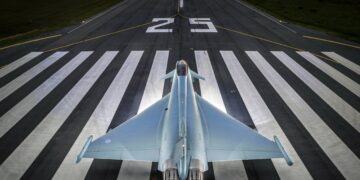
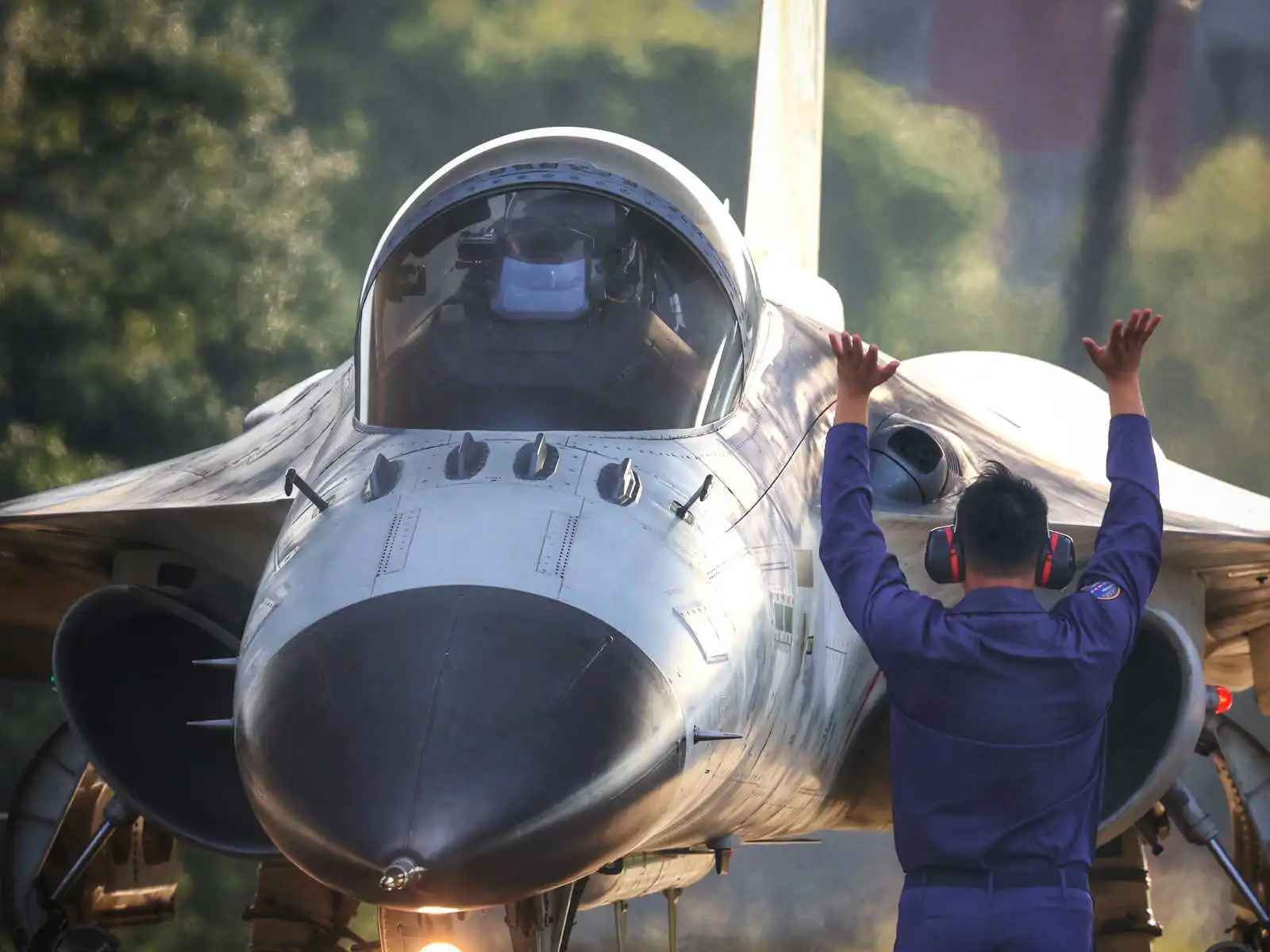
The tests were carried out using Taiwan’s indigenous F-CK-1C (IDF) fighter aircraft. According to information reported by Liberty Times, the test aircraft bearing tail number 1490 took off from Zhihang Air Base in Taitung on December 18, 2025, and successfully launched the munition with serial number AX-006 off the coast of Jiupeng. Images shared of the aircraft returning to base without the munition after the mission confirmed that the firing test was physically completed.
Advanced Technical Features and Operational Advantages
The air-launched HF-3 variant has been redesigned to meet the operational requirements of air platforms compared to the existing ship- and land-based versions. The large solid-fuel boosters found on the standard HF-3, which provide the necessary thrust at launch, were removed and replaced by the initial speed and altitude advantage provided by the aircraft. Thanks to this modification, approximately 200 kg of weight savings was achieved, reducing the missile’s overall weight to around 900 kg.
Launched at high cruise speed from the platform, the missile proceeds through free-fall and ballistic glide phases before igniting its ramjet engine and advancing toward the target area in a sea-skimming flight profile. According to test data, the munition in this new configuration is reported to have an operational range exceeding 150 kilometers.
Toward the Operational Evaluation Phase
The project, carried out by Taiwan’s National Chung-Shan Institute of Science and Technology (NCSIST), is regarded as a turning point for the Taiwanese military’s asymmetric warfare capability. If the data obtained from the initial validation test fully meets the design criteria, the project is expected to move into the next phase—operational evaluation (OPEVAL)—followed by the initiation of mass production planning.
Integrating this development with the “Xiang Sheng III” modernization program for IDF aircraft, which includes an AESA radar and advanced electronic warfare systems, is expected to significantly enhance Taiwan’s air strike capability in regional maritime security.
Source: C4Defence / Liberty Times